A VMAT inhibitor for movement disorders
Tetrabenazine
A medicine that reduces involuntary movements in Huntington's chorea and certain other movement disorders.
What is Tetrabenazine?
Tetrabenazine is a medicine used to reduce the involuntary, jerky movements (chorea) of Huntington's disease and some other movement disorders. It works by lowering the levels of certain brain messengers, especially dopamine, that drive these excess movements. Because it reduces dopamine, it can also cause low mood and depression, and there is a particular caution about depression and suicidal thoughts, so mood is watched closely. Other common effects are drowsiness and parkinsonism, meaning slowness, stiffness and tremor. The amount is usually built up slowly to find the level that helps movements without causing too many side effects.
Education and reference only. This is a plain-language guide to Tetrabenazine — it deliberately contains no doses. Doses depend on the person, the brand and the reason for treatment, and belong with your prescriber. Always check the BNF, the product labelling (SmPC) and follow medical advice.
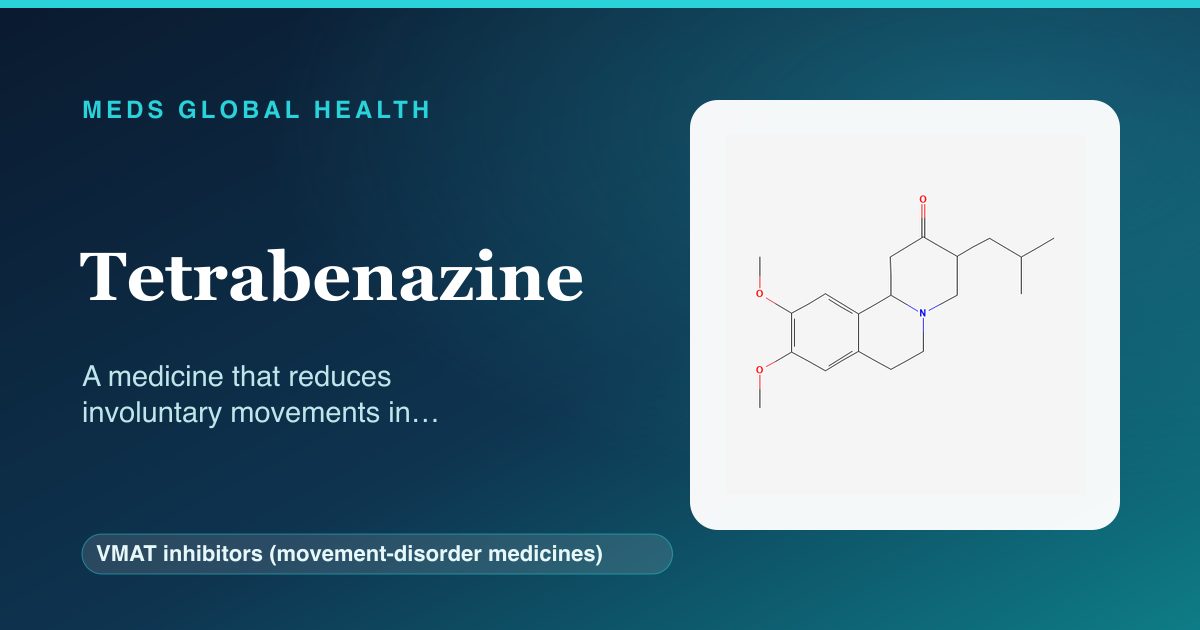
What it is
Tetrabenazine is a medicine used to dampen down the involuntary movements seen in Huntington's disease and in some other movement disorders. It belongs to a group sometimes called VMAT inhibitors, which reduce certain chemical messengers in the brain. It is taken by mouth as a tablet, usually started at a low level and increased gradually. It is a long-term treatment aimed at easing the movements rather than curing the underlying condition.
How it works
The jerky, involuntary movements of conditions like Huntington's disease are linked to an excess effect of brain messengers, especially dopamine. Tetrabenazine reduces the storage and release of these messengers in nerve cells, so there is less dopamine signalling, which calms the unwanted movements. Because dopamine is also involved in mood and in smooth, normal movement, reducing it explains both the risk of depression and the parkinsonism-type side effects.
Company & origin
A medicine used in the UK to reduce involuntary movements in Huntington's disease and some other movement disorders.
Practical use
How to take Tetrabenazine
General, dose-free guidance — always follow your prescriber's and the leaflet's specific instructions.
- Take it as prescribed, usually starting low and increasing slowly to find the right level.
- Take the tablets regularly, with or without food, and try not to miss doses.
- Report any low mood, depression, hopelessness or thoughts of self-harm to your team without delay.
- Tell your team if you become very drowsy, slow, stiff or develop a tremor, as the amount may need adjusting.
- Stand up slowly if you feel dizzy, as it can lower your blood pressure.
- Seek urgent help for a high fever with marked muscle stiffness or confusion.
Weighing it up
Advantages & disadvantages of Tetrabenazine
Advantages
- Reduces the troublesome involuntary movements of Huntington's disease and some other disorders.
- Can be adjusted gradually to find a level that balances benefit and side effects.
- A well-established option specifically aimed at chorea and similar movements.
Disadvantages
- Can cause or worsen depression, with a particular caution about suicidal thoughts.
- Commonly causes drowsiness and parkinsonism, with slowness, stiffness and tremor.
- Can lower blood pressure and cause dizziness, and rarely a serious reaction with fever and stiffness.
Practical use
Good to know
The dominant safety message is mood: by lowering dopamine, tetrabenazine can cause or worsen depression and has a particular caution about low mood and suicidal thoughts, so your team will ask about your mental health and you should report any worsening mood, hopelessness or thoughts of self-harm straight away. It is generally avoided in people who are already significantly depressed or have active suicidal thoughts. Other common effects are drowsiness and parkinsonism, with slowness, stiffness and tremor, which are dose-related, so the amount is built up slowly to balance benefit against side effects. It can also lower blood pressure and cause dizziness, and rarely a serious reaction with high fever and muscle stiffness. It is used carefully alongside some other medicines, and certain combinations are avoided.
Who should not take it / use with caution
- It is avoided in people who are significantly depressed or have active suicidal thoughts.
- It should not be combined with certain other medicines, such as some older antidepressants known as MAOIs.
- Used with caution, or avoided, in significant liver problems and certain other movement or psychiatric conditions.
Monitoring
- Asking about mood and watching closely for depression or suicidal thoughts.
- Reviewing movement side effects such as drowsiness, slowness, stiffness and tremor.
- Checking blood pressure and how well the involuntary movements are controlled.
Side effects
- Depression and low mood, with a particular caution about suicidal thoughts.
- Drowsiness, and parkinsonism with slowness, stiffness and tremor.
- Dizziness from lower blood pressure, and rarely a serious reaction with high fever and muscle stiffness.
Key interactions
- It should not be combined with certain antidepressants called MAOIs.
- Other medicines that cause drowsiness, lower blood pressure or affect dopamine can add to its effects.
- Some medicines change how the body breaks it down, so tell your prescriber about all your medicines.
Available as: Tablets taken by mouth.
Answers
Tetrabenazine: frequently asked questions
What is tetrabenazine used for?
It is used to reduce the involuntary, jerky movements (chorea) of Huntington's disease and some other movement disorders, rather than to cure the condition itself.
Can it affect my mood?
Yes, by lowering dopamine it can cause or worsen depression, with a particular caution about suicidal thoughts, so report any worsening mood or thoughts of self-harm straight away.
Why do I feel slow or stiff on it?
It can cause parkinsonism, with slowness, stiffness and tremor, because it reduces dopamine; these effects are dose-related, so the amount may be adjusted.
Why is it increased slowly?
Building it up gradually helps find a level that eases the movements while keeping drowsiness, parkinsonism and other effects manageable.
Are there medicines it should not be taken with?
Yes, it should not be combined with certain antidepressants called MAOIs and is used carefully with other medicines, so tell your prescriber everything you take.
Authoritative sources
- BNF
- NICE CKS
Building a medicines information resource?
We create evidence-led, dose-free drug and formulary references for teams.