A decongestant in eye and nasal drops for redness
Tetrahydrozoline (tetryzoline)
An over-the-counter imidazoline decongestant used mainly in eye drops to reduce redness, and only for short periods.
What is Tetrahydrozoline (tetryzoline)?
Tetrahydrozoline, also called tetryzoline, is a decongestant in some eye and nasal drops. It narrows the small surface blood vessels in the eye or nose, quickly reducing redness and the feeling of congestion. It is meant only for short-term use, because using it for too long can cause rebound redness or congestion that is worse than before. The drops must be kept well away from children, as swallowing them can be dangerous, and used cautiously by people with glaucoma or certain other conditions.
Education and reference only. This is a plain-language guide to Tetrahydrozoline (tetryzoline) — it deliberately contains no doses. Doses depend on the person, the brand and the reason for treatment, and belong with your prescriber. Always check the BNF, the product labelling (SmPC) and follow medical advice.
What it is
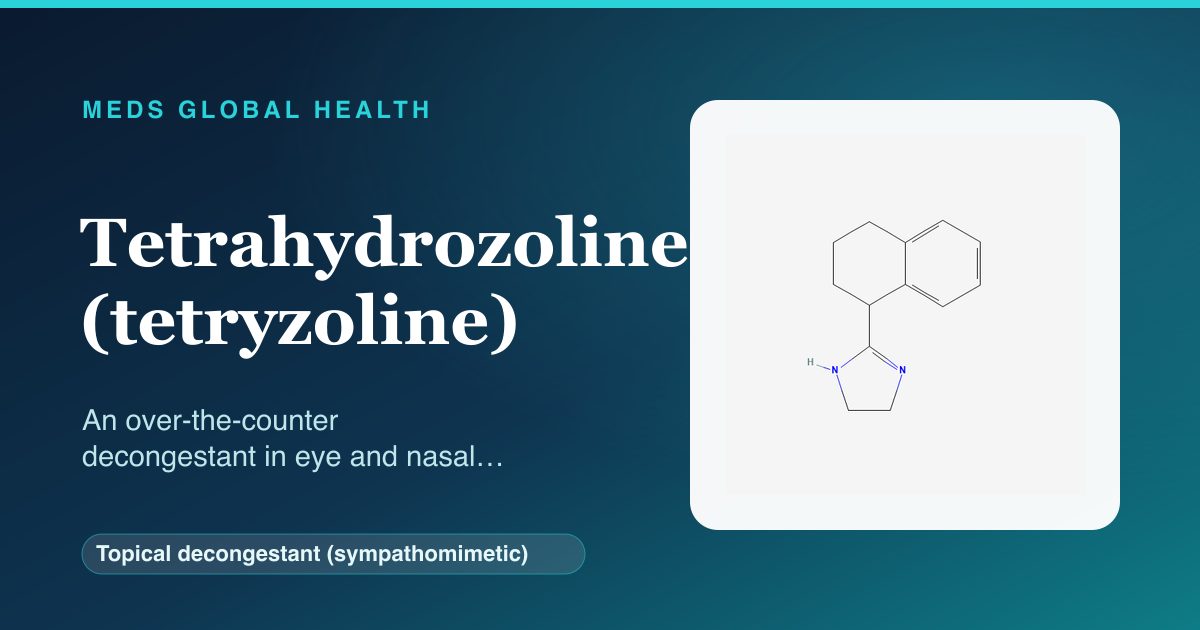
Tetrahydrozoline is a topical decongestant best known for the eye drops used to take the redness out of tired or irritated eyes, and it is also found in some nasal drops. It works locally at the surface where it is applied rather than throughout the body. It is intended for short-term, occasional relief of minor redness or congestion, not regular daily use, and is sold in pharmacy products.
How it works
Tetrahydrozoline tightens the muscle in the walls of small blood vessels, making them narrow. In the eye this reduces blood flow through the surface vessels, so the white of the eye looks clearer and less red. In the nose, narrowing the swollen vessels in the lining opens the airway and eases the blocked feeling. The effect is local and short-lived, which is why repeated, prolonged use can lead to a rebound where symptoms return more strongly.
Company & origin
A decongestant, also called tetryzoline, used in eye and nasal drops to relieve redness and a blocked feeling. It is closely related to other vasoconstrictor decongestants and is a familiar ingredient in 'get the red out' eye drops sold under brands such as Visine and Murine.
Practical use
How to take Tetrahydrozoline (tetryzoline)
General, dose-free guidance — always follow your prescriber's and the leaflet's specific instructions.
- Use the drops for the shortest time needed, usually only a few days, to avoid rebound symptoms.
- Follow the product instructions and avoid touching the dropper tip to the eye or any surface.
- Keep it stored safely out of the sight and reach of children, as swallowing it can be dangerous.
- Stop using it and seek advice if redness or congestion worsens or fails to settle.
- Check with a pharmacist first if you have glaucoma, heart or thyroid problems, or high blood pressure.
Weighing it up
Advantages & disadvantages of Tetrahydrozoline (tetryzoline)
Advantages
- Quickly clears eye redness or a blocked-feeling nose.
- Acts locally where applied, with little spread through the body when used correctly.
- Available without prescription for short-term, occasional relief.
Disadvantages
- Can cause rebound redness or congestion if used for too long.
- Relieves the symptom only and does not treat the underlying cause.
- Can be dangerous if swallowed, particularly by children.
Practical use
Good to know
As with other decongestant drops, the main caution is rebound: using them for more than a few days can cause worse redness or congestion when they wear off. They should be used for the shortest time possible and not relied on for ongoing red eyes, which deserve assessment. Tetrahydrozoline must be kept out of children's reach, because swallowing the drops can cause serious effects. People with glaucoma, heart conditions, high blood pressure or thyroid problems should check before using it.
Who should not take it / use with caution
- Young children, except under specific medical advice, because of the danger if drops are swallowed.
- People with narrow-angle glaucoma, who should avoid eye decongestants unless advised.
- People with poorly controlled heart disease, high blood pressure or thyroid problems without checking first.
Monitoring
- No blood tests are needed; judge by symptom relief and how long it is used.
- Watch for worsening redness or congestion that suggests rebound.
- Review persistent red eyes with a clinician rather than continuing the drops.
Side effects
- Temporary stinging, burning or dryness where the drops are applied.
- Rebound redness or congestion after prolonged use.
- Occasionally, blurred vision after eye drops or a brief raised heart rate.
Key interactions
- Can interact with some antidepressants, including older tricyclics and MAOI types, so check first.
- May add to the effects of other decongestants or stimulants.
- Tell a pharmacist about heart, blood pressure or eye medicines before using it.
Available as: Eye drops, and some nasal drops, for short-term use.
Answers
Tetrahydrozoline (tetryzoline): frequently asked questions
Is tetrahydrozoline the same as tetryzoline?
Yes, they are two names for the same decongestant. You may see either name on eye or nasal drop products, and both refer to the same ingredient that narrows blood vessels to reduce redness and congestion.
Why only use the red-eye drops for a short time?
Decongestant eye drops can cause rebound, where the redness returns worse once they wear off, especially with prolonged use. Keeping use short and occasional helps avoid getting stuck needing them constantly.
Is it dangerous if swallowed?
Yes. Swallowing these drops can cause serious effects, particularly in children, so they must be stored safely out of reach. If a child swallows them, seek urgent medical advice straight away.
Will it treat the cause of my red eyes?
No. It only makes the eyes look less red for a while by narrowing surface blood vessels. Persistent red eyes can have causes such as allergy, dryness or infection that need their own assessment.
Can I use it if I have glaucoma?
People with narrow-angle glaucoma should generally avoid decongestant eye drops unless a doctor advises otherwise. Check with a pharmacist or doctor before using it if you have any eye condition.
Authoritative sources
- BNF
- NICE CKS
Building a medicines information resource?
We create evidence-led, dose-free drug and formulary references for teams.