A fast-acting anaesthetic barbiturate
Thiopental
A fast-acting intravenous anaesthetic used for rapid induction and to control seizures or raised brain pressure in emergencies.
What is Thiopental?
Thiopental is a fast-acting general anaesthetic of the barbiturate type, given into a vein to send someone to sleep very quickly at the start of anaesthesia. It is given by an anaesthetist or intensive-care doctor, who monitors breathing, heart rate, blood pressure and consciousness. Because it acts so rapidly, it is used for fast induction, including in emergencies, and also to help control prolonged seizures (status epilepticus) and dangerously raised pressure in the brain. It can lower blood pressure and slow breathing, and it must not be used in people with the condition porphyria.
Education and reference only. This is a plain-language guide to Thiopental — it deliberately contains no doses. Doses depend on the person, the brand and the reason for treatment, and belong with your prescriber. Always check the BNF, the product labelling (SmPC) and follow medical advice.
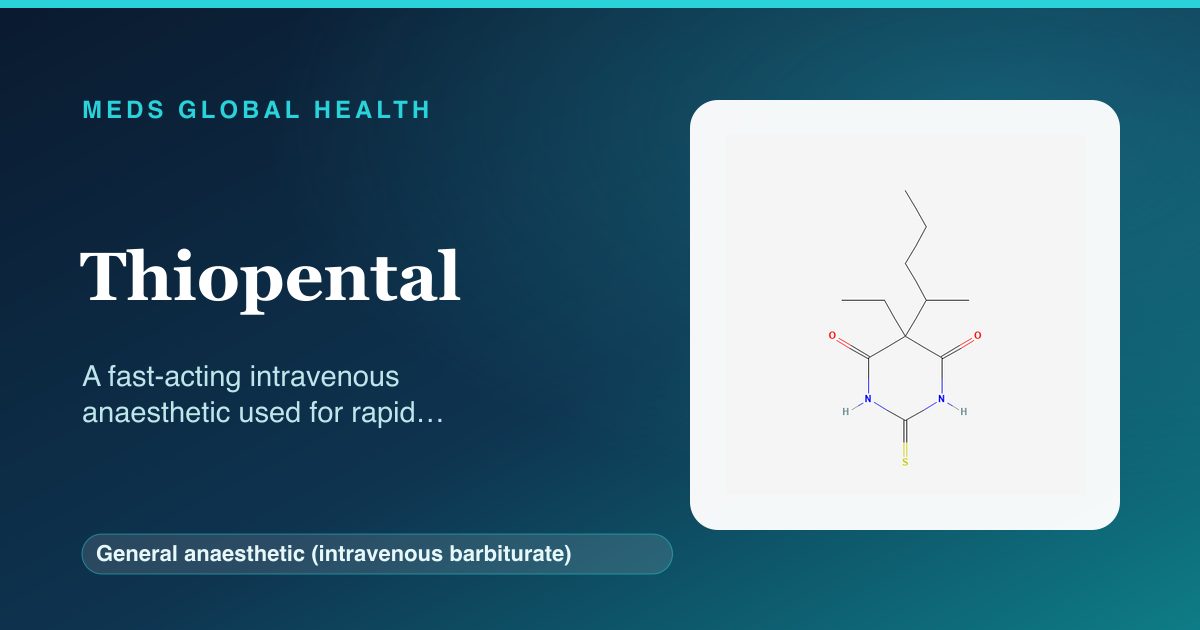
What it is
Thiopental is an intravenous general anaesthetic belonging to a group called barbiturates. Given into a vein, it sends a person to sleep within seconds, which is why it has long been used to induce anaesthesia quickly. It is given and supervised by anaesthetists and intensive-care doctors, who closely monitor breathing, heart rate, blood pressure and consciousness. Beyond starting anaesthesia, it has important emergency roles in stopping prolonged seizures and in protecting the brain when pressure inside the skull is dangerously high.
How it works
Thiopental works on the brain's main calming chemical messenger system, deepening its effect so awareness switches off almost immediately. The same powerful brain-calming action allows it to suppress relentless seizure activity in status epilepticus and to reduce the brain's activity and pressure in certain emergencies. Because it strongly damps down the brain and can also relax blood vessels and reduce the drive to breathe, it can lower blood pressure and slow or stop breathing, which is why it is only ever used with full monitoring and breathing support available.
Company & origin
A long-established intravenous barbiturate anaesthetic used in UK hospitals for very rapid induction of anaesthesia and in some emergencies.
Practical use
How to take Thiopental
General, dose-free guidance — always follow your prescriber's and the leaflet's specific instructions.
- Thiopental is given as an injection into a vein by an anaesthetist or intensive-care doctor; it is not something you take yourself.
- Tell the team about your medicines, allergies and any health conditions beforehand, and especially any history of porphyria in you or your family.
- You will be fully monitored, with breathing support ready, as it can lower blood pressure and slow breathing.
- It works within seconds, so you will fall asleep very quickly once it is given.
- When used in intensive care for seizures or brain pressure, the team adjusts and monitors it continuously.
Weighing it up
Advantages & disadvantages of Thiopental
Advantages
- Sends people to sleep within seconds, making it valuable for rapid induction and emergencies.
- Can stop prolonged, dangerous seizures (status epilepticus) when other treatments have not worked.
- Can reduce dangerously high pressure inside the brain in certain emergencies.
Disadvantages
- Can lower blood pressure and slow or stop breathing, so full monitoring and breathing support are essential.
- Must not be used in people with porphyria, as it can trigger a severe attack.
- If it leaks outside the vein or into an artery, it can damage surrounding tissue.
Practical use
Good to know
Thiopental is given by an anaesthetist or intensive-care team in a fully monitored setting, with equipment ready to support breathing. Its main strength is speed: it sends people to sleep within seconds, which is useful for rapid induction and in emergencies. It can lower blood pressure and reduce breathing, so the team manages these carefully. Two important safety points: it must not be given to people with porphyria, a rare inherited disorder of how the body makes a component of blood, because it can trigger a severe attack; and if any of the injection leaks outside the vein or into an artery it can damage tissue, so it is given carefully. Beyond anaesthesia, it is a valued emergency tool for stopping prolonged seizures and lowering dangerously high pressure in the brain.
Who should not take it / use with caution
- People with porphyria must not be given thiopental, as it can trigger a serious attack.
- It is used with great caution in people with low blood pressure, shock, or severe heart or breathing problems.
- As with all anaesthetics, the team must know about any personal or family history of serious reactions to anaesthesia.
Monitoring
- Continuous monitoring of breathing, oxygen levels, heart rate, blood pressure and consciousness while it is given.
- Close attention to the injection site to make sure it stays within the vein.
- In intensive care, ongoing monitoring of seizures or brain pressure and of breathing and circulation.
Side effects
- A fall in blood pressure and slowed or stopped breathing, managed by the anaesthetic team.
- Drowsiness and a hangover-like feeling afterwards, and sometimes coughing or hiccups as it is given.
- Tissue damage if it leaks from the vein, and rarely allergic reactions.
Key interactions
- Its effects add to those of other anaesthetics, sedatives, strong painkillers and alcohol, increasing drowsiness and breathing risks.
- Care is taken with medicines that lower blood pressure, as thiopental can lower it further.
- It can affect how some other medicines are handled by the body, which the team takes into account.
Available as: Injection given into a vein in hospital or intensive care.
Answers
Thiopental: frequently asked questions
Why is thiopental given for rapid induction?
It sends people to sleep within seconds, which makes it useful when anaesthesia needs to begin very quickly, including in emergencies.
Can it be used for seizures?
Yes. In intensive care it can help control prolonged, dangerous seizures (status epilepticus) when other treatments have not worked.
Why must people with porphyria avoid it?
Thiopental can trigger a severe attack in people with porphyria, a rare inherited disorder, so it must not be used in them.
Does it affect breathing and blood pressure?
Yes, it can lower blood pressure and slow or stop breathing, which is why it is only used with full monitoring and breathing support available.
Will I remember the procedure?
No. It sends you to sleep at the start of anaesthesia, and the team keeps you asleep and monitored throughout.
Authoritative sources
- BNF
- NICE CKS
Building a medicines information resource?
We create evidence-led, dose-free drug and formulary references for teams.