An older oral antiarrhythmic, now largely withdrawn
Tocainide
An older oral heart-rhythm medicine, related to lidocaine, now largely withdrawn because of serious side effects.
What is Tocainide?
Tocainide is an older medicine that was used to control abnormal heart rhythms. It is an oral relative of lidocaine, a local anaesthetic that also steadies the heart. It is now largely withdrawn and rarely, if ever, used, because it can cause serious side effects: severe blood disorders, including a dangerous fall in infection-fighting white cells (agranulocytosis), and scarring of the lungs (pulmonary fibrosis). Like other rhythm medicines, it can also worsen or cause abnormal rhythms. It is included here mainly for historical and reference purposes.
Education and reference only. This is a plain-language guide to Tocainide — it deliberately contains no doses. Doses depend on the person, the brand and the reason for treatment, and belong with your prescriber. Always check the BNF, the product labelling (SmPC) and follow medical advice.
What it is
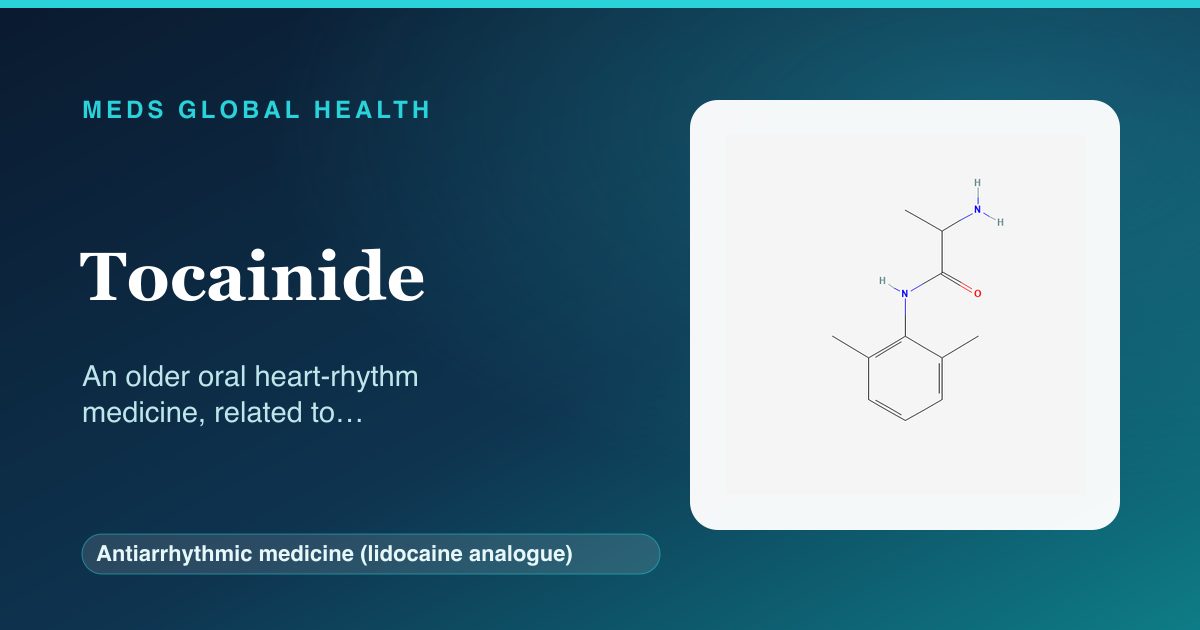
Tocainide is an older antiarrhythmic medicine, meaning a medicine used to control abnormal heart rhythms. It is chemically related to lidocaine, a local anaesthetic that also has a steadying effect on the heart, but unlike lidocaine it could be taken by mouth. It was used in the past for certain serious heart-rhythm problems. Today it is largely withdrawn and is not generally available, because experience showed it could cause rare but very serious harm. It is described here mainly for historical and educational reference rather than as a current treatment.
How it works
Tocainide works like lidocaine by blocking sodium channels in heart muscle cells, which are the tiny gateways that let electrical signals spread. By dampening these signals, it can steady abnormal, fast or irregular heart rhythms. However, medicines that change the heart's electrical activity in this way can sometimes make rhythms worse rather than better (a problem called pro-arrhythmia), and this, together with its serious effects on the blood and lungs, is why it fell out of use. It is no longer a routine treatment.
Company & origin
An older oral heart-rhythm medicine, related to lidocaine, now largely withdrawn because of serious side effects.
Practical use
How to take Tocainide
General, dose-free guidance — always follow your prescriber's and the leaflet's specific instructions.
- Tocainide is largely withdrawn and not generally available, so it is not a current treatment for most people.
- Anyone who was ever prescribed it should follow only their specialist's instructions and never restart it on their own.
- Report any signs of infection, such as fever or sore throat, urgently, as serious blood problems can occur with this medicine.
- Report new or worsening breathlessness or cough, as lung scarring is a recognised serious effect.
- Discuss current, safer heart-rhythm treatments with your cardiology team.
Weighing it up
Advantages & disadvantages of Tocainide
Advantages
- Could be taken by mouth, unlike lidocaine, which has to be given by injection.
- Could steady certain abnormal heart rhythms when it was in use.
- Now largely of historical interest, with safer alternatives available today.
Disadvantages
- Can cause serious blood disorders, including agranulocytosis, a dangerous fall in infection-fighting white cells.
- Can cause scarring of the lungs (pulmonary fibrosis).
- Like other rhythm medicines, it can worsen or trigger abnormal heart rhythms, and it is largely withdrawn.
Practical use
Good to know
The most important thing to understand about tocainide is why it is no longer used: although it could control some heart rhythms, it was found to cause rare but very serious problems. These include severe blood disorders, in particular agranulocytosis, a dangerous fall in the white cells that fight infection, and scarring of the lungs (pulmonary fibrosis) that affects breathing. Like other rhythm-controlling medicines, it can also trigger or worsen abnormal rhythms. Because much safer options now exist, tocainide has largely been withdrawn and is not generally available, so most people will only come across it as a historical reference. Anyone with questions about current heart-rhythm treatment should speak to their cardiology team about the medicines used today.
Who should not take it / use with caution
- It is largely withdrawn and not generally available, so it is not used for most people.
- It would be avoided in people with certain heart-conduction problems or a history of serious blood disorders.
- Any decision about historical or current rhythm medicines should rest with a specialist cardiology team.
Monitoring
- When it was used, regular blood counts were needed to watch for serious blood disorders.
- Watching for breathing problems that could signal lung scarring.
- Checking the heart rhythm for any worsening, as rhythm medicines can be pro-arrhythmic.
Side effects
- Serious blood disorders, including agranulocytosis, a dangerous fall in white cells that fight infection.
- Scarring of the lungs (pulmonary fibrosis), causing breathlessness and cough.
- Worsening or new abnormal heart rhythms, and nausea, dizziness or tremor.
Key interactions
- It could interact with other heart-rhythm medicines, adding to effects on the heart.
- Medicines affecting the blood or bone marrow add to the risk of serious blood problems.
- Any current heart-rhythm treatment and its interactions should be discussed with a cardiology team.
Available as: Tablets taken by mouth (historical).
Answers
Tocainide: frequently asked questions
What was tocainide used for?
It was an older medicine used to control abnormal heart rhythms; it is an oral relative of lidocaine and is now largely withdrawn.
Why is it no longer used?
It was found to cause rare but very serious problems, including severe blood disorders (agranulocytosis) and lung scarring, so safer alternatives are used instead.
What are the most serious risks?
A dangerous fall in infection-fighting white cells (agranulocytosis) and scarring of the lungs (pulmonary fibrosis), as well as worsening of heart rhythms.
Is it the same as lidocaine?
It is closely related to lidocaine and works in a similar way, but unlike lidocaine it could be taken by mouth; both steady the heart's electrical activity.
What should I use instead?
Speak to your cardiology team about the modern, safer heart-rhythm treatments used today, as tocainide is largely of historical interest.
Authoritative sources
- BNF
- NICE CKS
Building a medicines information resource?
We create evidence-led, dose-free drug and formulary references for teams.