A topical antifungal for athlete's foot and ringworm
Tolnaftate
An over-the-counter antifungal applied to the skin to treat athlete's foot and ringworm.
What is Tolnaftate?
Tolnaftate is an antifungal applied to the skin to treat fungal infections such as athlete's foot and ringworm. It is found in creams, powders and sprays, including brands such as Mycil and Tinactin. It works by stopping the fungus from growing and spreading, which allows the skin to heal and clears the itching, flaking and discomfort. It is applied to the affected area and the skin around it as directed, and it is important to keep the area clean and dry and to continue the full course, even after the skin looks better, to stop the infection coming back. It is generally well tolerated but may occasionally cause mild irritation.
Education and reference only. This is a plain-language guide to Tolnaftate — it deliberately contains no doses. Doses depend on the person, the brand and the reason for treatment, and belong with your prescriber. Always check the BNF, the product labelling (SmPC) and follow medical advice.
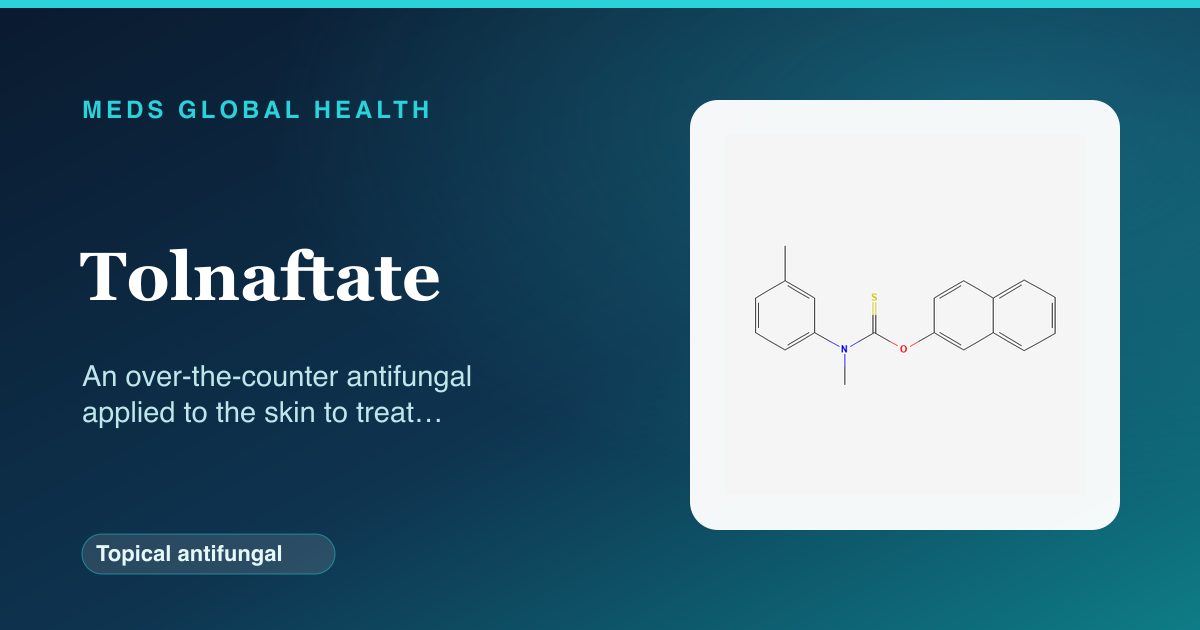
What it is
Tolnaftate is an antifungal medicine used on the skin to treat common fungal infections, most often athlete's foot between the toes, and ringworm of the body. It is available without a prescription in several forms, including creams, powders and sprays, with powders also helping to keep moist areas such as between the toes dry. Familiar brands include Mycil and Tinactin. It is chosen as a simple, well-established treatment for mild fungal skin infections that can be managed at home, and powder forms are also used to help prevent athlete's foot from returning.
How it works
Tolnaftate works by interfering with the way the fungus builds its cell walls. Without a properly formed cell wall, the fungus cannot grow or spread, so the infection is brought under control and the skin can heal. It is mainly active against the types of fungi that cause athlete's foot and ringworm. Because it is applied directly to the skin, it acts where it is needed, on the surface and outer layers where these infections live. Keeping up the treatment for the full recommended time matters, because the fungus can linger even after the visible symptoms have cleared, and stopping too early often lets the infection return.
Company & origin
A long-established antifungal used in the UK to treat athlete's foot and ringworm of the skin, found in creams, powders and sprays.
Practical use
How to take Tolnaftate
General, dose-free guidance — always follow your prescriber's and the leaflet's specific instructions.
- Apply it to the affected area and the skin just around it, as directed on the pack.
- Keep the area clean and dry, drying carefully between the toes for athlete's foot.
- Continue the full recommended course, even after the skin looks better, to stop it coming back.
- Wash your hands after applying it, and avoid sharing towels to limit spread.
- See a pharmacist or GP if it is not improving, or if the nails or scalp are involved.
Weighing it up
Advantages & disadvantages of Tolnaftate
Advantages
- Treats common fungal infections such as athlete's foot and ringworm of the skin.
- Available in creams, powders and sprays, with powders helping keep skin dry.
- A simple, well-established treatment that can be managed at home.
Disadvantages
- Needs the full course to be completed or the infection can come back.
- Not suitable for fungal infections of the nails or scalp, which need other treatment.
- May occasionally cause mild irritation where it is applied.
Practical use
Good to know
Tolnaftate works best when the affected skin is kept clean and dry, because fungi thrive in warm, moist conditions; for athlete's foot this means drying carefully between the toes and wearing clean, breathable socks. It is applied to the affected area and a little of the surrounding skin as directed, and it is important to keep going for the full recommended course, often continuing for a short while after the skin looks normal, to make sure the infection is fully cleared and less likely to return. It is for use on the skin and is not meant for the scalp or nails, which often need different treatment. If the infection is widespread, on the nails or scalp, weeping, or not improving after the recommended time, it should be checked by a pharmacist or GP, who may suggest a different antifungal.
Who should not take it / use with caution
- People who have had an allergic reaction to tolnaftate or the product's ingredients should not use it.
- It is not suitable for fungal infections of the nails or scalp, which need different treatment.
- Anyone whose infection is widespread, weeping or not improving should seek medical advice.
Monitoring
- No routine monitoring is needed for ordinary skin use.
- Checking that the infection is clearing over the recommended course.
- Seeking advice if it is not improving, spreads, or involves the nails or scalp.
Side effects
- Mild irritation, redness or stinging where it is applied.
- Occasionally dryness or itching of the treated skin.
- Rarely, an allergic skin reaction needing medical attention.
Key interactions
- Avoid using other antifungal or strong skin products on the same area at the same time unless advised.
- It is not known to interact in any important way with medicines taken by mouth.
- Tell the pharmacist about other creams or powders you are using on the same skin.
Available as: Creams, powders and sprays applied to the skin.
Answers
Tolnaftate: frequently asked questions
What is tolnaftate used for?
It is an antifungal used on the skin to treat fungal infections such as athlete's foot and ringworm of the body.
How long should I use it for?
Continue the full recommended course on the pack, usually carrying on for a short while after the skin looks better, to make sure the infection is fully cleared and less likely to return.
Can I use it on my nails?
No. It is not suitable for fungal infections of the nails or scalp, which usually need different treatment. See a pharmacist or GP if these are affected.
How can I stop athlete's foot coming back?
Keep your feet clean and dry, dry carefully between the toes, wear clean breathable socks, and finish the full course of treatment. Antifungal powders can also help prevent it returning.
What if it does not get better?
If the infection is widespread, weeping, or not improving after the recommended time, see a pharmacist or GP, who may suggest a different antifungal.
Authoritative sources
- BNF
- NICE CKS
Building a medicines information resource?
We create evidence-led, dose-free drug and formulary references for teams.