A MEK inhibitor used with dabrafenib in melanoma
Trametinib
A targeted cancer tablet, usually given with dabrafenib, for melanoma and some other cancers with a BRAF gene change.
What is Trametinib?
Trametinib is a specialist targeted cancer medicine used mainly to treat melanoma (a type of skin cancer) and some other cancers that have a particular change in the BRAF gene. It is a MEK inhibitor and is usually given together with another medicine, dabrafenib, as a daily tablet. It can affect the heart's pumping strength and the eyes, can cause fever, skin problems and lung inflammation, and can cause bleeding, so it needs careful monitoring. It can seriously harm an unborn baby, so effective contraception is essential. It is prescribed and supervised by a cancer specialist.
Education and reference only. This is a plain-language guide to Trametinib — it deliberately contains no doses. Doses depend on the person, the brand and the reason for treatment, and belong with your prescriber. Always check the BNF, the product labelling (SmPC) and follow medical advice.
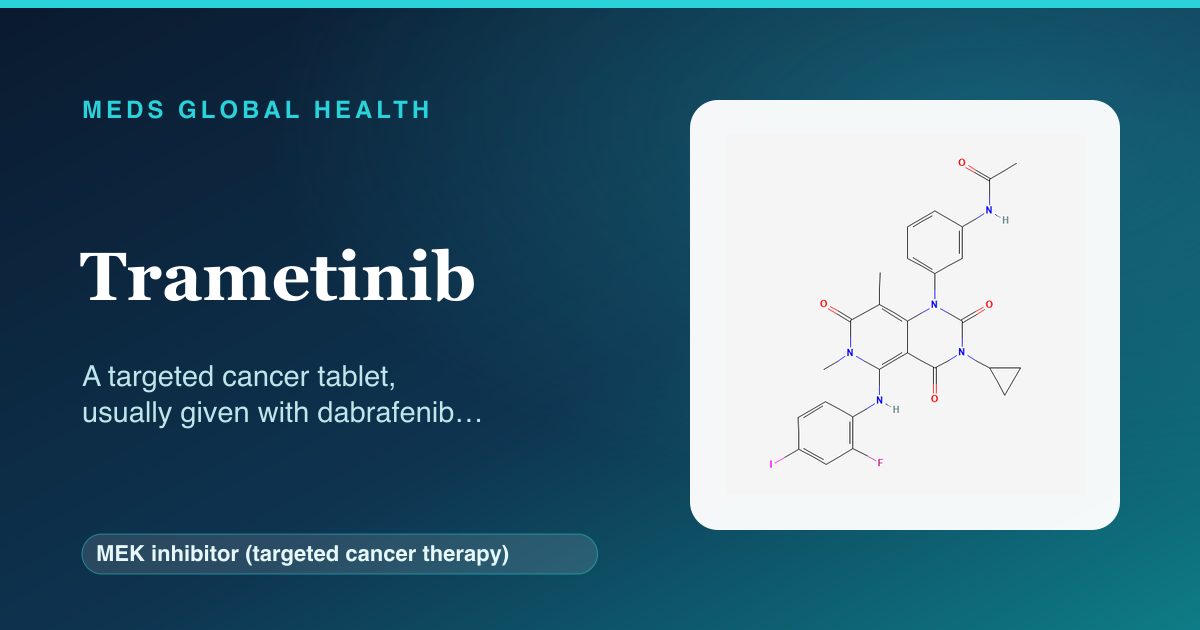
What it is
Trametinib is a targeted cancer medicine known as a MEK inhibitor. It is used to treat melanoma and some other cancers that carry a specific change (mutation) in a gene called BRAF, which drives the cancer to grow. It is usually given in combination with dabrafenib, another targeted medicine, because the two work better together and the combination reduces some side effects. It is taken by mouth as a daily tablet, under the care of a cancer specialist, and is only used when testing has shown the right BRAF change is present.
How it works
In some cancers, a faulty signal inside cancer cells keeps telling them to grow and divide. Trametinib blocks a protein called MEK, which is one step in that growth signal, so the signal is dampened down and the cancer is slowed. Because the same signal pathway can find ways around a single block, trametinib is usually combined with dabrafenib, which blocks a different step (the faulty BRAF protein); blocking two steps works better and helps delay resistance. It is taken every day to keep the signal switched down.
Company & origin
A specialist cancer medicine used in the UK, often together with dabrafenib, to treat melanoma and some other cancers with a BRAF gene change.
Practical use
How to take Trametinib
General, dose-free guidance — always follow your prescriber's and the leaflet's specific instructions.
- Take it by mouth once a day, at about the same time, usually on an empty stomach as advised, and usually together with dabrafenib.
- Use effective contraception during treatment and for the time afterwards that your team advises, as it can seriously harm an unborn baby.
- Report any new shortness of breath, swelling, a fast or irregular heartbeat, or feeling unusually tired, as these can signal heart problems.
- Tell your team promptly about any change in your vision, a high temperature, severe rash, or any unusual bleeding or bruising.
- Keep all monitoring appointments, including heart scans, eye checks and blood tests.
Weighing it up
Advantages & disadvantages of Trametinib
Advantages
- An effective targeted treatment for melanoma and some other cancers with a BRAF gene change.
- Works better and helps delay resistance when combined with dabrafenib.
- Taken at home as a daily tablet rather than as a drip.
Disadvantages
- Only works for cancers with a specific BRAF gene change, confirmed by testing.
- Can affect the heart, eyes and lungs, and commonly causes fever and skin problems.
- Can seriously harm an unborn baby, so strict contraception is needed.
Practical use
Good to know
Trametinib is only used when testing confirms the cancer has the right BRAF gene change, and it is usually given alongside dabrafenib. Several safety points matter. It can reduce the heart's pumping strength, so heart scans are done before and during treatment. It can affect the eyes, including the retina, and can rarely cause a blockage in a vein at the back of the eye, so any change in vision should be reported promptly. Fever (sometimes high) is common with the combination and needs to be managed, as are skin rashes and, less often, inflammation of the lungs and bleeding problems. Because it can seriously harm an unborn baby, effective contraception is essential during treatment and for a time afterwards, and it should not be used in pregnancy. The cancer team monitors closely throughout.
Who should not take it / use with caution
- People who have had a serious allergic reaction to trametinib should not take it.
- It must not be used in pregnancy, as it can seriously harm an unborn baby.
- It is used with particular care in people with heart, eye or lung problems, under specialist supervision.
Monitoring
- Heart scans to check the heart's pumping strength before and during treatment.
- Eye checks, and prompt review of any change in vision.
- Watching for fever, rashes, breathing problems and bleeding, with regular blood tests.
Side effects
- Fever (sometimes high), tiredness, and skin rashes, which are common with the combination.
- A drop in the heart's pumping strength, which heart scans are used to detect.
- Eye problems, including changes in the retina or, rarely, a blocked vein at the back of the eye.
- Less commonly but seriously, inflammation of the lungs, bleeding problems, or serious skin reactions, which need urgent attention.
Key interactions
- Tell your team about all your medicines, including anything that affects blood clotting, because of the risk of bleeding.
- Some other medicines, supplements and even certain foods can affect targeted cancer therapy, so check before starting anything new.
- It is used as part of a planned cancer treatment, usually alongside dabrafenib, under specialist guidance.
Available as: Tablets taken by mouth.
Answers
Trametinib: frequently asked questions
What is trametinib used for?
It is a targeted cancer medicine used mainly for melanoma and some other cancers that have a particular change in the BRAF gene, usually given together with dabrafenib.
Why is it given with dabrafenib?
The two medicines block different steps of the same growth signal, so together they work better and help delay the cancer becoming resistant.
Does it affect the heart?
It can reduce the heart's pumping strength, so heart scans are done before and during treatment, and you should report breathlessness, swelling or an irregular heartbeat.
Why is contraception so important?
Trametinib can seriously harm an unborn baby, so effective contraception is essential during treatment and for the time afterwards your team advises.
Should I worry about a high temperature?
Fever is common with the combination and sometimes needs treatment to be paused; tell your team promptly so it can be managed safely.
Authoritative sources
- BNF
- NICE CKS
Building a medicines information resource?
We create evidence-led, dose-free drug and formulary references for teams.