A sedating antidepressant
Trazodone
A sedating antidepressant often chosen when low mood comes with poor sleep or anxiety.
What is Trazodone?
Trazodone is an antidepressant that tends to be calming and sedating, so it is often used for depression where sleep is disturbed or there is a lot of anxiety. Because it can make you drowsy, it is frequently taken in the evening. Common effects include drowsiness, dizziness and a drop in blood pressure on standing. A rare but important side effect in men is a prolonged, painful erection (priapism), which needs urgent medical attention.
Education and reference only. This is a plain-language guide to Trazodone — it deliberately contains no doses. Doses depend on the person, the brand and the reason for treatment, and belong with your prescriber. Always check the BNF, the product labelling (SmPC) and follow medical advice.
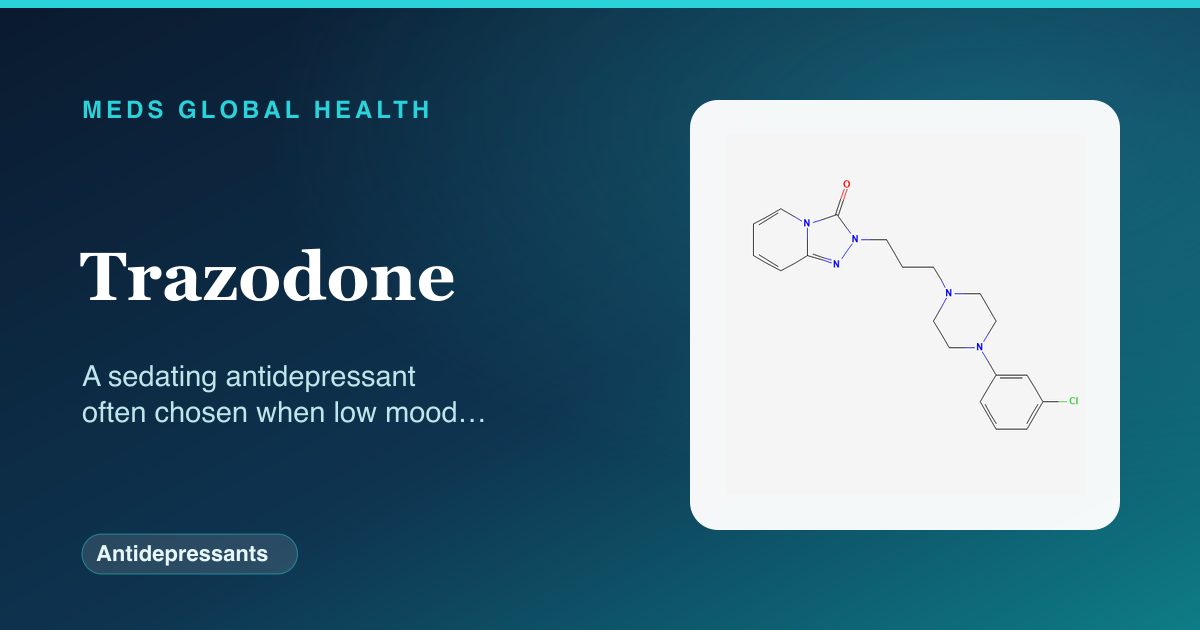
What it is
Trazodone is an antidepressant used to treat depression, particularly when low mood is accompanied by poor sleep, agitation or anxiety. Unlike some antidepressants that can be activating, trazodone is usually sedating, which is why it is often taken at night and sometimes used to help sleep. It is taken by mouth and, like other antidepressants, usually takes a few weeks to reach its full effect.
How it works
Trazodone works on the brain chemical serotonin, helping to lift mood over a period of weeks. It also blocks certain other receptors, which is what makes it sedating and gives it its calming, sleep-promoting effect. These same actions explain side effects such as drowsiness, dizziness and a drop in blood pressure when standing up.
Company & origin
A sedating antidepressant used in the UK for depression, often where sleep is disturbed or anxiety is prominent.
What it treats
Conditions Trazodone is used for
Practical use
How to take Trazodone
General, dose-free guidance — always follow your prescriber's and the leaflet's specific instructions.
- Take it regularly as prescribed, often in the evening because it tends to cause drowsiness.
- Allow a few weeks for the full benefit, and keep taking it even once you feel better unless advised otherwise.
- Stand up slowly, especially at first, as it can cause dizziness or a drop in blood pressure on standing.
- Do not stop suddenly; your prescriber will reduce it gradually to limit withdrawal effects.
- If you miss a dose, take it when you remember unless it is nearly time for the next, then skip it — do not double up.
Weighing it up
Advantages & disadvantages of Trazodone
Advantages
- Helpful for depression where poor sleep or anxiety is a problem, thanks to its calming effect.
- Often improves sleep, which can be taken in the evening to suit this.
- Less likely than some antidepressants to cause sexual side effects.
Disadvantages
- Commonly causes drowsiness and dizziness, which can affect driving and daily tasks.
- Can lower blood pressure on standing, with a risk of falls, especially in older people.
- Rarely causes priapism, a painful prolonged erection needing emergency care.
Practical use
Good to know
Because trazodone is sedating, it is commonly taken in the evening and can help with the broken sleep that often comes with depression; daytime drowsiness can still happen, so take care with driving until you know how it affects you. Like all antidepressants it usually takes a few weeks to work, and you should not stop it suddenly — coming off slowly under guidance reduces withdrawal effects. It can lower blood pressure on standing, causing dizziness or faintness, so get up slowly, especially at first and in older people. A rare but serious effect is priapism — a painful erection lasting more than a couple of hours — which needs emergency treatment to avoid lasting harm. As with other antidepressants, watch for any worsening mood or distressing thoughts, particularly in the early weeks or in younger adults.
Who should not take it / use with caution
- People recently treated with an MAOI antidepressant need a washout period before starting, and the two are not used together.
- Caution is needed in heart problems, certain heart-rhythm conditions, epilepsy and significant liver disease.
- Older people and those at risk of falls need extra care because of dizziness and low blood pressure.
Monitoring
- Mood and any thoughts of self-harm are reviewed, especially in the first weeks and in younger adults.
- Blood pressure and dizziness are checked, particularly in older people.
- Response and side effects are reviewed before deciding to continue, adjust or change.
Side effects
- Drowsiness, dizziness, dry mouth, blurred vision and headache.
- Low blood pressure on standing, nausea and tiredness.
- Rarely, priapism (a painful erection lasting hours) — seek emergency care; also report signs of low sodium such as confusion.
Key interactions
- It must not be combined with MAOI antidepressants, and a washout period is needed when switching.
- Other sedating medicines and alcohol add to drowsiness, and some medicines affect heart rhythm together with it.
- Combining it with other serotonin medicines can rarely cause serotonin syndrome, so tell your prescriber about all your medicines.
Available as: Tablets, capsules and an oral liquid.
Answers
Trazodone: frequently asked questions
Why is trazodone taken at night?
It tends to be sedating, so taking it in the evening uses that effect to help disturbed sleep and reduces daytime drowsiness.
How long before it works?
Like other antidepressants it usually takes a few weeks to lift mood, although the sleep-promoting effect may be noticed sooner.
What is priapism and why does it matter?
It is a rare, painful erection lasting more than a couple of hours; it is a medical emergency, so seek urgent help to prevent lasting damage.
Can I stop it once I feel better?
Do not stop suddenly; treatment is usually continued for a while after recovery and then reduced gradually under guidance to avoid withdrawal effects.
Will it make me dizzy?
It can lower blood pressure on standing, causing dizziness, so get up slowly, especially when you first start it or if you are older.
Authoritative sources
- BNF
- NICE CKS
Building a medicines information resource?
We create evidence-led, dose-free drug and formulary references for teams.