A copper-chelating medicine for Wilson's disease
Trientine
A copper-removing medicine used to treat Wilson's disease, an inherited condition where copper builds up in the body.
What is Trientine?
Trientine is a specialist medicine used to treat Wilson's disease, an inherited condition where copper builds up in the liver, brain and other organs and causes damage. It works by binding to excess copper so the body can pass it out in the urine, and is often used as an alternative for people who cannot take penicillamine. It is taken on an empty stomach, kept apart from food and iron, and is a lifelong treatment that needs regular monitoring. Symptoms, particularly nervous-system ones, can briefly worsen when treatment is first started.
Education and reference only. This is a plain-language guide to Trientine — it deliberately contains no doses. Doses depend on the person, the brand and the reason for treatment, and belong with your prescriber. Always check the BNF, the product labelling (SmPC) and follow medical advice.
What it is
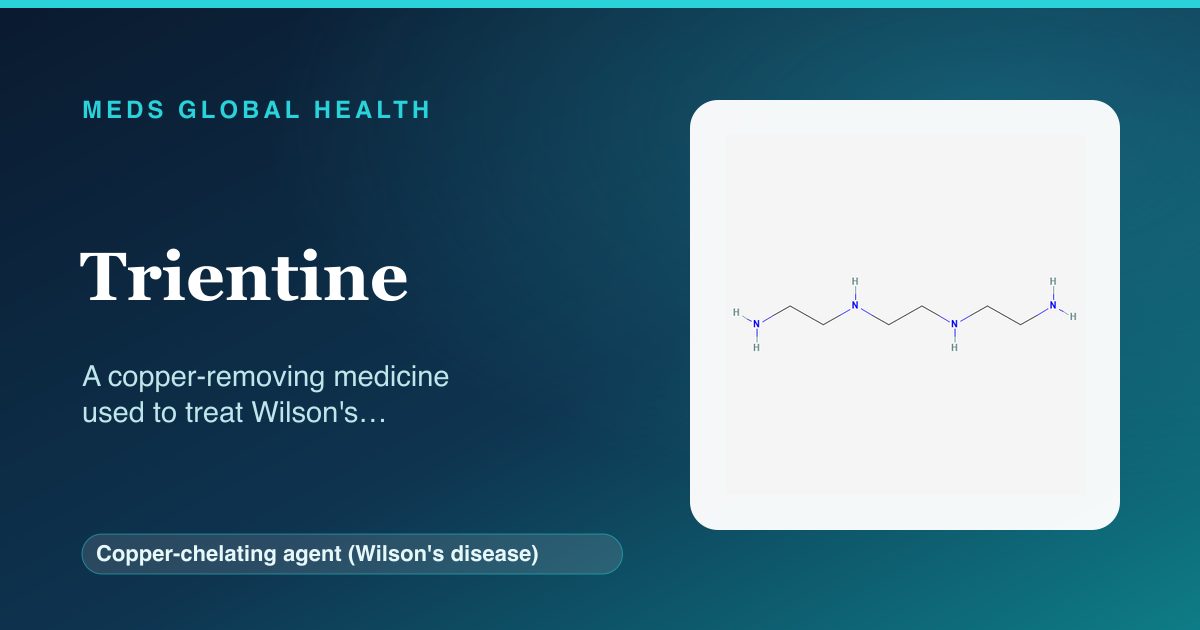
Trientine is a copper-chelating medicine, meaning it grabs hold of copper so the body can get rid of it. It is used in Wilson's disease, a rare inherited condition in which the body cannot remove copper properly, so copper gradually builds up and damages the liver, brain and other organs. Trientine is one of the main treatments and is often chosen for people who cannot tolerate penicillamine. It is taken by mouth as capsules or tablets, usually for life, under the care of a specialist team.
How it works
Trientine binds to excess copper in the body and helps it be removed in the urine, lowering the harmful copper levels that cause damage in Wilson's disease. By keeping copper under control over the long term, it helps protect the liver and nervous system and prevents the condition from getting worse. It is a maintenance treatment that works gradually, which is why it is taken every day and why copper levels are checked regularly to make sure the dose is right.
Company & origin
A specialist medicine used in the UK to remove excess copper in people with Wilson's disease, often as an alternative to penicillamine.
Practical use
How to take Trientine
General, dose-free guidance — always follow your prescriber's and the leaflet's specific instructions.
- Take it on an empty stomach, usually at least an hour before or a couple of hours after food, so it is absorbed properly.
- Keep it well apart from iron supplements, antacids and milk, which can stop it working.
- Swallow the capsules or tablets whole with water, and take it at evenly spaced times each day as advised.
- Do not stop taking it without specialist advice, as copper can build up again and cause serious harm.
- Follow the low-copper diet you are given, avoiding foods such as liver, shellfish, nuts and chocolate.
Weighing it up
Advantages & disadvantages of Trientine
Advantages
- An effective long-term way to control copper in Wilson's disease and protect the liver and nervous system.
- A useful alternative for people who cannot tolerate penicillamine.
- Generally better tolerated than penicillamine, with fewer of some of its side effects.
Disadvantages
- Must be taken on an empty stomach and kept apart from food and iron, which takes planning.
- Nervous-system symptoms can briefly worsen when treatment is first started.
- Removing too much copper over time can cause copper deficiency, so monitoring is needed.
Practical use
Good to know
Trientine is a lifelong treatment for a lifelong condition, so taking it consistently matters; stopping it can allow copper to build up again and cause serious harm. It is best taken on an empty stomach, separated from food, milk and especially iron supplements and antacids, which can stop it being absorbed properly. An important thing to expect is that nervous-system symptoms can sometimes get briefly worse when treatment is first started or the dose is changed, as copper shifts around the body; the specialist team watches for this. Because the medicine removes copper, taking too much over time can cause copper deficiency, so regular blood and urine tests are used to keep the balance right. A low-copper diet, avoiding foods such as liver, shellfish, nuts and chocolate, is usually advised alongside it.
Who should not take it / use with caution
- People who have had a serious allergic reaction to trientine should not take it.
- It is used with care, and with monitoring, in pregnancy, where the specialist team weighs the benefits and risks.
- It should only be used under specialist supervision, with regular copper monitoring.
Monitoring
- Regular blood and urine tests to check copper levels and make sure the dose is right.
- Watching for signs of too much copper removal, such as copper deficiency or anaemia.
- Reviewing liver function and nervous-system symptoms over time.
Side effects
- Nausea or stomach upset, especially early in treatment.
- A temporary worsening of nervous-system symptoms when treatment is first started.
- Over time, copper deficiency or iron-deficiency anaemia, which monitoring is designed to catch.
Key interactions
- Iron supplements bind to trientine and to each other, so they must be separated by a couple of hours.
- Antacids and milk can reduce how well trientine is absorbed, so keep them apart.
- Other mineral supplements such as zinc may need careful timing, guided by the specialist team.
Available as: Capsules and tablets taken by mouth.
Answers
Trientine: frequently asked questions
What is trientine used for?
It is used to treat Wilson's disease, an inherited condition where copper builds up in the body, by binding to excess copper so it can be passed out in the urine.
Why do I have to take it on an empty stomach?
Food, milk and especially iron supplements can stop trientine being absorbed, so it is taken away from food and kept apart from iron and antacids.
Why might my symptoms get worse at first?
Nervous-system symptoms can sometimes briefly worsen when treatment is first started as copper shifts around the body; your specialist team will watch for this.
Is it better than penicillamine?
Trientine is often used as an alternative for people who cannot tolerate penicillamine and is generally better tolerated, but your specialist will decide what suits you.
Can I stop taking it once I feel well?
No. Wilson's disease needs lifelong treatment, and stopping can let copper build up again and cause serious harm, so only change it on specialist advice.
Authoritative sources
- BNF
- NICE CKS
Building a medicines information resource?
We create evidence-led, dose-free drug and formulary references for teams.