An oral tablet for anaemia in chronic kidney disease
Vadadustat
An oral tablet used to treat anaemia (low blood count) in people with long-term kidney disease.
What is Vadadustat?
Vadadustat is an oral medicine used to treat anaemia, a low level of red blood cells, in people with chronic kidney disease. It belongs to a group called HIF prolyl-hydroxylase inhibitors, which prompt the body to make more of its own red blood cells. As a tablet, it offers an alternative to the injections that have traditionally been used. Important safety points are that it raises the risk of blood clots, can raise blood pressure and can affect the liver, and the blood count (haemoglobin) must not be pushed up too high or too fast. It is prescribed and monitored by a kidney specialist.
Education and reference only. This is a plain-language guide to Vadadustat — it deliberately contains no doses. Doses depend on the person, the brand and the reason for treatment, and belong with your prescriber. Always check the BNF, the product labelling (SmPC) and follow medical advice.
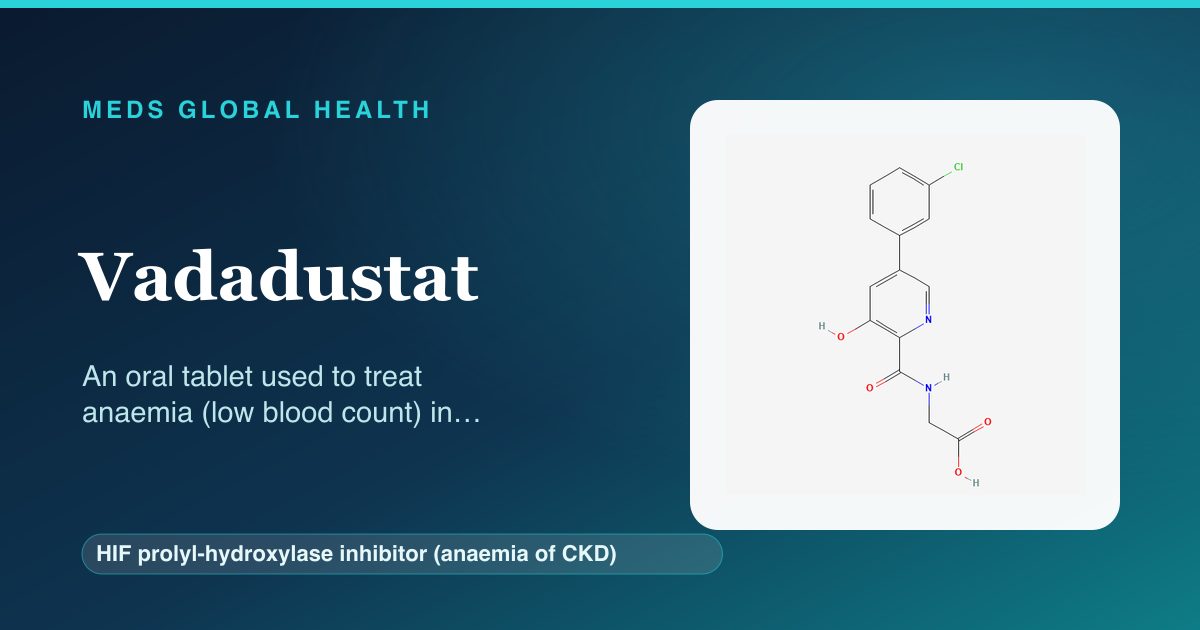
What it is
Vadadustat is a medicine used to treat anaemia, a shortage of red blood cells, in people with chronic kidney disease. When the kidneys are damaged, they make less of a hormone that tells the body to produce red blood cells, so anaemia is common. Vadadustat is one of a newer group of medicines called HIF prolyl-hydroxylase inhibitors, taken as a tablet by mouth, which encourage the body to make more of its own red blood cells. Being a tablet, it gives an alternative to the injectable treatments long used for this purpose. It is prescribed and supervised by a kidney specialist team.
How it works
The body senses how much oxygen is around using a system that, when oxygen is low, switches on the production of red blood cells. Vadadustat blocks an enzyme so that the body behaves as if oxygen is a little low, which boosts the natural signals that drive red-blood-cell production and the handling of iron. This raises the haemoglobin and treats the anaemia. Because the aim is to bring the blood count up gently into a target range rather than as high as possible, it is dose-adjusted and monitored, since pushing haemoglobin too high can be harmful.
Company & origin
An oral medicine used to treat anaemia caused by long-term kidney disease, offering a tablet alternative to injections.
What it treats
Conditions Vadadustat is used for
Practical use
How to take Vadadustat
General, dose-free guidance — always follow your prescriber's and the leaflet's specific instructions.
- Take the tablet by mouth as your kidney team directs, at about the same time in your routine.
- Attend regular blood tests so the dose can be adjusted to keep haemoglobin in the target range, not too high.
- Have your blood pressure checked regularly, as this medicine can raise it.
- Report any leg swelling or pain, breathlessness or chest pain promptly, as these can signal a blood clot.
- Tell your team about iron, antacids and other medicines, as the timing or choice may need adjusting.
Weighing it up
Advantages & disadvantages of Vadadustat
Advantages
- Treats anaemia of chronic kidney disease as a tablet, avoiding regular injections for many people.
- Encourages the body to make more of its own red blood cells.
- Allows the blood count to be adjusted gradually within a target range.
Disadvantages
- Raises the risk of blood clots in the legs or lungs.
- Can raise blood pressure and can affect the liver, so it needs monitoring.
- Requires regular blood tests, as the haemoglobin must not be over-corrected.
Practical use
Good to know
The main goal with vadadustat is to correct anaemia gently: the haemoglobin should be brought into a target range and not over-corrected, because letting the blood count rise too high or too fast can be dangerous, which is why regular blood tests guide the dose. Several safety points matter: it can raise the risk of blood clots, including clots in the legs or lungs, so any leg swelling, breathlessness or chest pain needs attention; it can raise blood pressure, which is checked regularly; and it can affect the liver, so liver blood tests are monitored. The convenience of a tablet over an injection is a real advantage for many people. It is important to take it as directed, attend monitoring appointments, and tell the team about other medicines, including iron and antacids, which can affect treatment.
Who should not take it / use with caution
- People who have had a serious allergic reaction to vadadustat should not take it.
- It is used with caution in people at high risk of blood clots or with poorly controlled blood pressure.
- It is used with care in people with liver problems, with monitoring of liver blood tests.
- It is avoided or used with care in pregnancy and breastfeeding, on specialist advice.
Monitoring
- Regular blood tests to check haemoglobin and adjust the dose, avoiding over-correction.
- Regular blood-pressure checks.
- Monitoring liver blood tests and watching for signs of blood clots.
Side effects
- Blood clots in the legs or lungs, which need prompt attention.
- Raised blood pressure, which is checked regularly.
- Changes in liver blood tests.
- Nausea, diarrhoea or other stomach upset in some people.
Key interactions
- Iron supplements and antacids can affect how well it is absorbed, so timing may need adjusting.
- Some other medicines change how vadadustat is handled by the body, so give a full medicines list.
- It is used with care alongside other treatments that affect blood pressure or clotting.
Available as: Tablets taken by mouth.
Answers
Vadadustat: frequently asked questions
What is vadadustat used for?
It is an oral tablet used to treat anaemia (a low red-blood-cell count) in people with chronic kidney disease, by helping the body make more of its own red blood cells.
How is it different from the injections?
It works towards the same goal of treating anaemia but is taken as a tablet rather than as an injection, which many people find more convenient.
Why are regular blood tests needed?
The haemoglobin must be brought into a target range and not over-corrected, as letting it rise too high or too fast can be harmful, so blood tests guide the dose.
Does it raise the risk of blood clots?
Yes, it can raise the risk of blood clots, so report any leg swelling or pain, breathlessness or chest pain to your team promptly.
Can it affect my blood pressure or liver?
It can raise blood pressure and can affect the liver, so your team checks your blood pressure and liver blood tests during treatment.
Authoritative sources
- BNF
- NICE CKS
Building a medicines information resource?
We create evidence-led, dose-free drug and formulary references for teams.