A BRAF inhibitor for melanoma with a BRAF V600 change
Vemurafenib
A targeted cancer tablet for melanoma that carries a specific BRAF V600 gene change.
What is Vemurafenib?
Vemurafenib is a specialist targeted cancer medicine used to treat melanoma (a type of skin cancer) that carries a specific change in the BRAF gene, called BRAF V600. It is a tablet taken by mouth and only works in cancers with this exact change. It can cause new skin cancers, so regular skin checks are needed, and it causes severe sensitivity to sunlight. It can affect the heart's rhythm (the QT interval) and can cause serious skin reactions such as DRESS and Stevens-Johnson syndrome. It can harm an unborn baby, so effective contraception is essential. It is prescribed and supervised by a cancer specialist.
Education and reference only. This is a plain-language guide to Vemurafenib — it deliberately contains no doses. Doses depend on the person, the brand and the reason for treatment, and belong with your prescriber. Always check the BNF, the product labelling (SmPC) and follow medical advice.
What it is
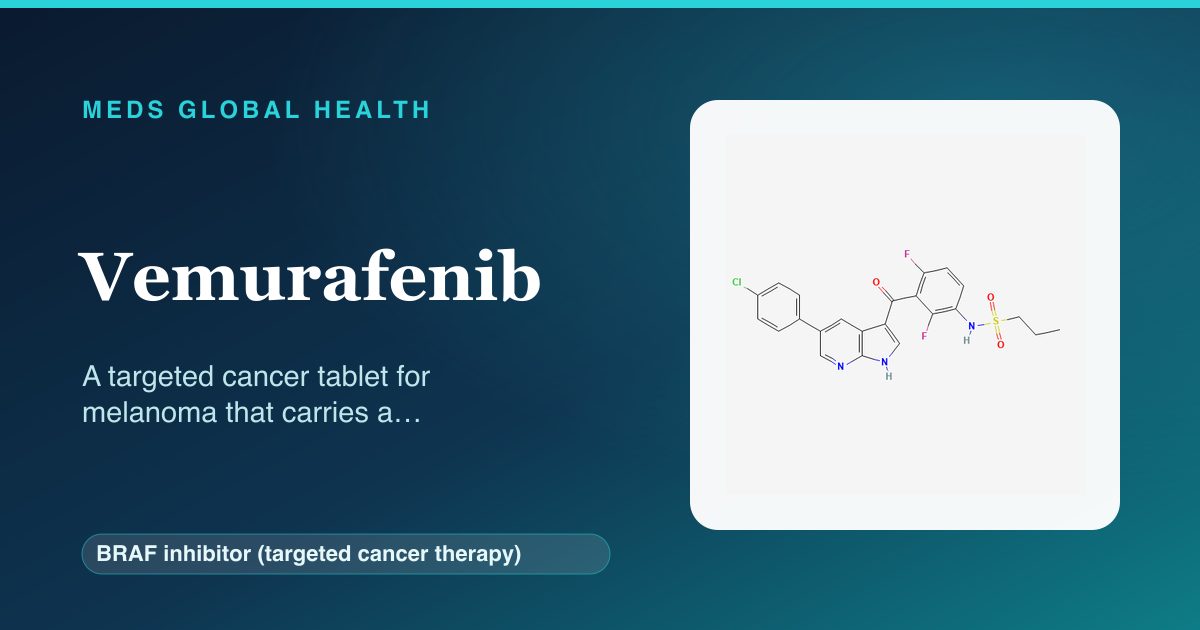
Vemurafenib is a targeted cancer medicine known as a BRAF inhibitor. It is used to treat melanoma that has a particular change (mutation) in a gene called BRAF, known as BRAF V600, which drives the cancer to grow. It only works in cancers that carry this exact change, so testing is done first. It is taken by mouth as a tablet, under the care of a cancer specialist. It is sometimes used on its own and sometimes combined with another targeted medicine, depending on the situation.
How it works
In melanomas with a BRAF V600 change, the faulty BRAF protein is stuck switched on, constantly sending a signal that tells the cancer cells to grow and divide. Vemurafenib blocks this faulty BRAF protein, switching the growth signal off and slowing or shrinking the cancer. Because it targets this specific fault, it only works in cancers that actually carry the BRAF V600 change, which is why testing is needed before it is used. It is taken every day to keep the signal switched off, and the cancer can sometimes find ways around it over time.
Company & origin
A specialist cancer medicine used in the UK to treat melanoma that carries a specific BRAF gene change (BRAF V600).
Practical use
How to take Vemurafenib
General, dose-free guidance — always follow your prescriber's and the leaflet's specific instructions.
- Take it by mouth twice a day, at about the same times, as your team directs.
- Protect yourself from the sun with clothing and high-factor sun cream, as it makes the skin very sensitive to sunlight.
- Have the regular skin checks your team arranges, and report any new or changing skin lump, sore or mole.
- Tell your team urgently about any widespread rash, blistering, peeling skin, or a rash with fever, as these can be serious.
- Use effective contraception during treatment and for the time afterwards your team advises, as it can harm an unborn baby.
Weighing it up
Advantages & disadvantages of Vemurafenib
Advantages
- An effective targeted treatment for melanoma that carries the BRAF V600 change.
- Taken at home as a tablet rather than as a drip.
- Can work quickly to shrink melanoma in suitable people.
Disadvantages
- Only works in melanomas with the BRAF V600 change, confirmed by testing.
- Can cause new skin cancers and severe sensitivity to sunlight.
- Can affect the heart's rhythm, cause serious skin reactions, and harm an unborn baby.
Practical use
Good to know
Vemurafenib only works in melanomas with the BRAF V600 change, so this must be confirmed by testing first. Several safety points matter. It can cause new skin cancers, including a type called squamous cell carcinoma, so regular skin checks are needed during treatment and for a time afterwards, and any new or changing skin lump or sore should be reported. It causes severe sensitivity to sunlight, so careful sun protection is essential. It can affect the heart's electrical rhythm (the QT interval), which may be checked with ECGs and blood-salt tests, and it can cause serious skin reactions such as DRESS and Stevens-Johnson syndrome; any widespread rash, blistering, or rash with fever needs urgent attention. Because it can harm an unborn baby, effective contraception is essential during treatment and for a time afterwards. The cancer team monitors closely throughout.
Who should not take it / use with caution
- People who have had a serious allergic reaction to vemurafenib should not take it.
- It is only for melanomas with a confirmed BRAF V600 gene change.
- It must not be used in pregnancy, as it can harm an unborn baby, and is used with care in people with heart-rhythm problems.
Monitoring
- Confirming the BRAF V600 change by testing before starting.
- Regular skin checks for new skin cancers, during treatment and for a time afterwards.
- Heart tracings (ECGs) and blood-salt tests, and prompt review of any serious rash.
Side effects
- New skin cancers (such as squamous cell carcinoma) and other skin changes, which skin checks are designed to catch.
- Severe sensitivity to sunlight, with sunburn-like reactions and rashes.
- Joint pain, tiredness, hair thinning and nausea.
- Less commonly but seriously, changes in the heart's rhythm (the QT interval) or serious skin reactions such as DRESS or Stevens-Johnson syndrome, which need urgent attention.
Key interactions
- Tell your team about all your medicines, especially any that also affect the heart's QT interval.
- Some medicines, supplements and grapefruit can change vemurafenib levels, so check before starting anything new.
- It is sometimes combined with another targeted medicine, under specialist guidance.
Available as: Tablets taken by mouth.
Answers
Vemurafenib: frequently asked questions
What is vemurafenib used for?
It is a targeted cancer medicine used to treat melanoma that carries a specific change in the BRAF gene, called BRAF V600.
Why do I need a gene test first?
Vemurafenib only works in melanomas with the BRAF V600 change, so testing confirms the change is present before treatment is started.
Why do I need regular skin checks?
It can cause new skin cancers, so regular skin checks are done during treatment and afterwards; report any new or changing skin lump, sore or mole.
Why is sun protection so important?
Vemurafenib causes severe sensitivity to sunlight, so protective clothing and high-factor sun cream are essential to prevent serious skin reactions.
Can I take it during pregnancy?
No. Vemurafenib can harm an unborn baby, so effective contraception is essential during treatment and for the time afterwards your team advises.
Authoritative sources
- BNF
- NICE CKS
Building a medicines information resource?
We create evidence-led, dose-free drug and formulary references for teams.