A BCL-2 inhibitor tablet for some blood cancers
Venetoclax
A targeted cancer tablet used for some blood cancers, started gradually to lower the risk of tumour lysis syndrome.
What is Venetoclax?
Venetoclax is a specialist targeted cancer tablet used for some blood cancers, such as chronic lymphocytic leukaemia (CLL) and acute myeloid leukaemia (AML). It works by removing a survival signal that cancer cells rely on, so they die. Because it can kill cancer cells very quickly, its most important early risk is tumour lysis syndrome, where the breakdown of cancer cells releases chemicals that can harm the kidneys and heart. To reduce this, the dose is built up slowly (a 'ramp-up') with plenty of fluids and close blood tests, and grapefruit and certain medicines must be avoided during this period. It also lowers the infection-fighting white cells and can cause serious infections. It is taken under specialist care.
Education and reference only. This is a plain-language guide to Venetoclax — it deliberately contains no doses. Doses depend on the person, the brand and the reason for treatment, and belong with your prescriber. Always check the BNF, the product labelling (SmPC) and follow medical advice.
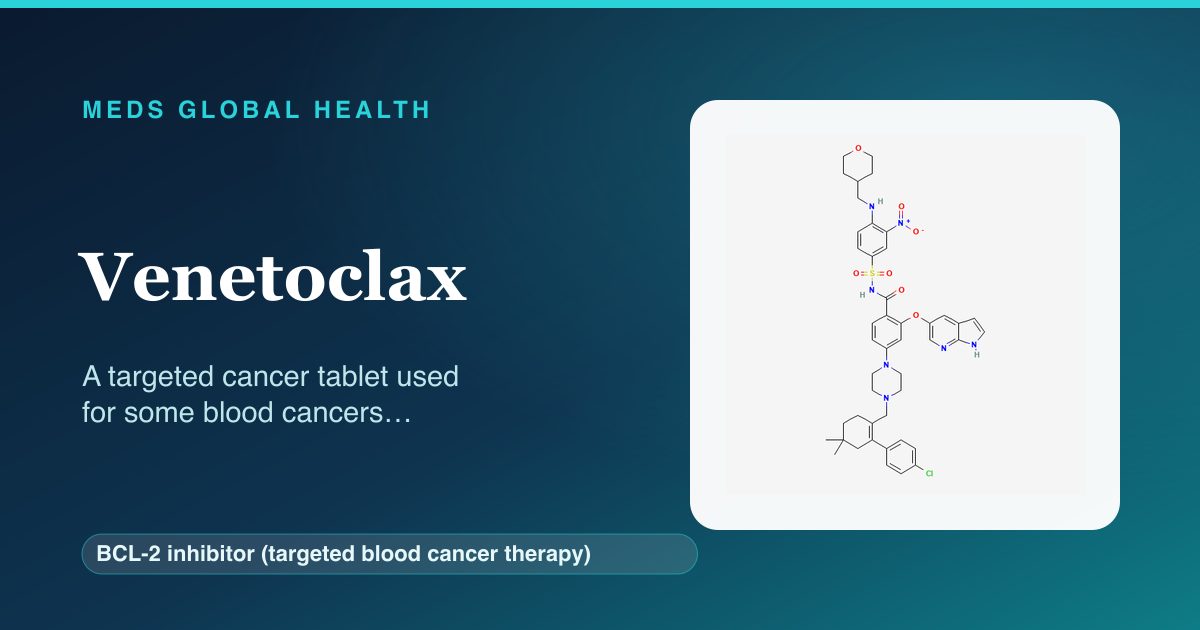
What it is
Venetoclax is a targeted cancer medicine taken as tablets, used for some blood cancers, including chronic lymphocytic leukaemia (CLL) and acute myeloid leukaemia (AML). It belongs to a group of medicines that block a protein called BCL-2, which cancer cells use to stay alive. By blocking BCL-2, venetoclax prompts the cancer cells to die. Because it can destroy large numbers of cancer cells quickly, it is started gradually with careful monitoring. It is prescribed and supervised by a specialist blood-cancer team.
How it works
Cancer cells often survive by overproducing a protein called BCL-2, which blocks the natural 'self-destruct' process that normally clears damaged or unwanted cells. Venetoclax attaches to BCL-2 and switches off this survival signal, allowing the cancer cells to undergo their natural self-destruction and die. Because this can happen rapidly and in large numbers, the breakdown products of dying cells can flood the bloodstream and cause tumour lysis syndrome, which is why the dose is increased step by step and why hydration and blood tests are so important when treatment begins.
Company & origin
A specialist targeted cancer tablet used in the UK for some blood cancers, such as chronic lymphocytic leukaemia (CLL) and acute myeloid leukaemia (AML).
Practical use
How to take Venetoclax
General, dose-free guidance — always follow your prescriber's and the leaflet's specific instructions.
- Take the tablets with food and water, at about the same time each day, following the gradual dose build-up (ramp-up) exactly as instructed.
- Drink plenty of fluids as advised, especially when starting and increasing the dose, to help protect your kidneys.
- Avoid grapefruit, grapefruit juice and Seville oranges, which can raise the medicine's levels.
- Tell your team about all your medicines, as some strongly affect venetoclax, and treat any fever or infection as urgent.
- Use effective contraception during treatment and for the period your team advises, as it can harm an unborn baby.
Weighing it up
Advantages & disadvantages of Venetoclax
Advantages
- A targeted tablet that can be very effective in some blood cancers such as CLL and AML.
- Taken by mouth, often as part of time-limited treatment plans for some cancers.
- Works in a different way to chemotherapy by switching on cancer cells' natural self-destruction.
Disadvantages
- Carries a risk of tumour lysis syndrome when starting, needing a gradual dose build-up, hydration and close blood tests.
- Lowers the infection-fighting white cells and can cause serious infections.
- Interacts with grapefruit and several medicines, which must be avoided or managed during ramp-up.
Practical use
Good to know
The single most important point with venetoclax is the risk of tumour lysis syndrome when treatment starts. As many cancer cells die at once, they release chemicals such as potassium, phosphate and uric acid that can harm the kidneys and the heart's rhythm. To manage this, venetoclax is started at a low dose and built up gradually over several weeks (a 'ramp-up'), with plenty of fluids to drink, sometimes extra fluids by drip, and frequent blood tests. During this period it is important to avoid grapefruit and Seville oranges, and certain medicines that strongly affect how venetoclax is broken down (strong CYP3A inhibitors), as these can raise its levels and the risk. It also lowers the white cells that fight infection, so any fever or sign of infection should be reported urgently. Effective contraception is important because it can harm an unborn baby.
Who should not take it / use with caution
- People who have had a serious allergic reaction to venetoclax should not take it.
- Strong medicines that affect how venetoclax is broken down (strong CYP3A inhibitors) must not be used during the dose build-up.
- It is avoided in pregnancy because it can harm an unborn baby; it is given only under specialist blood-cancer care.
Monitoring
- Frequent blood tests for blood salts, kidney function and blood counts, especially when starting and increasing the dose.
- Hydration and watching for signs of tumour lysis syndrome during the dose build-up.
- Watching for signs of infection and reviewing how the cancer is responding.
Side effects
- A fall in the white cells that fight infection, raising the risk of serious infection.
- Tumour lysis syndrome early on, with changes in blood salts that can affect the kidneys and heart.
- Diarrhoea, nausea, tiredness and a fall in red cells (anaemia) or platelets.
- Less commonly but seriously, severe infections including pneumonia and blood infection (sepsis).
Key interactions
- Grapefruit, grapefruit juice and Seville oranges raise venetoclax levels and must be avoided.
- Strong medicines that affect the CYP3A pathway (some antifungals and antibiotics) can dangerously raise its levels, especially during ramp-up.
- Other medicines that lower blood counts add to the infection risk; always give your team a full medicines list.
Available as: Tablets taken by mouth.
Answers
Venetoclax: frequently asked questions
What is venetoclax used for?
It is a targeted cancer tablet used for some blood cancers, such as chronic lymphocytic leukaemia (CLL) and acute myeloid leukaemia (AML).
What is tumour lysis syndrome?
It is a serious problem where many cancer cells die quickly and release chemicals that can harm the kidneys and heart; the dose is built up slowly with fluids and blood tests to reduce the risk.
Why must I avoid grapefruit?
Grapefruit and Seville oranges, along with certain medicines, can raise venetoclax levels in the body and increase the risk of side effects, especially when starting.
Why is my dose increased slowly?
Starting low and building up gradually (a ramp-up) lowers the risk of tumour lysis syndrome by avoiding too many cancer cells dying at once.
What should I do if I get a temperature?
Venetoclax lowers the white cells that fight infection, so treat any fever or sign of infection as urgent and contact your team straight away.
Authoritative sources
- BNF
- NICE CKS
Building a medicines information resource?
We create evidence-led, dose-free drug and formulary references for teams.