An oestrogen-receptor-degrading hormone therapy for breast cancer
Vepdegestrant
A newer specialist hormone therapy used in some forms of hormone-receptor-positive advanced breast cancer.
What is Vepdegestrant?
Vepdegestrant is a newer specialist hormone (endocrine) therapy for certain types of breast cancer that are hormone-receptor positive (ER-positive). It belongs to a class that does not just block the oestrogen receptor but actually marks it for destruction, using a technology known as a PROTAC. By removing this receptor, it cuts off a key signal that drives some breast cancers to grow. Common side effects include hot flushes, tiredness, low blood counts and raised liver enzymes on blood tests. It is a specialist cancer medicine used and monitored by an oncology team.
Education and reference only. This is a plain-language guide to Vepdegestrant — it deliberately contains no doses. Doses depend on the person, the brand and the reason for treatment, and belong with your prescriber. Always check the BNF, the product labelling (SmPC) and follow medical advice.
What it is
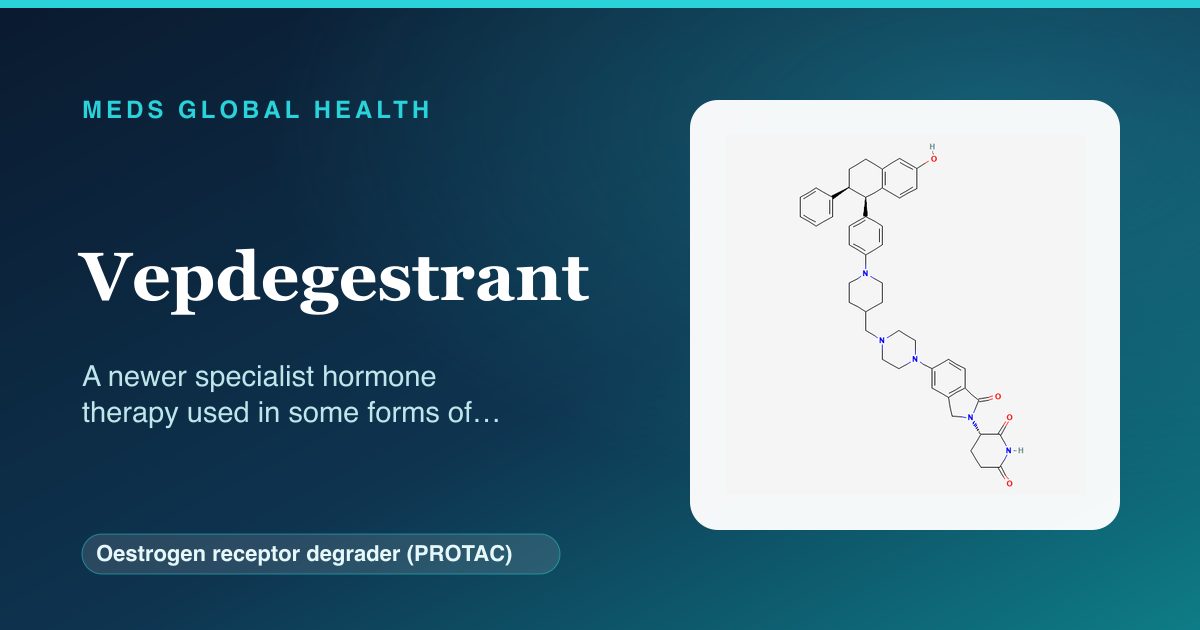
Vepdegestrant is a hormone therapy used to treat some forms of advanced breast cancer that depend on the hormone oestrogen to grow, known as oestrogen-receptor-positive (ER-positive) breast cancer. It is a newer type of medicine called an oestrogen receptor degrader; rather than simply blocking the receptor, it tags it so the cell's own machinery breaks it down. The particular technology behind it is known as a PROTAC. It is taken by mouth and is a specialist cancer treatment, prescribed and supervised by an oncology team.
How it works
Many breast cancers grow because the hormone oestrogen attaches to a receptor inside the cancer cells, switching on signals that tell the cells to multiply. Vepdegestrant works by latching on to this oestrogen receptor and flagging it for the cell's natural disposal system, so the receptor is broken down and removed. With fewer receptors present, oestrogen has far less effect, and the growth signal driving the cancer is reduced. Because this removes the receptor altogether rather than just blocking it temporarily, it offers a different way of cutting off the hormone signal in cancers that have become harder to treat.
Company & origin
A newer specialist hormone therapy that breaks down the oestrogen receptor, used in certain hormone-receptor-positive advanced breast cancers.
Practical use
How to take Vepdegestrant
General, dose-free guidance — always follow your prescriber's and the leaflet's specific instructions.
- Take it by mouth exactly as your oncology team directs, at around the same time each day.
- Attend your blood tests, as they check your blood counts and liver during treatment.
- Tell your team about all your other medicines, as some can interact with it.
- Report new symptoms such as signs of infection, unusual tiredness, or yellowing of the skin or eyes.
- Discuss contraception and pregnancy with your team, as hormone therapy can affect a pregnancy.
Weighing it up
Advantages & disadvantages of Vepdegestrant
Advantages
- Targets and removes the oestrogen receptor that drives some breast cancers, offering a different approach.
- Taken by mouth rather than as an injection.
- A newer option for certain hormone-receptor-positive advanced breast cancers.
Disadvantages
- Can cause hot flushes and tiredness, like other hormone therapies.
- Can lower blood counts and raise liver enzymes, needing regular blood tests.
- A newer, specialist medicine whose long-term effects are still being learned.
Practical use
Good to know
Vepdegestrant is a specialist cancer medicine, so the most important point is that it is used and closely monitored by an oncology team as part of a wider treatment plan. The most common effects people notice are hot flushes and tiredness, much like other hormone therapies for breast cancer. Blood tests are important because it can lower the blood counts, including the cells that fight infection, and can raise liver enzymes, which the team checks regularly. As a newer medicine, the full picture of its long-term effects is still being built, so reporting any new symptoms matters. It is important to tell the team about all your other medicines, and, because hormone therapies can affect a pregnancy, contraception and pregnancy are discussed carefully where relevant.
Who should not take it / use with caution
- People who have had a serious allergic reaction to it should not take it.
- It is not suitable in pregnancy, and pregnancy should be avoided during treatment.
- It is used with caution in people with significant liver problems or low blood counts.
- It should only be used under the care of a specialist oncology team.
Monitoring
- Regular blood tests to check blood counts and liver function.
- Reviewing how well the cancer is responding to treatment.
- Watching for and managing side effects over time.
Side effects
- Hot flushes and tiredness.
- Low blood counts, including cells that fight infection.
- Raised liver enzymes on blood tests.
- Nausea, joint aches or other effects that should be reported to the team.
Key interactions
- Some medicines can raise or lower its levels in the body, so a full medicines list is important.
- Care is needed with other medicines that can affect the liver or blood counts.
- Tell your team about any supplements or herbal products as well as prescribed medicines.
Available as: Tablets taken by mouth.
Answers
Vepdegestrant: frequently asked questions
What is vepdegestrant used for?
It is a specialist hormone therapy for certain hormone-receptor-positive (ER-positive) advanced breast cancers, helping to switch off a key signal that drives their growth.
How is it different from other hormone therapies?
Rather than just blocking the oestrogen receptor, it marks the receptor for destruction so the cell breaks it down, using a technology known as a PROTAC.
What are the common side effects?
Common effects include hot flushes, tiredness, low blood counts and raised liver enzymes on blood tests, which the oncology team monitors.
Why do I need regular blood tests?
Blood tests check your blood counts and liver, because the medicine can lower the counts and raise liver enzymes, allowing problems to be caught early.
Is it safe in pregnancy?
No, hormone therapies like this can harm a pregnancy, so it is not used in pregnancy and contraception is discussed with your team where relevant.
Authoritative sources
- BNF
- NICE CKS
Building a medicines information resource?
We create evidence-led, dose-free drug and formulary references for teams.