An oral targeted medicine for tenosynovial giant cell tumour
Vimseltinib
A targeted oral medicine used to treat tenosynovial giant cell tumour, a growth in or around a joint.
What is Vimseltinib?
Vimseltinib is a targeted oral medicine used to treat tenosynovial giant cell tumour (TGCT), a non-cancerous but often troublesome growth in or around a joint or tendon. It is a CSF1R inhibitor, meaning it blocks a signal that drives this tumour to grow, and is used when surgery would cause serious problems. It is taken as a capsule under specialist care. Important safety points are that it can raise liver enzymes and harm the liver, can cause swelling (oedema) and can raise a muscle marker called CK. It is prescribed and monitored by a specialist team.
Education and reference only. This is a plain-language guide to Vimseltinib — it deliberately contains no doses. Doses depend on the person, the brand and the reason for treatment, and belong with your prescriber. Always check the BNF, the product labelling (SmPC) and follow medical advice.
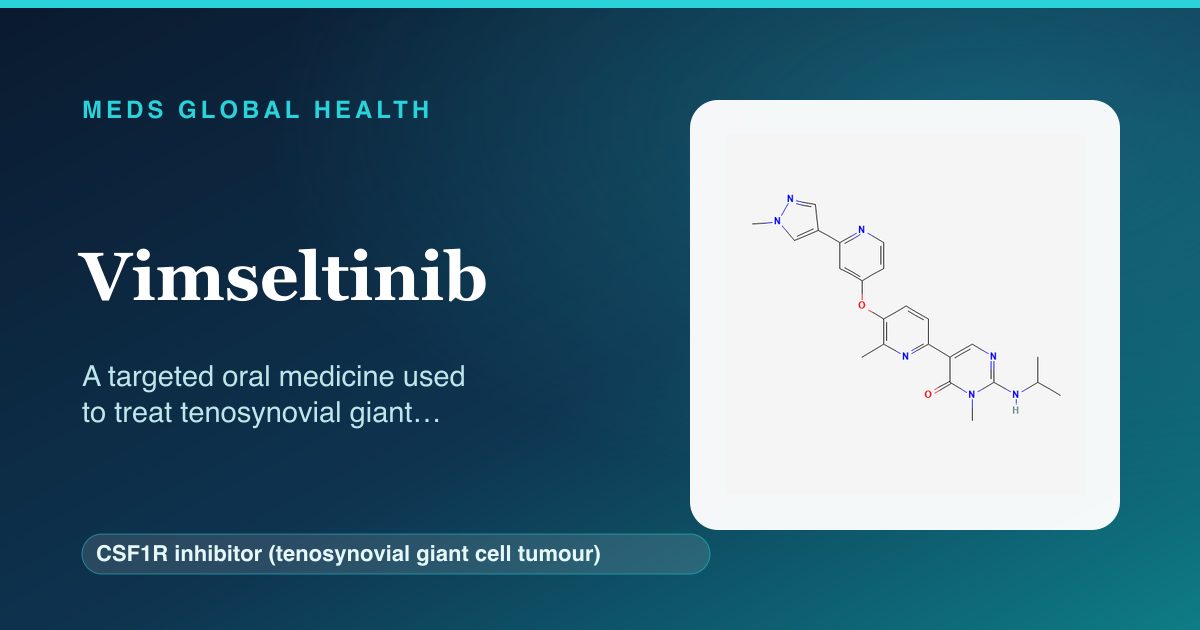
What it is
Vimseltinib is a targeted medicine used to treat tenosynovial giant cell tumour (TGCT), a growth that develops in or around a joint or tendon. Although TGCT is not a cancer, it can cause swelling, pain, stiffness and damage to the joint, and surgery is not always possible or may cause significant problems. Vimseltinib is taken by mouth and works by blocking a specific signal (CSF1R) that drives the tumour to grow. It is used in adults when surgery would not be a good option, and is prescribed and supervised by a specialist team.
How it works
Tenosynovial giant cell tumour grows because of overactivity of a signalling system involving a protein called CSF1, which acts through a receptor called CSF1R to recruit and activate the cells that build up the tumour. Vimseltinib is a CSF1R inhibitor: it blocks this receptor, switching off the signal that tells these cells to gather and multiply. With the driving signal blocked, the tumour can shrink and symptoms such as swelling and pain can improve. Because it works on an ongoing process, it is taken regularly and the response is reviewed over time, with monitoring for its side effects.
Company & origin
A targeted oral medicine used to treat tenosynovial giant cell tumour, a non-cancerous but troublesome joint tumour.
Practical use
How to take Vimseltinib
General, dose-free guidance — always follow your prescriber's and the leaflet's specific instructions.
- Take the capsule by mouth as your specialist team directs.
- Attend regular blood tests to check your liver and the muscle marker CK.
- Report any yellowing of the skin or eyes, dark urine or unusual tiredness, as these can signal liver problems.
- Tell your team about any new swelling of the face, eyes, hands or legs.
- Give a full list of your other medicines, as some can interact with vimseltinib.
Weighing it up
Advantages & disadvantages of Vimseltinib
Advantages
- Targets the signal that drives tenosynovial giant cell tumour, helping it shrink.
- An oral option for people in whom surgery would cause serious problems.
- Can ease symptoms such as swelling, pain and stiffness in the affected joint.
Disadvantages
- Can raise liver enzymes and, in some people, cause liver harm.
- Can cause swelling (oedema) and raise the muscle marker CK.
- Needs regular monitoring and specialist supervision.
Practical use
Good to know
The most important safety point with vimseltinib is its effect on the liver: it can raise liver enzymes and, in some people, cause more significant liver problems, so liver blood tests are checked regularly and any yellowing of the skin or eyes, dark urine or unusual tiredness should be reported. It can also cause swelling (oedema), for example around the eyes, face, hands or legs, and can raise a muscle blood marker called CK (creatine kinase), which is also monitored. Because it is a specialist targeted medicine, regular reviews are used to weigh up how well it is shrinking the tumour and easing symptoms against its side effects. It is taken as a capsule as directed, and it is important to keep to monitoring appointments and tell the team about other medicines, as some can interact.
Who should not take it / use with caution
- People who have had a serious allergic reaction to vimseltinib should not take it.
- It is used with caution in people with existing liver problems, with close monitoring of liver blood tests.
- It is avoided or used with care in pregnancy and breastfeeding, on specialist advice.
- It should only be used under a specialist team experienced in treating this tumour.
Monitoring
- Regular liver blood tests, especially in the early months of treatment.
- Checking the muscle marker CK and watching for swelling (oedema).
- Reviewing how well the tumour and symptoms are responding over time.
Side effects
- Raised liver enzymes and, less commonly, more significant liver problems.
- Swelling (oedema), for example around the eyes, face, hands or legs.
- A raised muscle marker called CK (creatine kinase).
- Tiredness, rash or stomach upset in some people.
Key interactions
- Some medicines change how vimseltinib is broken down by the body, so a full medicines list is important.
- Other medicines that affect the liver are used with care alongside it.
- Tell your team about everything you take, including supplements, before and during treatment.
Available as: Capsules taken by mouth.
Answers
Vimseltinib: frequently asked questions
What is vimseltinib used for?
It is a targeted oral medicine used to treat tenosynovial giant cell tumour, a non-cancerous but troublesome growth in or around a joint, when surgery would cause serious problems.
Is tenosynovial giant cell tumour a cancer?
No, it is not a cancer, but it can cause swelling, pain, stiffness and joint damage, which is why treatment is sometimes needed when surgery is not a good option.
Why are liver blood tests needed?
Vimseltinib can raise liver enzymes and sometimes cause liver problems, so liver blood tests are checked regularly and liver symptoms should be reported.
Can it cause swelling?
Yes, it can cause swelling (oedema), for example around the eyes, face, hands or legs, so tell your team about any new swelling.
Why does my team check a muscle marker?
It can raise a blood marker from muscle called CK (creatine kinase), so this is monitored along with your liver during treatment.
Authoritative sources
- BNF
- NICE CKS
Building a medicines information resource?
We create evidence-led, dose-free drug and formulary references for teams.