Tocopherol
Vitamin E
A fat-soluble antioxidant vitamin used to prevent and treat vitamin E deficiency, which is uncommon as most people get enough from their diet.
What is Vitamin E?
Vitamin E, also called tocopherol, is a fat-soluble vitamin that acts as an antioxidant, helping to protect cells from damage. Supplements are used to prevent and treat vitamin E deficiency, although true deficiency is uncommon because most people get enough from a normal diet of oils, nuts, seeds and green vegetables. It is generally very safe at sensible amounts, but taking high amounts over a long time may slightly affect blood clotting and is not recommended without advice. As with other vitamins, more is not automatically better.
Education and reference only. This is a plain-language guide to Vitamin E — it deliberately contains no doses. Doses depend on the person, the brand and the reason for treatment, and belong with your prescriber. Always check the BNF, the product labelling (SmPC) and follow medical advice.
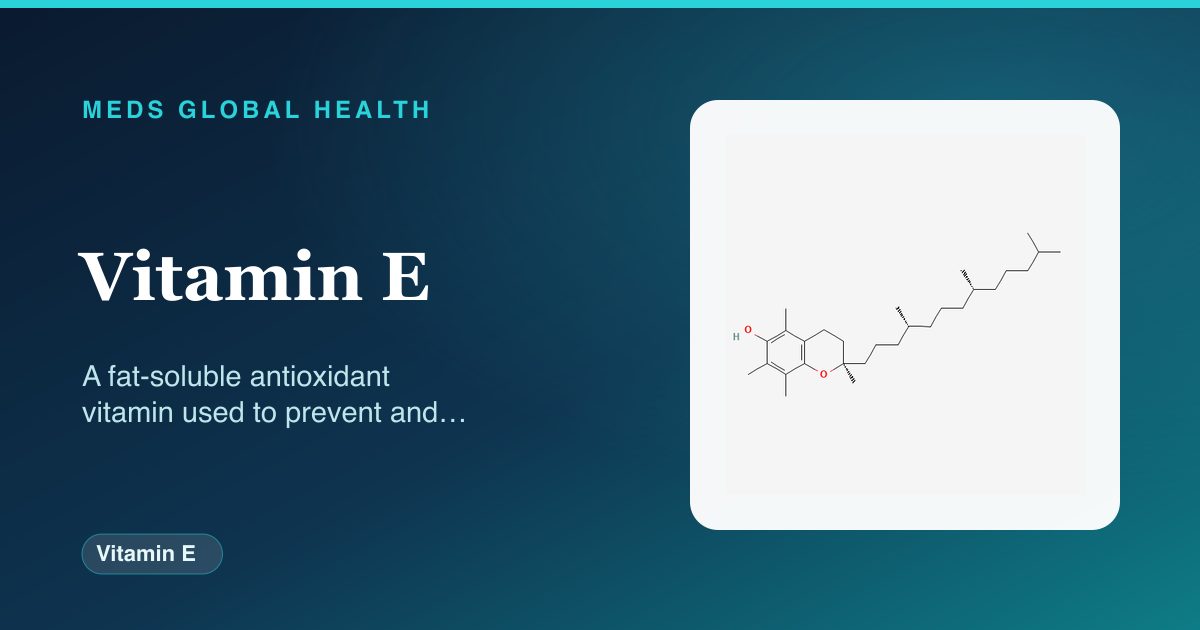
What it is
Vitamin E is the name for a group of fat-soluble compounds, the most active being alpha-tocopherol. It is found in vegetable oils, nuts, seeds, wheatgerm and green leafy vegetables. Its main role is as an antioxidant, helping to protect the body's cells, including red blood cells, from damage. Because it is fat-soluble, the body can store it, and deficiency is uncommon, usually occurring only in conditions that affect the absorption of fat. As a supplement it is taken to prevent or correct deficiency.
How it works
Vitamin E works mainly as an antioxidant, sitting within the fatty parts of cell membranes and helping to neutralise unstable molecules that could otherwise damage cells. This helps keep cell membranes, including those of red blood cells, healthy. When deficiency is corrected, the body's natural defences against this kind of damage are restored. Because it is fat-soluble, vitamin E is absorbed alongside dietary fat and stored in body tissues, so a regular large supply is not usually needed.
Company & origin
Vitamin E was discovered in the 1920s as a factor in the diet needed for normal reproduction in animals, and was later recognised as an important antioxidant.
Practical use
How to take Vitamin E
General, dose-free guidance — always follow your prescriber's and the leaflet's specific instructions.
- Take it as advised, usually once a day, ideally with a meal as it is absorbed better with food.
- There is no need for large amounts, as deficiency is uncommon and the body can store vitamin E.
- If you take a blood thinner such as warfarin, tell your prescriber before taking high-dose vitamin E.
- Tell your healthcare team you take it if you are due to have surgery.
- Most people get enough from a balanced diet, so supplements are mainly for those who cannot absorb it well.
Weighing it up
Advantages & disadvantages of Vitamin E
Advantages
- Effectively prevents and treats vitamin E deficiency and supports the body's antioxidant defences.
- Generally very safe and well tolerated at sensible amounts.
- Useful in conditions where fat absorption is poor and deficiency can occur.
Disadvantages
- True deficiency is uncommon, so supplements are often unnecessary.
- High amounts over a long time may slightly affect blood clotting.
- There is no proven benefit in taking large amounts to prevent disease.
Practical use
Good to know
True vitamin E deficiency is uncommon and tends to happen only in people who cannot absorb fat properly, such as some digestive or liver conditions, or in babies born very early. Most people get enough from a normal diet, so routine supplements are rarely necessary. It is generally very safe, but the main caution is that taking high amounts over a long time may have a small effect on blood clotting, which matters for people on blood-thinning medicines or facing surgery. There is no proven benefit in taking large amounts to prevent disease, and high-dose long-term use should be on advice rather than taken on the assumption that more is better.
Who should not take it / use with caution
- People taking blood-thinning medicines should avoid high-dose vitamin E unless advised.
- Those due to have surgery should mention high-dose use, as it may affect bleeding.
- Long-term high-dose use should be avoided unless specifically recommended by a clinician.
Monitoring
- Reviewing whether a supplement is genuinely needed or whether diet provides enough.
- Watching for any increased bleeding or bruising with high-dose use, especially alongside blood thinners.
- Checking response in people given it for deficiency due to poor fat absorption.
Side effects
- Usually none at sensible amounts; occasionally nausea or stomach upset with large amounts.
- High amounts over time may slightly increase the tendency to bleed.
- Rarely, tiredness or headache.
Key interactions
- May add to the effect of blood-thinning medicines such as warfarin, increasing bleeding risk.
- Can interact with some other supplements that affect clotting, such as fish oils.
- Absorption may be affected by medicines or conditions that reduce fat absorption.
Available as: Capsules and tablets taken by mouth.
Answers
Vitamin E: frequently asked questions
What is vitamin E used for?
It is used to prevent and treat vitamin E deficiency, acting mainly as an antioxidant that helps protect the body's cells; true deficiency is uncommon as most people get enough from their diet.
Is it safe to take vitamin E every day?
At sensible amounts it is very safe, but taking high amounts over a long time may slightly affect blood clotting, so high-dose use should be on advice.
Can it thin my blood?
High amounts may have a small effect on clotting, so tell your prescriber if you take a blood thinner or are due to have surgery.
Do I need a vitamin E supplement?
Most people get enough from a balanced diet of oils, nuts, seeds and green vegetables, so supplements are mainly for those who cannot absorb fat properly.
Will taking a lot prevent disease?
There is no proven benefit in taking large amounts to prevent disease, and more is not automatically better.
Authoritative sources
- BNF
- NICE CKS
Building a medicines information resource?
We create evidence-led, dose-free drug and formulary references for teams.