A leukotriene-receptor antagonist tablet for asthma
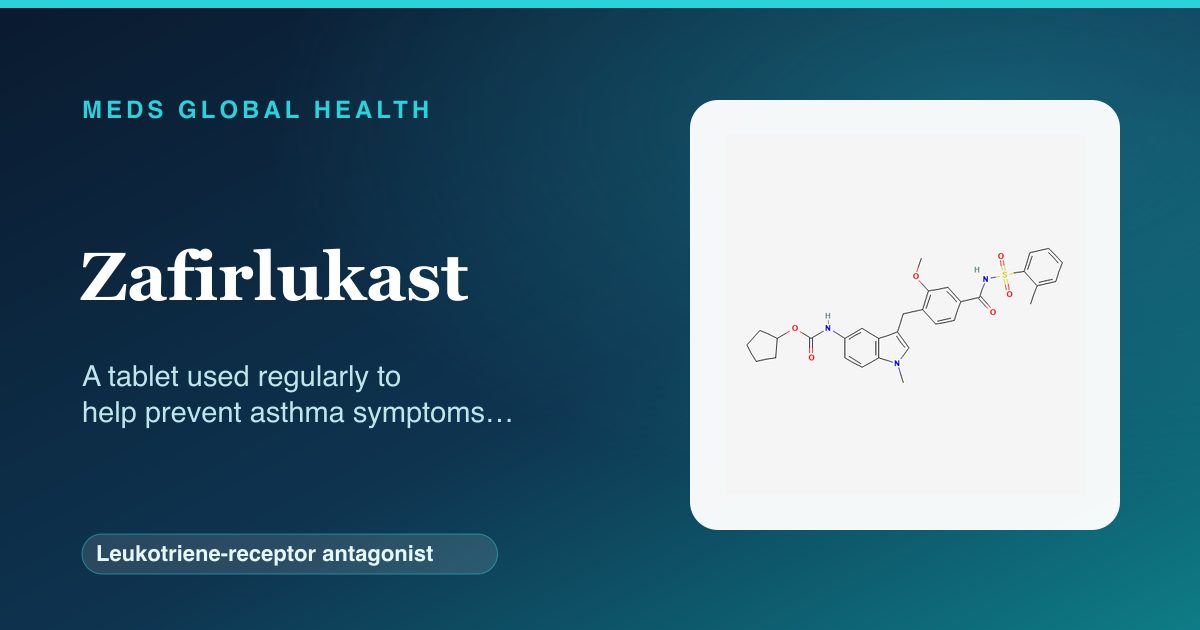
Zafirlukast
A tablet used regularly to help prevent asthma symptoms, not to treat a sudden attack.
What is Zafirlukast?
Zafirlukast is a leukotriene-receptor antagonist, a preventer tablet taken regularly to help control asthma. It works by blocking leukotrienes, chemicals that cause the airways to tighten and become inflamed. It is taken every day to reduce symptoms and is not for treating a sudden asthma attack, for which a reliever inhaler is still needed. Its most important risk is rare liver injury, so any yellowing of the skin or eyes, persistent nausea or tummy pain should be reported. It has also been linked with mood and behaviour changes and, rarely, a condition called Churg-Strauss syndrome.
Education and reference only. This is a plain-language guide to Zafirlukast — it deliberately contains no doses. Doses depend on the person, the brand and the reason for treatment, and belong with your prescriber. Always check the BNF, the product labelling (SmPC) and follow medical advice.
What it is
Zafirlukast is a preventer medicine for asthma from the group called leukotriene-receptor antagonists. It is taken as a regular tablet to help keep asthma under control, reducing symptoms such as wheezing, coughing and breathlessness over time. It is used alongside other asthma treatments, not on its own for sudden symptoms, and it does not replace a reliever inhaler during an attack. It is taken every day to work in the background, and it is one option for people whose asthma is not fully controlled by their inhalers alone.
How it works
In asthma, the body releases chemicals called leukotrienes that make the airways tighten, swell and produce mucus, leading to symptoms. Zafirlukast blocks the receptors that leukotrienes act on, so the airways stay more open and less inflamed. Because it works steadily over time rather than instantly, it is taken regularly as a preventer rather than as a rescue treatment. This is why it does not help during a sudden attack and why a fast-acting reliever inhaler is still essential.
Company & origin
A preventer tablet used in the UK to help control asthma, taken regularly rather than during an attack.
What it treats
Conditions Zafirlukast is used for
Practical use
How to take Zafirlukast
General, dose-free guidance — always follow your prescriber's and the leaflet's specific instructions.
- Take it regularly every day as a preventer, even when you feel well, to keep your asthma controlled.
- Keep using your reliever inhaler for sudden symptoms, as zafirlukast does not treat an attack.
- Take it away from food, as food can reduce how well it is absorbed.
- Report any yellowing of the skin or eyes, persistent nausea, tummy pain or unusual tiredness straight away.
- Tell your doctor about any changes in mood, sleep or behaviour, or new symptoms such as a rash or numbness.
Weighing it up
Advantages & disadvantages of Zafirlukast
Advantages
- A tablet option that helps control asthma, useful for people who prefer not to rely only on inhalers.
- Taken by mouth, which some people find easier than extra inhaler steps.
- Works steadily in the background to reduce asthma symptoms over time.
Disadvantages
- Does not treat a sudden asthma attack, so a reliever inhaler is still essential.
- Can rarely cause liver injury, so symptoms such as jaundice must be reported.
- Has been linked with mood and behaviour changes and, very rarely, Churg-Strauss syndrome.
Practical use
Good to know
The first thing to understand is that zafirlukast is a preventer taken every day, not a rescue medicine: it will not relieve a sudden asthma attack, so you must keep and use your reliever inhaler and have an asthma action plan. The most important safety point is that it can rarely cause liver injury, so you should report any yellowing of the skin or eyes, dark urine, persistent nausea, vomiting, tummy pain or unusual tiredness straight away. It has also been linked with changes in mood and behaviour, such as low mood, anxiety, sleep problems or, rarely, thoughts of self-harm, which should be reported. Very rarely it has been associated with Churg-Strauss syndrome, an inflammation of blood vessels; tell your doctor about new symptoms such as a rash, worsening breathing, numbness or tingling. It is usually taken away from food, as food can reduce how well it is absorbed.
Who should not take it / use with caution
- People who have had a serious allergic reaction to zafirlukast should not take it.
- It is used with caution, and is generally avoided, in people with liver problems.
- It is used with care in people with a history of mental-health problems, and advice should be sought in pregnancy and breastfeeding.
Monitoring
- Reviewing how well asthma is controlled, including reliever inhaler use and symptoms.
- Watching for signs of liver problems, with liver blood tests if symptoms occur.
- Asking about mood and behaviour changes and any new Churg-Strauss-type symptoms.
Side effects
- Headache or stomach upset.
- Rarely, liver injury, which may show as yellowing of the skin or eyes, nausea or tummy pain.
- Changes in mood, sleep or behaviour in some people.
- Very rarely, Churg-Strauss syndrome, an inflammation of blood vessels.
Key interactions
- It can increase the effect of warfarin, a blood thinner, so clotting may need closer monitoring.
- Some medicines, such as certain stomach-acid and aspirin-type medicines, can affect its levels.
- Tell your prescriber about all your medicines, especially any that affect the liver.
Available as: Tablets taken by mouth, usually away from food.
Answers
Zafirlukast: frequently asked questions
What is zafirlukast used for?
It is a preventer tablet taken regularly to help control asthma by blocking leukotrienes, chemicals that tighten and inflame the airways.
Can I use it for an asthma attack?
No. Zafirlukast is a daily preventer and does not relieve a sudden attack, so you must keep using your reliever inhaler and follow your asthma action plan.
Why must I watch for jaundice?
It can rarely cause liver injury, so report any yellowing of the skin or eyes, dark urine, persistent nausea, tummy pain or unusual tiredness straight away.
Can it affect my mood?
It has been linked with changes in mood, sleep and behaviour, such as low mood or anxiety, so tell your doctor about any such changes.
Should I take it with food?
It is usually taken away from food, as food can reduce how well it is absorbed; follow the advice you are given on timing.
The wider class
About Leukotriene-receptor antagonist
Zafirlukast belongs to the leukotriene-receptor antagonist class. For how the class as a whole works, its shared safety principles and monitoring, see the full guide.
Browse by body system
Authoritative sources
- BNF
- NICE CKS
Building a medicines information resource?
We create evidence-led, dose-free drug and formulary references for teams.