A short oral course for postnatal depression
Zuranolone
A medicine taken by mouth as a short course to treat postnatal (postpartum) depression.
What is Zuranolone?
Zuranolone is a specialist medicine taken by mouth as a short course to treat postnatal (postpartum) depression, the depression that can develop after having a baby. It works on a calming brain signalling system to help lift mood, and is taken for a short defined period rather than long term. The dominant safety point is that it commonly causes drowsiness and sedation, so you must not drive or operate machinery while taking it and for a time afterwards. As with other depression treatments, mood and any suicidal thoughts are watched closely, and because it may harm a developing baby, effective contraception is advised during and for a time after the course. It is used under specialist supervision.
Education and reference only. This is a plain-language guide to Zuranolone — it deliberately contains no doses. Doses depend on the person, the brand and the reason for treatment, and belong with your prescriber. Always check the BNF, the product labelling (SmPC) and follow medical advice.
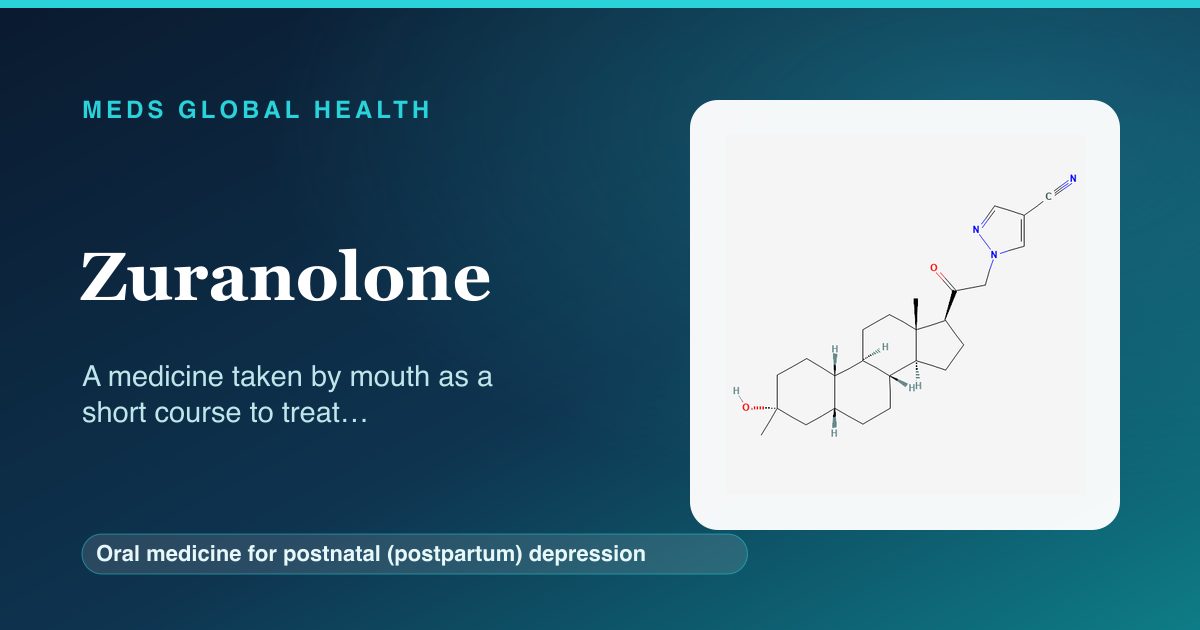
What it is
Zuranolone is a specialist medicine taken by mouth to treat postnatal (postpartum) depression, a form of depression that can develop in the weeks and months after having a baby. Unlike many antidepressants that are taken continuously, it is given as a short, defined course. It works on a calming chemical system in the brain to help improve mood. Because of its effects, particularly drowsiness, and the need to monitor mood, it is prescribed and supervised carefully, often by or with specialist mental-health input. It is used as part of a wider plan of support for postnatal depression.
How it works
Zuranolone works on a brain signalling system involving a calming chemical messenger called GABA, boosting its soothing effect on nerve activity, which is thought to help lift the low mood of postnatal depression. Because it works on this calming system, drowsiness and sedation are a natural part of its action, especially soon after each dose. It is designed to be taken as a short course rather than continuously, with the aim of improving mood over that period. Mood is watched throughout, since changes in mood and, rarely, thoughts of self-harm need to be picked up early in anyone being treated for depression.
Company & origin
A specialist medicine taken by mouth as a short course to treat postnatal (postpartum) depression, used under specialist supervision.
What it treats
Conditions Zuranolone is used for
Practical use
How to take Zuranolone
General, dose-free guidance — always follow your prescriber's and the leaflet's specific instructions.
- Take it by mouth as a short, defined course exactly as prescribed, usually in the evening and often with food.
- Do not drive, ride or operate machinery while taking it and for the period afterwards that you are advised.
- Report any new or worsening low mood, agitation or thoughts of harming yourself urgently.
- Use effective contraception during the course and for a time afterwards, as it may harm a developing baby.
- Discuss pregnancy and breastfeeding with your prescriber before starting.
Weighing it up
Advantages & disadvantages of Zuranolone
Advantages
- Specifically used to treat postnatal (postpartum) depression as a short course rather than long-term treatment.
- Taken by mouth and works on a calming brain system to help lift mood.
- Given as a defined course, with a clear start and finish.
Disadvantages
- Commonly causes drowsiness and sedation, so you must not drive or operate machinery.
- Mood needs close monitoring, including watching for any thoughts of self-harm.
- May harm a developing baby, so contraception is needed and it is used under specialist supervision.
Practical use
Good to know
The dominant thing to understand about zuranolone is that it commonly causes drowsiness and sedation: you must not drive, ride or operate machinery while taking it and for a period afterwards, as advised, because your reactions and alertness can be affected even if you do not feel very sleepy. It is taken as a short, defined course rather than long term, usually in the evening, and taking it with food may be advised. As with all treatments for depression, your mood is watched closely, and any new or worsening low mood, agitation or thoughts of harming yourself should be reported urgently. Because it may harm a developing baby, effective contraception is advised during the course and for a time afterwards, and pregnancy and breastfeeding should be discussed with your prescriber. It is used under specialist supervision alongside other support for postnatal depression.
Who should not take it / use with caution
- It must not be used in pregnancy because it may harm a developing baby, and effective contraception is advised.
- People who have had a serious allergic reaction to zuranolone should not take it.
- It is used with caution, and only under specialist guidance, alongside other medicines that cause drowsiness or affect mood.
Monitoring
- Watching mood closely, including for any new or worsening thoughts of self-harm.
- Checking how drowsy or sedated the medicine is making you and advising on driving.
- Reviewing contraception and pregnancy plans during and after the course.
Side effects
- Drowsiness and sedation, which is why you must not drive or operate machinery.
- Dizziness, tiredness or headache.
- Rarely but importantly, worsening mood or thoughts of self-harm, which need urgent attention.
Key interactions
- Alcohol and other medicines that cause drowsiness, such as some painkillers and sleep medicines, add to its sedating effect.
- Other medicines that act on the brain or affect mood may interact, so tell your prescriber everything you take.
- Some medicines can change the levels of zuranolone in the body, so a full medicines list is important.
Available as: Capsules taken by mouth as a short course.
Answers
Zuranolone: frequently asked questions
What is zuranolone used for?
It is taken by mouth as a short course to treat postnatal (postpartum) depression, the depression that can develop after having a baby.
Can I drive while taking it?
No. Zuranolone commonly causes drowsiness and sedation, so you must not drive, ride or operate machinery while taking it and for the period afterwards you are advised.
How long do I take it for?
It is taken as a short, defined course rather than long term; your prescriber will tell you exactly how long to take it.
Is it safe in pregnancy?
No. It may harm a developing baby, so it must not be used in pregnancy, and effective contraception is advised during the course and for a time afterwards.
What should I do if my mood gets worse?
As with all depression treatments, report any new or worsening low mood, agitation or thoughts of harming yourself urgently, as mood is watched closely.
Authoritative sources
- BNF
- NICE CKS
Building a medicines information resource?
We create evidence-led, dose-free drug and formulary references for teams.