An oral JAK inhibitor for eczema
Abrocitinib
An oral tablet used for moderate to severe atopic eczema that works by calming an overactive immune response in the skin.
What is Abrocitinib?
Abrocitinib is a specialist tablet used for adults with moderate to severe atopic eczema when creams and other treatments have not controlled it well enough. It belongs to a group of medicines called JAK inhibitors, which dampen down the overactive immune signals that drive the itching, redness and inflammation of eczema. It is taken by mouth once a day. As with other JAK inhibitors, it carries important safety warnings about serious infections, blood clots, heart and circulation problems and certain cancers, especially in older people and smokers, so people are screened and monitored carefully and vaccinations are checked before starting.
Education and reference only. This is a plain-language guide to Abrocitinib — it deliberately contains no doses. Doses depend on the person, the brand and the reason for treatment, and belong with your prescriber. Always check the BNF, the product labelling (SmPC) and follow medical advice.
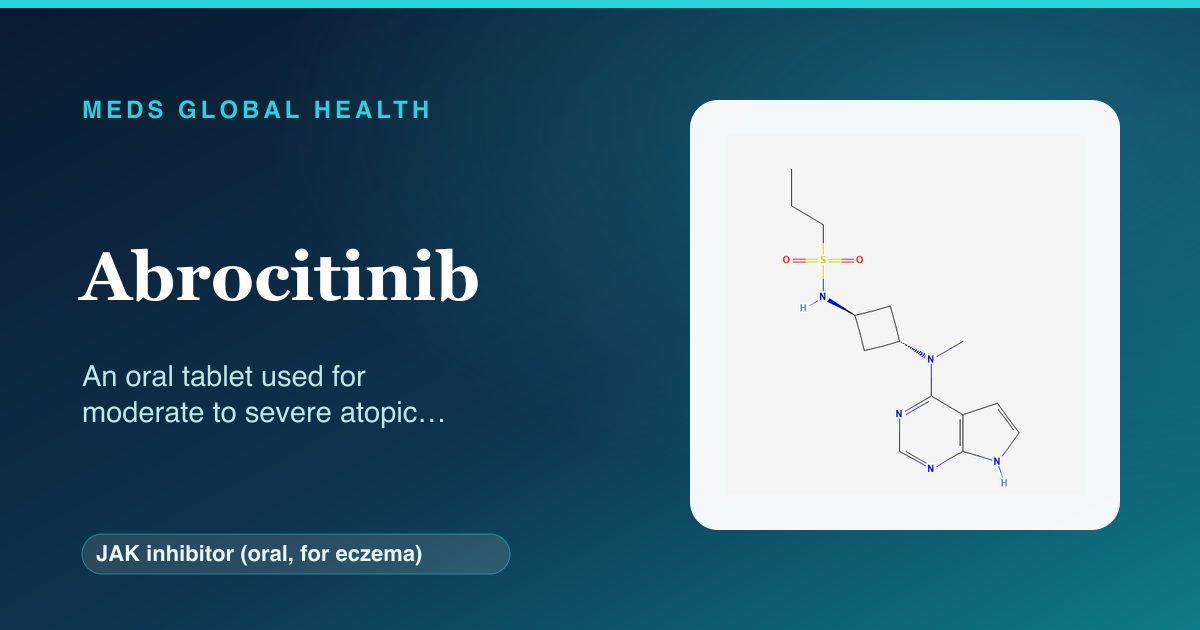
What it is
Abrocitinib is a medicine called a JAK inhibitor, used to treat moderate to severe atopic eczema in adults whose skin has not been controlled by other treatments such as creams, ointments or other tablets. Eczema is driven by an overactive immune response in the skin, and abrocitinib works inside cells to quieten the signals that cause the inflammation. It is taken by mouth as a once-daily tablet and is started and supervised by a specialist skin team, who screen for infections and other risks before treatment begins.
How it works
In eczema, immune cells send out chemical messengers that travel into cells and switch on inflammation, leading to the itch, redness and damaged skin barrier. Abrocitinib blocks part of this messaging system, known as the JAK pathway, so fewer of these inflammatory signals get through. With the signalling calmed, the skin inflammation and itch can settle. Because the JAK pathway is also used by the immune system to fight infection, dampening it is what gives the medicine both its benefit in eczema and its main safety risks.
Company & origin
A specialist oral medicine used in the UK for adults with moderate to severe atopic eczema when other treatments have not worked well enough.
What it treats
Conditions Abrocitinib is used for
Practical use
How to take Abrocitinib
General, dose-free guidance — always follow your prescriber's and the leaflet's specific instructions.
- Take it by mouth once a day, at about the same time each day, with or without food.
- Swallow the tablet whole with water rather than crushing or splitting it.
- Keep up with the blood tests and reviews your specialist arranges, as these check the medicine is safe for you.
- Tell your team promptly about any signs of infection, such as fever, a persistent cough or a painful blistering rash.
- Do not have live vaccines without checking first, and tell any health professional that you take a JAK inhibitor.
Weighing it up
Advantages & disadvantages of Abrocitinib
Advantages
- Often improves itch and skin quickly in moderate to severe eczema that other treatments have not controlled.
- Taken as a once-daily tablet rather than an injection.
- Offers another option for people whose eczema has not responded to creams or other treatments.
Disadvantages
- Carries class warnings about serious infections, blood clots, heart problems and certain cancers, especially in older people and smokers.
- Needs screening before starting and regular blood tests during treatment.
- Live vaccines are generally avoided, and it is only started under specialist care.
Practical use
Good to know
The most important thing to understand about abrocitinib is that, like other JAK inhibitors, it comes with serious safety warnings. Because it dampens the immune system, it can make serious infections more likely, including tuberculosis and shingles, so people are screened and their vaccinations checked before starting and watched for signs of infection during treatment. There is also a recognised risk of blood clots in the legs or lungs, major heart and circulation problems, and certain cancers, which is greatest in people over a certain age, smokers or former smokers, and those with heart or cancer risk factors; in these groups it is only used when no suitable alternative exists. It often works quickly on itch, which many people value, but it is a long-term treatment that needs regular blood tests and review. Live vaccines are generally avoided while taking it.
Who should not take it / use with caution
- People who have had a serious allergic reaction to abrocitinib should not take it.
- It is generally avoided in people with a serious active infection, including tuberculosis, until this is treated.
- It is used with great caution, or avoided, in people at higher risk of blood clots, heart problems or cancer, such as older people and smokers.
- It is not recommended in pregnancy, and effective contraception is advised; discuss family planning with your specialist.
Monitoring
- Screening for infections such as tuberculosis and hepatitis, and checking vaccinations, before starting.
- Regular blood tests to check blood counts, cholesterol and liver and kidney function.
- Watching for signs of infection, blood clots, heart problems and skin changes throughout treatment.
Side effects
- Nausea, headache or cold-like symptoms, particularly early in treatment.
- A higher chance of infections, including shingles and chest or sinus infections.
- Acne or spots in some people.
- Less commonly but seriously, blood clots, major heart or circulation events, or certain cancers, which is why screening and monitoring are used.
Key interactions
- It can interact with some other medicines that affect the same liver pathways, so give your team a full medicines list.
- Taking it with other medicines that weaken the immune system increases the risk of infection.
- Live vaccines are generally avoided while on treatment.
Available as: Tablets taken by mouth.
Answers
Abrocitinib: frequently asked questions
What is abrocitinib used for?
It is used to treat moderate to severe atopic eczema in adults whose skin has not been controlled well enough by creams or other treatments.
How does it work?
It is a JAK inhibitor that blocks part of the immune signalling system in cells, calming the overactive response that causes the itch, redness and inflammation of eczema.
What are the main safety concerns?
Like other JAK inhibitors, it can raise the risk of serious infections, blood clots, heart and circulation problems and certain cancers, especially in older people and smokers, so people are screened and monitored.
Will I need blood tests?
Yes. You will have blood tests before starting and regularly during treatment to check your blood counts, cholesterol and liver and kidney function.
Can I have my usual vaccinations?
Live vaccines are generally avoided while taking it, so always check with your specialist team before having any vaccine.
The wider class
About JAK inhibitor (oral, for eczema)
Abrocitinib belongs to the jak inhibitor (oral, for eczema) class. For how the class as a whole works, its shared safety principles and monitoring, see the full guide.
Browse by body system
Authoritative sources
- BNF
- NICE CKS
Building a medicines information resource?
We create evidence-led, dose-free drug and formulary references for teams.