A JAK inhibitor for some blood disorders, with a skin cream for vitiligo
Ruxolitinib
A targeted medicine that calms overactive blood-cell signalling, taken by mouth for certain blood disorders and used as a cream for vitiligo.
What is Ruxolitinib?
Ruxolitinib is a specialist targeted medicine that blocks enzymes called JAK1 and JAK2, which carry growth and inflammation signals inside cells. Taken by mouth, it is used for myelofibrosis and polycythaemia (bone-marrow disorders that affect blood-cell production) and for graft-versus-host disease after a stem-cell transplant. There is also a skin cream form used for vitiligo. The main risks of the oral medicine are low blood counts (anaemia and low platelets), serious infections including tuberculosis and shingles, and a higher chance of some skin cancers; it should not be stopped suddenly. It is used under specialist supervision.
Education and reference only. This is a plain-language guide to Ruxolitinib — it deliberately contains no doses. Doses depend on the person, the brand and the reason for treatment, and belong with your prescriber. Always check the BNF, the product labelling (SmPC) and follow medical advice.
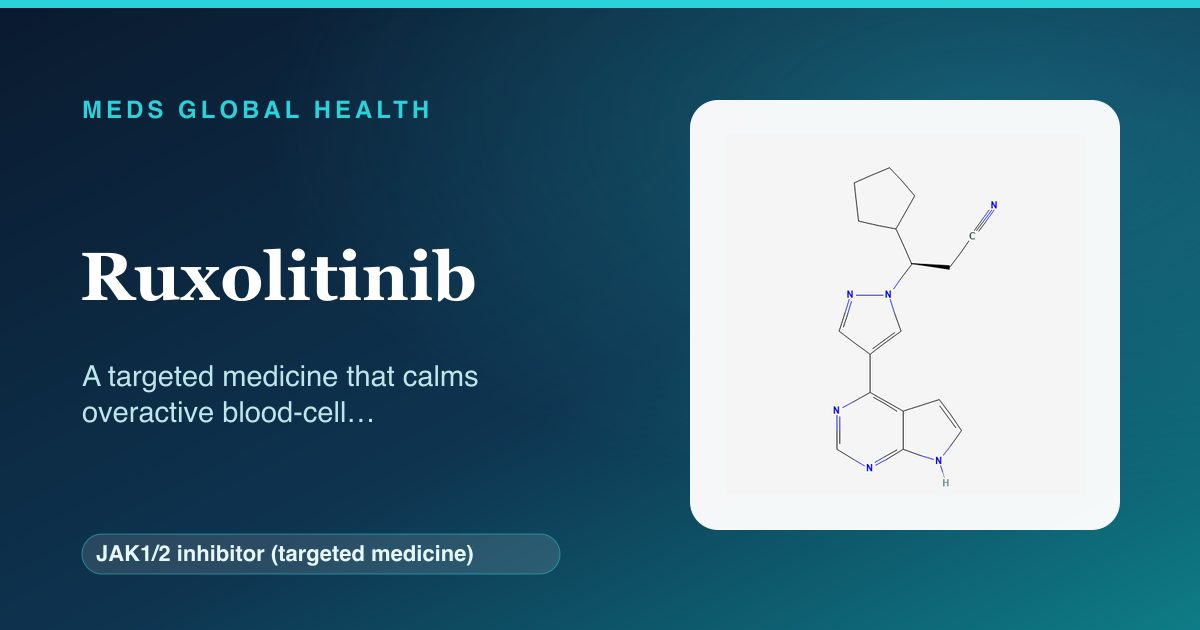
What it is
Ruxolitinib is a targeted medicine that blocks enzymes called Janus kinases (JAK1 and JAK2), which pass on signals that control how blood cells are made and how inflammation behaves. As tablets taken by mouth, it is used to treat myelofibrosis and polycythaemia, which are disorders of the bone marrow affecting blood-cell production, and graft-versus-host disease, a complication that can follow a stem-cell (bone-marrow) transplant. There is also a cream form, applied to the skin, used to treat vitiligo, a condition causing pale patches of skin. It is prescribed and supervised by a specialist team.
How it works
Many of the disorders ruxolitinib treats are driven by overactive JAK signalling, which tells cells to grow, multiply or stir up inflammation more than they should. By blocking JAK1 and JAK2, ruxolitinib dampens these signals: in myelofibrosis and polycythaemia it helps control overactive blood-cell production and can shrink an enlarged spleen, and in graft-versus-host disease it calms the immune attack on the body. The skin cream works locally to calm the immune activity behind vitiligo. Because it works by quietening these signals, it is taken regularly and should not be stopped abruptly.
Company & origin
A specialist targeted medicine used in the UK for certain bone-marrow disorders and graft-versus-host disease, with a separate skin cream for vitiligo.
Practical use
How to take Ruxolitinib
General, dose-free guidance — always follow your prescriber's and the leaflet's specific instructions.
- Take the tablets by mouth as prescribed, at about the same times each day, with or without food.
- Do not stop the oral medicine suddenly; any change is made gradually on specialist advice to avoid a flare.
- If using the cream for vitiligo, apply only the amount and to the area your specialist advises.
- Report tiredness, breathlessness, unusual bruising, bleeding, fever or a painful blistering rash promptly.
- Discuss contraception and pregnancy plans with your team before and during treatment.
Weighing it up
Advantages & disadvantages of Ruxolitinib
Advantages
- An effective targeted treatment for myelofibrosis, polycythaemia and graft-versus-host disease.
- Can ease symptoms and help shrink an enlarged spleen in some bone-marrow disorders.
- Available as a skin cream for vitiligo as well as tablets for blood disorders.
Disadvantages
- Lowers blood counts, causing anaemia and low platelets, so monitoring is needed.
- Raises the chance of serious infections, including tuberculosis and shingles.
- Should not be stopped suddenly, and carries a higher chance of some skin cancers.
Practical use
Good to know
An important practical point is that the oral medicine should not be stopped suddenly, as symptoms can flare; any change is made gradually under specialist advice. It lowers blood counts, causing anaemia and low platelets, so regular blood tests are needed and you should report tiredness, breathlessness, unusual bruising or bleeding. Because it calms the immune system, serious infections can occur, including reactivation of tuberculosis and shingles (herpes zoster), so report fevers, a painful blistering rash or feeling generally unwell, and tell your team about any past TB. There is also a higher chance of some non-melanoma skin cancers, so protect your skin from the sun and report new or changing skin spots. With the skin cream, only the amount and area advised should be used. As with medicines of this kind, contraception and pregnancy should be discussed with your team.
Who should not take it / use with caution
- People who have had a serious allergic reaction to ruxolitinib should not use it.
- It is used with caution, or avoided, in people with very low blood counts or active serious infections.
- Pregnancy and breastfeeding should be discussed with the specialist team, as it may not be suitable.
Monitoring
- Regular blood tests to check blood counts before and during treatment.
- Screening for tuberculosis where appropriate and watching for signs of infection, including shingles.
- Skin checks over time, as the chance of some skin cancers is higher.
Side effects
- Anaemia and low platelets, causing tiredness, breathlessness, bruising or bleeding.
- Serious infections, including reactivation of tuberculosis and shingles (herpes zoster).
- Dizziness, headache and raised cholesterol; with the cream, skin irritation where it is applied.
- Rarely but seriously, some non-melanoma skin cancers, so report new or changing skin spots.
Key interactions
- Some medicines and supplements change how ruxolitinib is broken down, so a full medicines list is important.
- Other medicines that lower blood counts or dampen the immune system can add to the risks.
- Live vaccines are generally avoided during treatment because the immune system is affected.
Available as: Tablets taken by mouth, and a cream applied to the skin for vitiligo.
Answers
Ruxolitinib: frequently asked questions
What is ruxolitinib used for?
Taken by mouth it is used for myelofibrosis, polycythaemia and graft-versus-host disease; there is also a skin cream form used to treat vitiligo.
How does it work?
It blocks enzymes called JAK1 and JAK2 that carry growth and inflammation signals inside cells, calming overactive blood-cell production and immune activity.
Can I stop it suddenly?
No. The oral medicine should not be stopped suddenly, as symptoms can flare; any change is made gradually under specialist advice.
Why are infections a concern?
It calms the immune system, so serious infections can occur, including reactivation of tuberculosis and shingles; report fevers or a painful blistering rash promptly.
Does it affect blood counts?
Yes. It can cause anaemia and low platelets, so regular blood tests are needed and you should report tiredness, breathlessness, bruising or bleeding.
The wider class
About JAK1/2 inhibitor (targeted medicine)
Ruxolitinib belongs to the jak1/2 inhibitor (targeted medicine) class. For how the class as a whole works, its shared safety principles and monitoring, see the full guide.
Browse by body system
Authoritative sources
- BNF
- NICE CKS
Building a medicines information resource?
We create evidence-led, dose-free drug and formulary references for teams.