An older first-generation sulfonylurea for type 2 diabetes
Acetohexamide
An older sulfonylurea tablet that lowers blood sugar in type 2 diabetes, now largely replaced by newer medicines.
What is Acetohexamide?
Acetohexamide is an older, first-generation sulfonylurea once used to lower blood sugar in type 2 diabetes. It works by prompting the pancreas to release more insulin. Its main risk is hypoglycaemia (blood sugar dropping too low), which can be more of a problem in older people and those with reduced kidney function, and it can also cause weight gain. It is now largely obsolete, having been replaced by newer sulfonylureas and other treatments, so you are unlikely to be started on it today.
Education and reference only. This is a plain-language guide to Acetohexamide — it deliberately contains no doses. Doses depend on the person, the brand and the reason for treatment, and belong with your prescriber. Always check the BNF, the product labelling (SmPC) and follow medical advice.
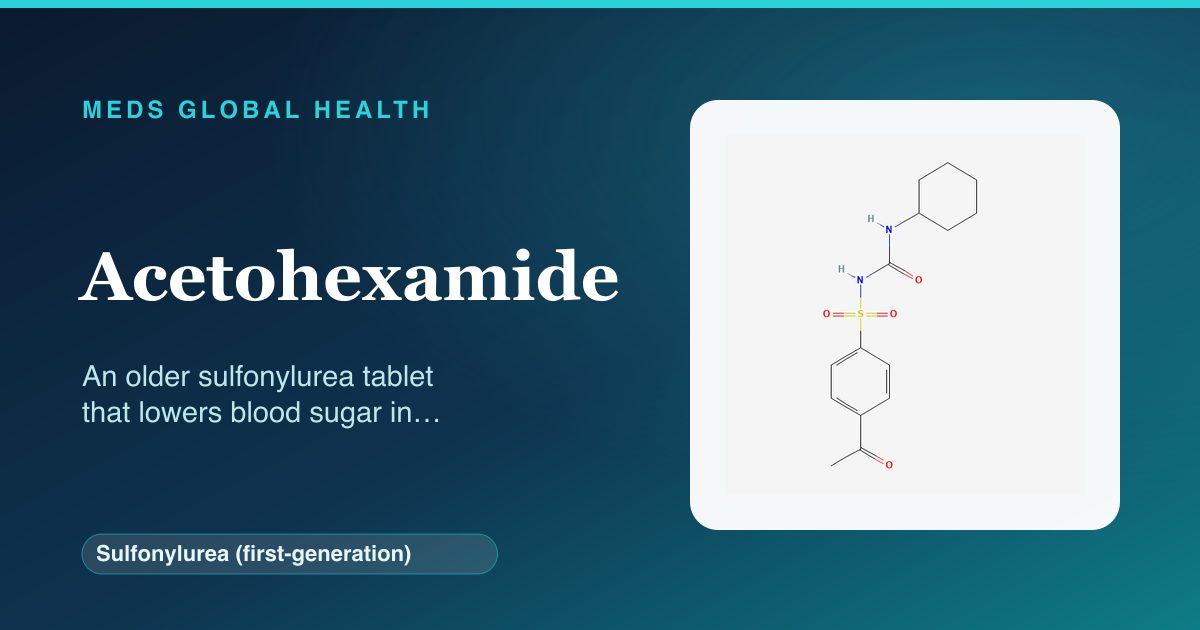
What it is
Acetohexamide is one of the original, first-generation sulfonylureas, a group of tablets used to lower blood sugar in people with type 2 diabetes. It works by encouraging the pancreas to release more insulin, the hormone that helps move sugar out of the blood. It belongs to an older era of diabetes treatment and has been overtaken by newer sulfonylureas and other classes of medicine that are easier to use and have a better safety profile, so it is now considered largely obsolete and is rarely prescribed in the UK.
How it works
Acetohexamide acts on the insulin-producing cells of the pancreas, prompting them to release more insulin. The extra insulin helps the body move sugar from the blood into the cells, lowering blood sugar levels. Because it pushes the pancreas to make more insulin regardless of how high the blood sugar is, it can sometimes lower blood sugar too far, which is why hypoglycaemia is its key risk. It only works if the pancreas is still able to make insulin, so it is used in type 2 rather than type 1 diabetes.
Company & origin
An older first-generation sulfonylurea once used to lower blood sugar in type 2 diabetes, now largely obsolete and rarely seen in the UK.
What it treats
Conditions Acetohexamide is used for
Practical use
How to take Acetohexamide
General, dose-free guidance — always follow your prescriber's and the leaflet's specific instructions.
- Take it by mouth as prescribed, usually with or before a meal, to match its blood-sugar-lowering effect to food.
- Eat regular meals and do not skip them, as missing food while taking it can cause blood sugar to drop too low.
- Learn the signs of low blood sugar, such as shakiness, sweating or confusion, and carry a fast-acting sugar source.
- Check your blood sugar as advised, especially when first starting or if your routine changes.
- Tell your prescriber about kidney problems or if you are elderly, as the risk of low blood sugar is higher.
Weighing it up
Advantages & disadvantages of Acetohexamide
Advantages
- Lowers blood sugar in type 2 diabetes by helping the pancreas release more insulin.
- Taken by mouth as a tablet rather than by injection.
- A long-established medicine with decades of historical use behind it.
Disadvantages
- Can cause blood sugar to drop too low, especially in older people and those with kidney problems.
- Tends to cause weight gain, like other sulfonylureas.
- Largely obsolete and replaced by newer, more predictable medicines.
Practical use
Good to know
The most important thing to understand about acetohexamide is that, like other sulfonylureas, it can make blood sugar drop too low, a state called hypoglycaemia, which can cause shakiness, sweating, confusion and, if severe, loss of consciousness. This risk is greater in older people, in those who eat irregularly, and in people whose kidneys do not work as well, partly because the medicine and its breakdown products can build up. Weight gain is another common effect of sulfonylureas. Acetohexamide is an older medicine that has largely been replaced by newer, more predictable options, so it is rarely chosen today; if you are taking it, it is sensible to know the signs of low blood sugar and how to treat it quickly.
Who should not take it / use with caution
- People who have had a serious allergic reaction to acetohexamide or related sulfonylureas should not take it.
- It is not suitable for type 1 diabetes or for diabetic ketoacidosis, which need insulin.
- It is used with great caution, or avoided, in people with significant kidney or liver problems because of the higher risk of low blood sugar.
Monitoring
- Checking blood sugar levels and longer-term control with regular tests.
- Watching for episodes of low blood sugar, particularly in older people and those with kidney problems.
- Reviewing kidney function, as reduced kidney function raises the risk of low blood sugar.
Side effects
- Low blood sugar (hypoglycaemia), with shakiness, sweating, hunger or confusion.
- Weight gain over time.
- Nausea or stomach upset in some people.
- Rarely, skin rashes or, very rarely, serious blood or liver problems.
Key interactions
- Other diabetes medicines, including insulin, add to the blood-sugar-lowering effect and the risk of going too low.
- Alcohol can make low blood sugar more likely and may cause an unpleasant flushing reaction in some people.
- Some medicines, such as certain antibiotics and beta-blockers, can change how it affects blood sugar or mask warning signs of a low.
Available as: Tablets taken by mouth.
Answers
Acetohexamide: frequently asked questions
What is acetohexamide used for?
It is an older first-generation sulfonylurea used to lower blood sugar in type 2 diabetes by prompting the pancreas to release more insulin.
What is its main risk?
The main risk is hypoglycaemia, where blood sugar drops too low; this is more likely in older people and those with reduced kidney function.
Why is it rarely used now?
It is largely obsolete and has been replaced by newer sulfonylureas and other diabetes medicines that are more predictable and easier to use.
Can it cause weight gain?
Yes, like other sulfonylureas, acetohexamide can cause some weight gain over time.
Can people with type 1 diabetes use it?
No. It only works if the pancreas can still make insulin, so it is not suitable for type 1 diabetes, which needs insulin.
The wider class
About Sulfonylurea (first-generation)
Acetohexamide belongs to the sulfonylurea (first-generation) class. For how the class as a whole works, its shared safety principles and monitoring, see the full guide.
Browse by body system
Authoritative sources
- BNF
- NICE CKS
Building a medicines information resource?
We create evidence-led, dose-free drug and formulary references for teams.