A sulfonylurea for type 2 diabetes
Glipizide
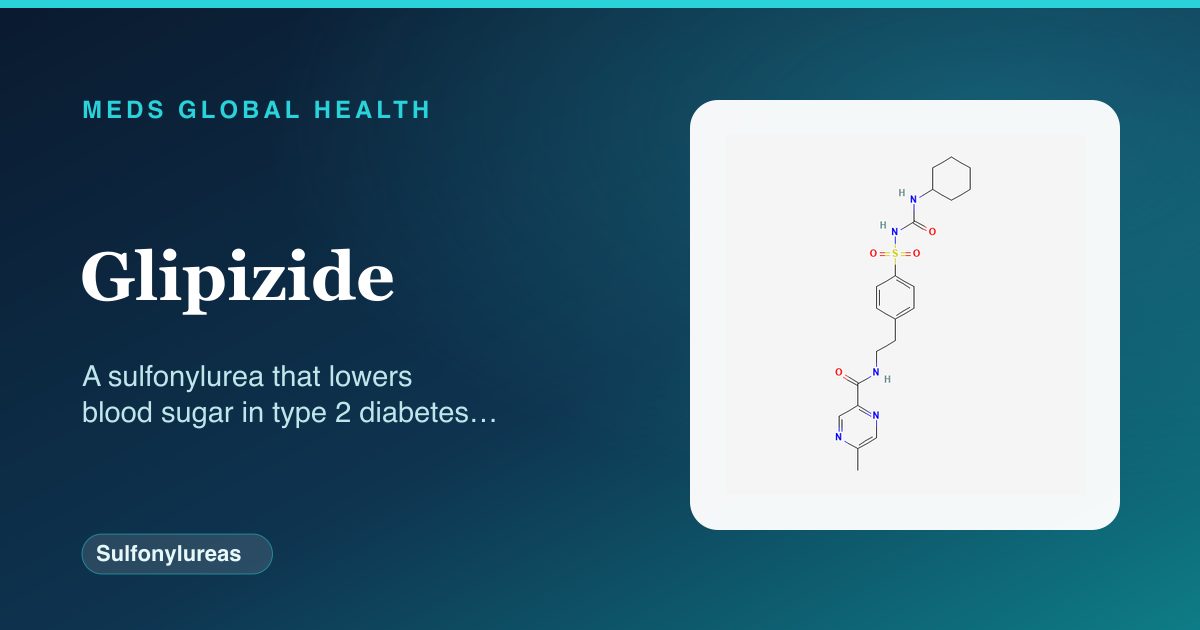
A sulfonylurea that lowers blood sugar in type 2 diabetes by prompting the pancreas to release more insulin; its main risk is low blood sugar (hypoglycaemia).
What is Glipizide?
Glipizide is a sulfonylurea tablet used to lower blood sugar in type 2 diabetes. It works by encouraging the pancreas to release more insulin, so it lowers blood sugar effectively but can cause hypoglycaemia (low blood sugar), especially if a meal is missed. It is usually taken with or shortly before a meal and is often added when metformin alone is not enough.
Education and reference only. This is a plain-language guide to Glipizide — it deliberately contains no doses. Doses depend on the person, the brand and the reason for treatment, and belong with your prescriber. Always check the BNF, the product labelling (SmPC) and follow medical advice.
What it is
Glipizide is a sulfonylurea used in the UK to lower blood sugar in type 2 diabetes. It is usually taken with food, often once a day, and is commonly added to metformin or used when metformin is unsuitable. Like other sulfonylureas, it lowers blood sugar but, unlike metformin and the newer SGLT2 inhibitors and GLP-1 medicines, it has not been shown to protect the heart or kidneys. It works only while the pancreas can still make insulin, and its effect tends to lessen over the years as type 2 diabetes progresses.
How it works
Glipizide stimulates the beta cells of the pancreas to release more insulin, the hormone that moves sugar (glucose) from the blood into the body's cells. By increasing insulin release it lowers blood sugar. Because it prompts the release of insulin regardless of whether you have eaten, blood sugar can fall too low if a meal is missed or delayed, which is why low blood sugar is the main risk to be aware of.
Company & origin
Originated / developed by: Originally developed by Pfizer..
Glipizide is a sulfonylurea introduced in the 1970s and used to lower blood sugar in type 2 diabetes.
What it treats
Conditions Glipizide is used for
Practical use
How to take Glipizide
General, dose-free guidance — always follow your prescriber's and the leaflet's specific instructions.
- Take it with or shortly before a meal so the medicine works in step with your food.
- Do not skip meals, as missing food while it is working can make your blood sugar fall too low.
- Always carry a fast-acting sugar source (such as glucose tablets or a sugary drink) in case of a hypo, and follow it with a longer-acting snack.
- Take care with alcohol, which can increase the chance of low blood sugar and make it harder to spot.
- If you are ill and eating less, ask your diabetes team or pharmacist whether the medicine needs adjusting.
- If you miss a dose, take it with your next meal rather than doubling up, and ask your pharmacist if unsure.
Weighing it up
Advantages & disadvantages of Glipizide
Advantages
- It lowers blood sugar effectively and acts relatively quickly.
- It is a long-established, low-cost option, often added when metformin alone is not enough.
- It can be a useful choice for people who cannot take metformin.
Disadvantages
- It can cause hypoglycaemia (low blood sugar), particularly if meals are missed, in older people or with kidney problems.
- It tends to cause some weight gain.
- Unlike metformin, SGLT2 inhibitors and GLP-1 medicines, it has not been shown to protect the heart or kidneys, and its effect can fade over time.
Practical use
Good to know
The key risk is hypoglycaemia (low blood sugar), which is more likely if you skip or delay a meal, eat less than usual, drink alcohol, are older, or have kidney problems. Learn the warning signs — shakiness, sweating, hunger, a fast heartbeat, confusion — and treat them promptly with something sugary, followed by a longer-acting snack. It is taken with or shortly before a meal so it works in step with your food. It can cause some weight gain. If you become unwell and are not eating normally, ask your diabetes team about adjusting it, as you may be at greater risk of a hypo.
Who should not take it / use with caution
- People with type 1 diabetes or diabetic ketoacidosis, where insulin is needed instead.
- People with severe kidney or liver problems, in whom the risk of low blood sugar is higher (used with caution).
- Pregnant or breastfeeding women, and anyone who has had a serious allergic reaction to glipizide or related sulfonylureas.
Monitoring
- Regular checks of blood sugar control, usually including an HbA1c blood test.
- Watching for low blood sugar episodes and reviewing the dose if they occur.
- Reviewing kidney function and weight, and whether the medicine remains the best option over time.
Side effects
- Low blood sugar (hypoglycaemia) — shakiness, sweating, hunger, confusion — which can be serious if untreated.
- Weight gain.
- Occasional digestive upset such as nausea.
- Rarely, allergic skin reactions or changes in liver blood tests.
Key interactions
- Alcohol can increase the risk of low blood sugar and should be used carefully.
- Other diabetes medicines, including insulin, add to the blood-sugar-lowering effect and raise hypo risk.
- Some medicines (such as certain antibiotics, antifungals and others) can change glipizide levels or hide the signs of a hypo, so tell your prescriber about all your medicines.
Available as: Tablets taken by mouth.
Answers
Glipizide: frequently asked questions
Why can glipizide cause low blood sugar?
It works by prompting the pancreas to release more insulin, which lowers blood sugar whether or not you have eaten. If you miss or delay a meal, eat less or drink alcohol, your blood sugar can fall too low, so it is important to eat regularly and know how to treat a hypo.
When should I take glipizide?
It is usually taken with or shortly before a meal so that it works in step with your food. Taking it this way helps reduce the risk of your blood sugar dropping too low between meals.
Does glipizide cause weight gain?
Sulfonylureas such as glipizide can lead to some weight gain, partly because of the extra insulin they release. If weight is a concern, talk to your diabetes team, as other diabetes medicines may suit you better.
Does glipizide protect the heart?
No. Unlike metformin and the newer SGLT2 inhibitors and GLP-1 medicines, sulfonylureas have not been shown to protect the heart or kidneys. Glipizide is used mainly to lower blood sugar rather than for any added organ protection.
What if I am unwell and not eating?
If you are ill and eating less than usual, your blood sugar may drop, so ask your diabetes team or pharmacist about 'sick day' advice. The medicine may need adjusting, and you should keep watching for signs of low blood sugar.
The wider class
About Sulfonylureas
Glipizide belongs to the sulfonylureas class. For how the class as a whole works, its shared safety principles and monitoring, see the full guide.
Browse by body system
Authoritative sources
- BNF
- NICE CKS
Building a medicines information resource?
We create evidence-led, dose-free drug and formulary references for teams.