Activated vitamin D
Alfacalcidol
An activated vitamin D used mainly in kidney disease; the liver converts it to the active form calcitriol.
What is Alfacalcidol?
Alfacalcidol is an activated form of vitamin D that the liver quickly turns into calcitriol, the fully active form. Like calcitriol, it is used when the body cannot activate ordinary vitamin D, especially in chronic kidney disease and some causes of low calcium. It helps the body absorb calcium and keep bones and blood calcium healthy. Because it becomes active vitamin D, it can raise blood calcium too high, so calcium levels are checked regularly. It is usually used under specialist or kidney-team guidance.
Education and reference only. This is a plain-language guide to Alfacalcidol — it deliberately contains no doses. Doses depend on the person, the brand and the reason for treatment, and belong with your prescriber. Always check the BNF, the product labelling (SmPC) and follow medical advice.
What it is
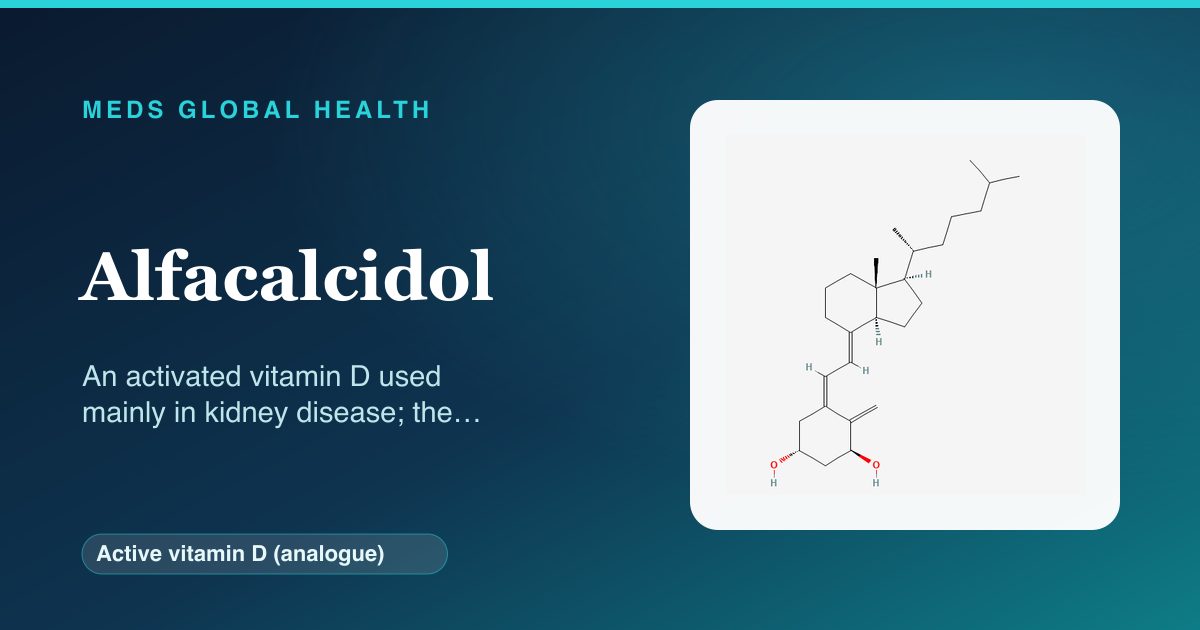
Alfacalcidol is a form of vitamin D that is already part-way activated, needing only one more step in the liver to become calcitriol, the fully active form. It is used when the body cannot carry out the activation that the kidneys normally perform — most often in chronic kidney disease, and in some conditions causing low blood calcium — where ordinary vitamin D would not work well. Because the liver readily completes the final step, it acts much like active vitamin D. It is taken by mouth as a capsule or liquid, and is sometimes given by injection.
How it works
Once swallowed, alfacalcidol is converted in the liver into calcitriol, the active form of vitamin D, which then increases calcium absorption from the gut and works with the parathyroid glands and bones to balance calcium and bone health. In kidney disease, the kidneys can no longer make active vitamin D, so providing alfacalcidol bypasses that failed step. Because it ends up as active vitamin D, its effect can be strong, and blood calcium can rise too high if the dose is not carefully balanced. Its action is broadly similar to calcitriol, with the difference being the one extra activation step in the liver.
Company & origin
An activated form of vitamin D used in the UK mainly in kidney disease, which the liver turns into the fully active form.
What it treats
Conditions Alfacalcidol is used for
Practical use
How to take Alfacalcidol
General, dose-free guidance — always follow your prescriber's and the leaflet's specific instructions.
- Take it by mouth exactly as prescribed, usually once a day or as your kidney or specialist team directs.
- Attend your regular blood tests for calcium and kidney function, as these guide your dose.
- Report signs of high calcium such as nausea, constipation, extra thirst, passing lots of urine, confusion or unusual tiredness.
- Tell your team before starting or changing calcium supplements, antacids or other vitamin D products.
- Do not adjust the dose yourself, as the active vitamin D effect leaves little room for error.
Weighing it up
Advantages & disadvantages of Alfacalcidol
Advantages
- Becomes active vitamin D in the liver, so it works even when the kidneys cannot activate ordinary vitamin D.
- Helps maintain healthy calcium and bones in kidney disease and certain low-calcium conditions.
- Available as capsules, liquid and injection, giving flexible options.
Disadvantages
- Can raise blood calcium too high, needing regular blood-test monitoring.
- Usually needs specialist or kidney-team supervision and careful dose balancing.
- Its strong, active-vitamin-D effect leaves less room for error than ordinary vitamin D.
Practical use
Good to know
The main point is the same as for calcitriol: because alfacalcidol becomes active vitamin D, its biggest risk is raising blood calcium too high, so regular blood tests for calcium (often with phosphate and kidney function) are essential. Report symptoms of high calcium such as feeling sick, constipation, increased thirst, passing lots of urine, confusion or unusual tiredness. It is usually managed by a specialist or kidney team, who balance the dose carefully. Calcium supplements and antacids can add to its effect, so discuss any changes with your team. Because the liver does the final activation, it can be a practical choice when active vitamin D is needed.
Who should not take it / use with caution
- People who already have high blood calcium should not take it until that is corrected.
- It is avoided in vitamin D toxicity or conditions that themselves cause high calcium, unless specialist-advised.
- Used with great caution alongside calcium supplements or other active vitamin D forms.
Monitoring
- Regular blood tests for calcium, often with phosphate and kidney function, to guide the dose.
- Watching for symptoms of high calcium between tests.
- Reviewing other calcium and vitamin D products to avoid adding too much.
Side effects
- High blood calcium is the main concern, causing nausea, constipation, thirst, frequent urination or tiredness.
- Headache, stomach upset or muscle aches in some people.
- Rarely, raised phosphate or, over time, calcium deposits, which monitoring aims to catch.
Key interactions
- Calcium supplements and antacids can add to its effect and raise calcium too far.
- Thiazide water tablets can also raise calcium when taken with active vitamin D.
- Some medicines such as certain anti-epileptics and steroids can change how vitamin D works, so tell your prescriber what you take.
Available as: Capsules and oral liquid taken by mouth; also available as an injection.
Answers
Alfacalcidol: frequently asked questions
How is alfacalcidol different from ordinary vitamin D?
It is already part-activated and the liver turns it into active vitamin D, so it works even when the kidneys cannot activate plain vitamin D.
Is it the same as calcitriol?
It is very similar in effect; the difference is that alfacalcidol needs one extra activation step in the liver to become calcitriol, the active form.
Why do I need regular blood tests?
Because it becomes active vitamin D and can raise blood calcium too high, calcium levels are checked regularly so your dose stays in the right range.
Why is it used in kidney disease?
Failing kidneys can no longer make active vitamin D, so alfacalcidol provides a form that the liver can finish activating, bypassing the kidney step.
What are the signs of high calcium?
Feeling sick, constipation, extra thirst, passing lots of urine, confusion or unusual tiredness can suggest high calcium and should be reported.
The wider class
About Active vitamin D (analogue)
Alfacalcidol belongs to the active vitamin d (analogue) class. For how the class as a whole works, its shared safety principles and monitoring, see the full guide.
Browse by body system
Authoritative sources
- BNF
- NICE CKS
Building a medicines information resource?
We create evidence-led, dose-free drug and formulary references for teams.