An activated vitamin D medicine for overactive parathyroid glands in kidney disease
Doxercalciferol
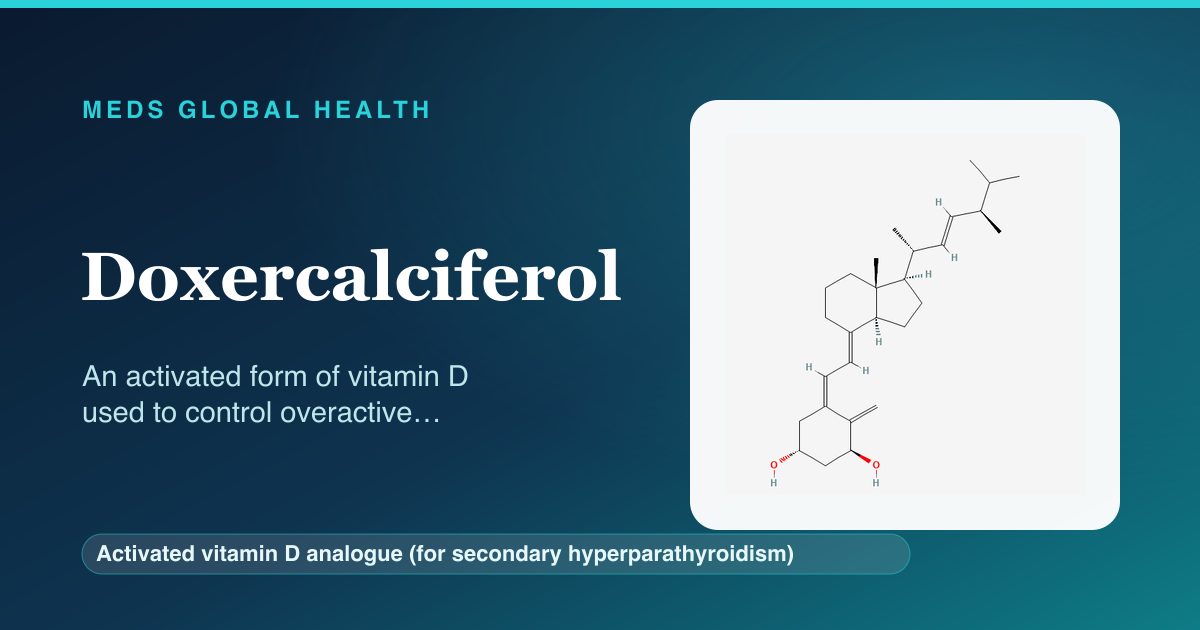
An activated form of vitamin D used to control overactive parathyroid glands (secondary hyperparathyroidism) in kidney disease.
What is Doxercalciferol?
Doxercalciferol is an activated vitamin D medicine used to treat secondary hyperparathyroidism, where the parathyroid glands become overactive because of chronic kidney disease. Damaged kidneys cannot turn vitamin D into its active form, so the glands push out too much parathyroid hormone, which weakens the bones. Doxercalciferol provides an active vitamin D the body can use, helping to lower parathyroid hormone. The main thing to watch is that it can raise calcium and phosphate in the blood, so regular blood tests are essential.
Education and reference only. This is a plain-language guide to Doxercalciferol — it deliberately contains no doses. Doses depend on the person, the brand and the reason for treatment, and belong with your prescriber. Always check the BNF, the product labelling (SmPC) and follow medical advice.
What it is
Doxercalciferol is an activated vitamin D analogue, meaning it acts as a ready-to-use form of vitamin D. It is used in people with chronic kidney disease who have developed secondary hyperparathyroidism, a problem in which the parathyroid glands become overactive. Healthy kidneys normally convert vitamin D into its active form, but failing kidneys cannot do this well, so the body senses a shortage and the parathyroid glands work overtime. Doxercalciferol supplies the active vitamin D the body is missing, helping to calm the glands. It is used under the care of a kidney specialist.
How it works
In chronic kidney disease the kidneys lose the ability to activate vitamin D, and this, along with rising phosphate, drives the parathyroid glands to release too much parathyroid hormone. Over time this pulls calcium out of the bones and damages them. Doxercalciferol is turned into active vitamin D in the body, which signals the parathyroid glands to slow down and release less hormone. Because active vitamin D also raises how much calcium and phosphate the body absorbs and moves into the blood, the dose has to be balanced carefully and checked with blood tests.
Company & origin
A specialist activated vitamin D medicine used to control overactive parathyroid glands in people with chronic kidney disease.
What it treats
Conditions Doxercalciferol is used for
Practical use
How to take Doxercalciferol
General, dose-free guidance — always follow your prescriber's and the leaflet's specific instructions.
- Take it exactly as your kidney team prescribes, as the dose is carefully matched to your blood test results.
- Attend your regular blood tests, as these guide whether the dose should go up or down.
- Do not take extra vitamin D or calcium supplements unless your team has advised it, as they add to the effect.
- Tell your team promptly if you feel unusually sick, thirsty, tired, confused or constipated, as these can be signs of high calcium.
- Follow any phosphate-lowering treatment and dietary advice you are given alongside it.
Weighing it up
Advantages & disadvantages of Doxercalciferol
Advantages
- Helps control overactive parathyroid glands and protect the bones in chronic kidney disease.
- Provides an active form of vitamin D that failing kidneys can no longer make.
- The dose can be fine-tuned to each person using blood test results.
Disadvantages
- Can raise calcium and phosphate in the blood, so regular monitoring is essential.
- Needs ongoing blood tests and dose adjustments rather than being a fixed treatment.
- Other vitamin D or calcium products add to the effect and can tip the balance.
Practical use
Good to know
The most important thing to understand about doxercalciferol is that it can raise the levels of calcium and phosphate in the blood, which is why regular blood tests are central to using it safely. High calcium can cause symptoms such as feeling sick, thirst, tiredness, confusion or constipation, and high phosphate over time can worsen the bone and blood-vessel problems of kidney disease. The dose is adjusted up or down depending on your parathyroid hormone, calcium and phosphate results, so it is a treatment that is fine-tuned over time rather than fixed. It is often used alongside phosphate-lowering treatment and a kidney-friendly diet. Tell your team about all supplements you take, especially other vitamin D or calcium products, as these add to the effect.
Who should not take it / use with caution
- People with high blood calcium should not start it until this is corrected.
- People who have had a serious allergic reaction to it or to vitamin D products should not take it.
- It should only be used under specialist kidney care, with regular monitoring.
Monitoring
- Regular blood tests for parathyroid hormone, calcium and phosphate to guide the dose.
- Watching for symptoms of high calcium, such as thirst, tiredness or confusion.
- Reviewing bone health and overall kidney care over time.
Side effects
- High blood calcium, which can cause nausea, thirst, tiredness, confusion or constipation.
- High blood phosphate, which can worsen bone and blood-vessel problems over time.
- Headache, swelling or general unwellness in some people.
Key interactions
- Other vitamin D or calcium supplements add to its effect and can push calcium too high.
- Some medicines, such as certain water tablets, can affect calcium levels alongside it.
- Phosphate binders are often used together, with the balance guided by blood tests.
Available as: Capsules taken by mouth and a solution for injection, used in kidney care.
Answers
Doxercalciferol: frequently asked questions
What is doxercalciferol used for?
It is used to treat secondary hyperparathyroidism, where the parathyroid glands become overactive because chronic kidney disease stops the kidneys activating vitamin D properly.
Why do I need so many blood tests?
It can raise calcium and phosphate in the blood, so regular tests of these and of parathyroid hormone are used to fine-tune the dose and keep it safe.
Can I take my own vitamin D as well?
Not without advice. Extra vitamin D or calcium supplements add to the effect and can push your calcium too high, so check with your team first.
What are the warning signs of too much calcium?
Feeling unusually sick, very thirsty, tired, confused or constipated can be signs of high calcium, and you should tell your team promptly if these occur.
Does it cure kidney disease?
No. It does not treat the kidney disease itself; it helps control one of its complications, the overactive parathyroid glands, to protect the bones.
The wider class
About Activated vitamin D analogue (for secondary hyperparathyroidism)
Doxercalciferol belongs to the activated vitamin d analogue (for secondary hyperparathyroidism) class. For how the class as a whole works, its shared safety principles and monitoring, see the full guide.
Browse by body system
Authoritative sources
- BNF
- NICE CKS
Building a medicines information resource?
We create evidence-led, dose-free drug and formulary references for teams.