Oral vitamin B12
Cyanocobalamin
An oral form of vitamin B12 used to treat or prevent B12 deficiency where an oral form is suitable; pernicious anaemia usually needs injections instead.
What is Cyanocobalamin?
Cyanocobalamin is a form of vitamin B12 taken by mouth. Vitamin B12 is needed to make healthy red blood cells and to keep the nervous system working properly, and a lack of it causes anaemia and nerve problems. Oral cyanocobalamin is used to treat or prevent B12 deficiency where an oral form is suitable, such as deficiency due to a diet low in animal foods. However, where deficiency is due to the body being unable to absorb B12 from the gut, as in pernicious anaemia, the usual UK treatment is injections of hydroxocobalamin rather than oral tablets, so the right form depends on the cause.
Education and reference only. This is a plain-language guide to Cyanocobalamin — it deliberately contains no doses. Doses depend on the person, the brand and the reason for treatment, and belong with your prescriber. Always check the BNF, the product labelling (SmPC) and follow medical advice.
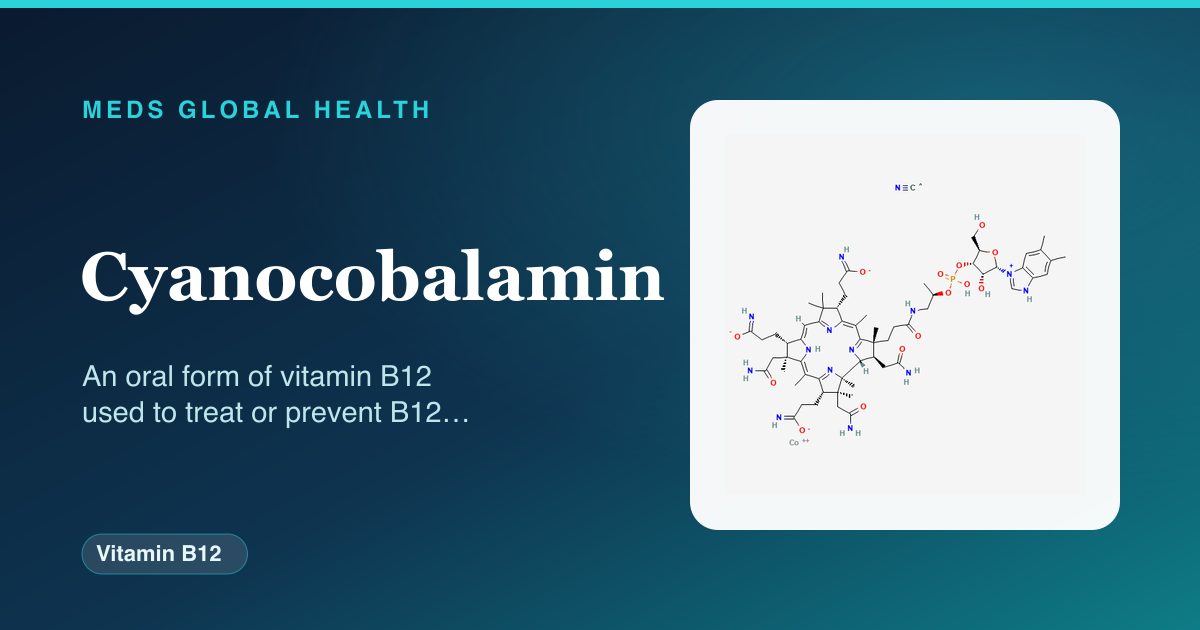
What it is
Cyanocobalamin is a man-made, stable form of vitamin B12 that can be taken by mouth. Vitamin B12 is found naturally in animal foods such as meat, fish, eggs and dairy, and is needed to make red blood cells and to keep the nervous system healthy. A shortage causes a type of anaemia and can damage nerves, leading to tiredness, tingling and balance problems. Oral cyanocobalamin is used to treat or prevent deficiency in situations where an oral form will be absorbed and is suitable, such as deficiency from a diet low in animal products.
How it works
Vitamin B12 is essential for making healthy red blood cells and for the protective coating around nerves, so supplying cyanocobalamin restores these processes when levels are low, easing anaemia and helping nerve symptoms. Taken by mouth, it is absorbed from the gut, which works well when the cause of deficiency is a low dietary intake. When the problem is that the body cannot absorb B12 from the gut, for example in pernicious anaemia where a needed stomach factor is missing, oral absorption is unreliable, which is why injections are usually used instead in that situation.
Company & origin
Vitamin B12 was identified in the mid-20th century during research into pernicious anaemia, a condition once untreatable and often fatal.
Practical use
How to take Cyanocobalamin
General, dose-free guidance — always follow your prescriber's and the leaflet's specific instructions.
- Take it as advised, usually once a day, with or without food.
- It is most suitable when the deficiency is due to diet, such as eating little or no animal food.
- If your deficiency is due to poor absorption, as in pernicious anaemia, injections of hydroxocobalamin are usually used instead.
- Do not self-treat unexplained tiredness or tingling with B12; have the cause checked first.
- Most people who eat a varied diet get enough B12, so supplements are mainly for those at risk of deficiency.
Weighing it up
Advantages & disadvantages of Cyanocobalamin
Advantages
- Provides a convenient by-mouth way to treat or prevent dietary B12 deficiency.
- Useful for people who eat little or no animal food, such as some vegans.
- Supports healthy red blood cells and the nervous system when levels are low.
Disadvantages
- Not reliably absorbed when deficiency is due to the gut being unable to take up B12.
- Pernicious anaemia usually needs injections of hydroxocobalamin rather than oral tablets.
- Tiredness and tingling have many causes, so the reason for deficiency should be checked first.
Practical use
Good to know
Cyanocobalamin is an oral form of vitamin B12, and the key point is that the right treatment for B12 deficiency depends on its cause. If the deficiency is dietary, for example in people who eat little or no animal food, an oral form like cyanocobalamin can work well. If the deficiency is because the body cannot absorb B12 from the gut, as in pernicious anaemia, the usual UK approach is injections of hydroxocobalamin rather than tablets, because oral absorption is unreliable in that case. B12 deficiency can affect both blood and nerves, and nerve symptoms in particular need prompt treatment, so deficiency should be investigated and treated properly rather than self-managed. Most people who eat a varied diet get enough B12.
Who should not take it / use with caution
- People whose deficiency is due to poor absorption, such as pernicious anaemia, usually need injections instead.
- It should not be used to self-treat unexplained symptoms without first investigating the cause.
- People with a known sensitivity to a particular product should check its ingredients.
Monitoring
- Blood tests to check that B12 levels and any anaemia improve with treatment.
- Reviewing whether the cause is dietary or due to poor absorption, which guides the form used.
- Watching that nerve symptoms such as tingling or balance problems respond to treatment.
Side effects
- Usually well tolerated; occasionally mild stomach upset, nausea or headache.
- Rarely, itching or a skin rash.
- Most excess is passed out in the urine, as it is water-soluble.
Key interactions
- Some medicines, such as metformin and long-term acid-reducing medicines, can lower B12 levels over time.
- Conditions and surgery affecting the stomach or gut can reduce how well oral B12 is absorbed.
- Tell your prescriber what you take, as the cause of deficiency guides the right form of treatment.
Available as: Tablets taken by mouth.
Answers
Cyanocobalamin: frequently asked questions
What is cyanocobalamin used for?
It is an oral form of vitamin B12 used to treat or prevent B12 deficiency where an oral form is suitable, such as deficiency due to a diet low in animal foods.
Can I take tablets instead of B12 injections?
It depends on the cause; oral B12 works well for dietary deficiency, but pernicious anaemia, where the gut cannot absorb B12, usually needs injections of hydroxocobalamin instead.
What is the difference from hydroxocobalamin?
Both are forms of vitamin B12; hydroxocobalamin is the form usually given by injection in the UK for absorption problems, while cyanocobalamin is commonly taken by mouth for dietary deficiency.
Do vegans need B12?
Vitamin B12 comes mainly from animal foods, so people who eat little or no animal food may need a supplement to avoid deficiency.
Should I take B12 for tiredness?
Tiredness has many causes, so it is best to have the reason checked rather than self-treating, as the right treatment depends on the cause.
The wider class
About Vitamin B12
Cyanocobalamin belongs to the vitamin b12 class. For how the class as a whole works, its shared safety principles and monitoring, see the full guide.
Browse by body system
Authoritative sources
- BNF
- NICE CKS
Building a medicines information resource?
We create evidence-led, dose-free drug and formulary references for teams.