Injectable vitamin B12
Hydroxocobalamin
An injectable form of vitamin B12 used to treat pernicious anaemia and vitamin B12 deficiency.
What is Hydroxocobalamin?
Hydroxocobalamin is the injectable form of vitamin B12 used in the UK to treat pernicious anaemia and other causes of vitamin B12 deficiency. Vitamin B12 is needed to make healthy red blood cells and to keep the nervous system working, so a shortage can cause tiredness, breathlessness and nerve problems such as numbness or tingling. It is usually given as a short course of injections into a muscle to build levels back up, followed by maintenance injections every few months. A high-dose version is also used in hospital as an emergency antidote for cyanide poisoning. Because deficiency is often due to poor absorption, many people need lifelong injections rather than tablets.
Education and reference only. This is a plain-language guide to Hydroxocobalamin — it deliberately contains no doses. Doses depend on the person, the brand and the reason for treatment, and belong with your prescriber. Always check the BNF, the product labelling (SmPC) and follow medical advice.
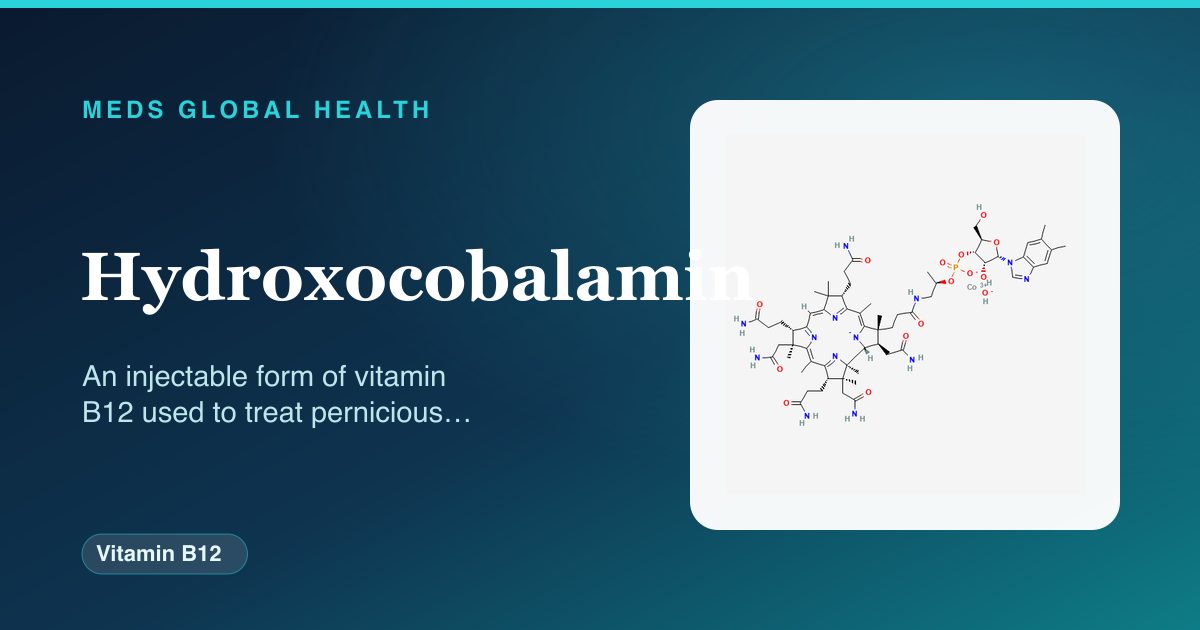
What it is
Hydroxocobalamin is a form of vitamin B12 given by injection into a muscle. Vitamin B12 is an essential nutrient the body needs to make red blood cells, to keep nerves healthy and to help process certain building blocks in cells. When the body cannot absorb enough B12 from food — most often in pernicious anaemia, where the stomach lacks a factor needed for absorption — levels fall and anaemia and nerve problems can develop. Because the problem is usually absorption rather than diet, B12 is given by injection so it bypasses the gut. A separate, much higher-dose preparation is used in hospitals as an antidote for cyanide poisoning.
How it works
Hydroxocobalamin replaces the vitamin B12 the body is missing, allowing it to make healthy red blood cells again and to repair and protect the nervous system. Given by injection, it goes straight into the body and is stored in the liver, which is why maintenance injections are only needed every few months rather than daily. As levels recover, anaemia and tiredness usually improve, though long-standing nerve damage may only partly recover. In cyanide poisoning, a high dose binds the cyanide to form a harmless compound that the body then removes in the urine.
Company & origin
The usual injectable form of vitamin B12 used in the UK to treat pernicious anaemia and other causes of B12 deficiency.
Practical use
How to take Hydroxocobalamin
General, dose-free guidance — always follow your prescriber's and the leaflet's specific instructions.
- It is given as an injection into a muscle by a nurse or doctor, usually as several loading injections over a couple of weeks at first.
- After the initial course, maintenance injections are given every few months to keep your levels topped up.
- Keep to your injection schedule and attend follow-up appointments, as many people need these injections for life.
- Report new or worsening numbness, tingling, weakness or balance problems promptly, as nerve symptoms are best treated early.
- If you also take folic acid, follow your prescriber's advice on timing, as B12 should be corrected first or alongside it.
Weighing it up
Advantages & disadvantages of Hydroxocobalamin
Advantages
- Reliably corrects vitamin B12 deficiency even when the gut cannot absorb B12 from food or tablets.
- Stored in the liver, so maintenance injections are only needed every few months.
- Improves anaemia and tiredness and can stop nerve damage from progressing if treated early.
Disadvantages
- Has to be given by injection, which usually means regular visits to a nurse or surgery.
- Long-standing nerve symptoms may only partly recover if treatment is delayed.
- Often needs to be continued for life when deficiency is due to an absorption problem.
Practical use
Good to know
Most people with B12 deficiency from pernicious anaemia or absorption problems need lifelong injections, because tablets are not reliably absorbed when the gut itself is the problem. After an initial set of loading injections over a couple of weeks, maintenance injections are usually given every few months, and many people learn the schedule well. Nerve symptoms such as numbness, tingling or poor balance should be treated promptly, as they may not fully reverse if left too long. Folate (folic acid) deficiency can occur alongside B12 deficiency, but B12 should be corrected first or treated together, because giving folate alone can mask the problem and let nerve damage progress. The cyanide-antidote use is a separate hospital emergency situation and can temporarily turn the skin and urine a reddish colour.
Who should not take it / use with caution
- People with a known allergy to hydroxocobalamin, cobalt or any ingredient in the injection should not have it.
- It should be used with care, and B12 corrected first or together with folate, rather than giving folic acid alone.
- Used cautiously and with monitoring in people who have low potassium when anaemia is being corrected.
Monitoring
- Blood tests to confirm the anaemia and B12 levels improve with treatment.
- Checking blood potassium when severe anaemia is first being corrected.
- Reviewing nerve symptoms and the ongoing maintenance schedule over time.
Side effects
- Pain, redness or itching at the injection site are the most common effects.
- Occasionally nausea, dizziness, headache or a temporary skin rash.
- Rarely, allergic reactions; the cyanide-antidote dose can turn the skin and urine reddish for a time.
Key interactions
- Giving folic acid alone when B12 is also low can mask the anaemia and let nerve damage progress, so B12 is corrected first or together.
- Some blood tests for B12 levels can be affected by other medicines and supplements, so tell your prescriber what you take.
- Correcting severe anaemia can lower blood potassium, which may matter if you take medicines affecting potassium.
Available as: Injection given into a muscle; a separate high-dose preparation is used in hospital for cyanide poisoning.
Answers
Hydroxocobalamin: frequently asked questions
Why do I need injections rather than tablets?
Vitamin B12 deficiency is often caused by the gut being unable to absorb B12, so injections bypass the gut and work reliably where tablets may not.
Will I need the injections for life?
Often yes. When deficiency is due to an absorption problem such as pernicious anaemia, maintenance injections are usually needed long term, typically every few months.
Why are nerve symptoms treated quickly?
Numbness, tingling and balance problems from B12 deficiency can become permanent if left too long, so they are best treated promptly.
Is hydroxocobalamin the same as folic acid?
No. They are different vitamins; giving folic acid alone when B12 is low can hide the problem, so B12 is corrected first or alongside it.
I have heard it is used for poisoning — is that the same medicine?
It is the same vitamin but a much higher hospital dose used as an emergency antidote for cyanide poisoning, which is a separate situation from treating deficiency.
The wider class
About Vitamin B12
Hydroxocobalamin belongs to the vitamin b12 class. For how the class as a whole works, its shared safety principles and monitoring, see the full guide.
Browse by body system
Authoritative sources
- BNF
- NICE CKS
Building a medicines information resource?
We create evidence-led, dose-free drug and formulary references for teams.