An SNRI antidepressant, the active part of venlafaxine
Desvenlafaxine
An SNRI antidepressant, the active form of venlafaxine, used to treat depression.
What is Desvenlafaxine?
Desvenlafaxine is an antidepressant of the SNRI type, used to treat depression. It is the active form (metabolite) that the body makes from venlafaxine, and works in a similar way. Key things to know are that it can raise blood pressure, that stopping it suddenly can cause withdrawal effects so it is reduced gradually, and that, like other antidepressants, there can be a short-term increase in suicidal thoughts early in treatment in younger people. It can also increase the risk of bleeding, especially with certain other medicines.
Education and reference only. This is a plain-language guide to Desvenlafaxine — it deliberately contains no doses. Doses depend on the person, the brand and the reason for treatment, and belong with your prescriber. Always check the BNF, the product labelling (SmPC) and follow medical advice.
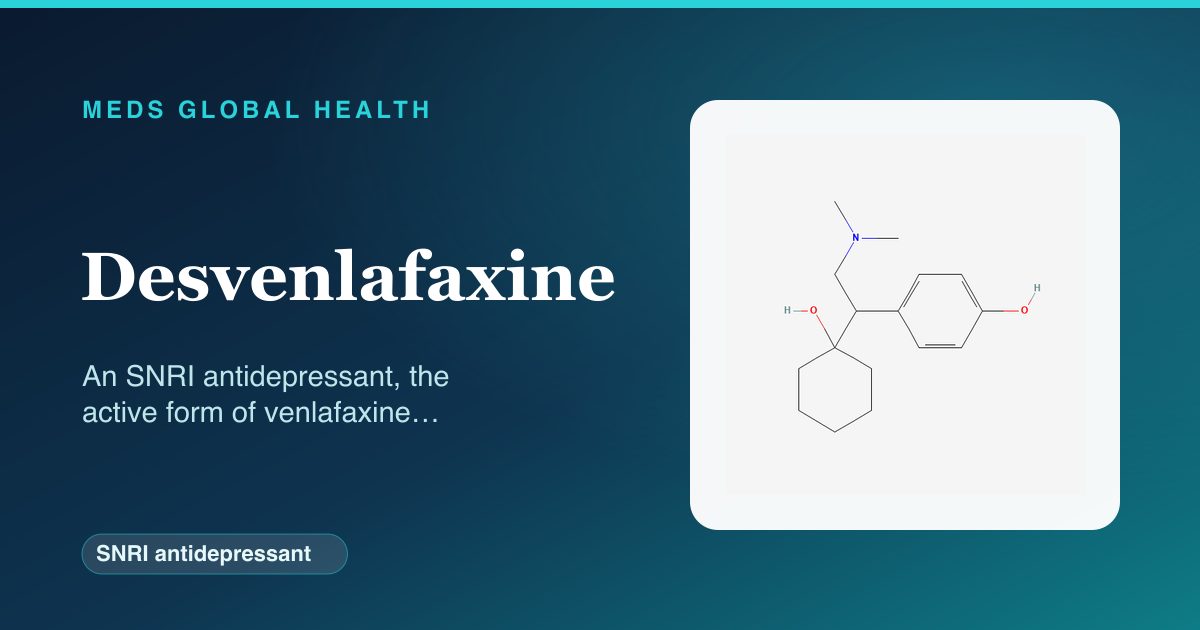
What it is
Desvenlafaxine is an antidepressant belonging to the group called SNRIs (serotonin and noradrenaline reuptake inhibitors). It is the active substance that the body produces when it breaks down another antidepressant, venlafaxine, so the two are closely related and work in a similar way. It is used to treat depression. It is taken by mouth, usually once a day. It is used more widely in some countries than in the UK, where venlafaxine itself is the more familiar option, but they belong to the same family.
How it works
Depression is linked, in part, to the activity of chemical messengers in the brain called serotonin and noradrenaline. Desvenlafaxine works by increasing the availability of these two messengers, which over time helps to lift mood and ease the symptoms of depression. Because it boosts noradrenaline as well as serotonin, it can also nudge up blood pressure, which is why blood pressure is checked. Antidepressants like this usually take some weeks to build their full effect, so it is important to keep taking it even before you feel the benefit.
Company & origin
An SNRI antidepressant used for depression; it is the active form (metabolite) of venlafaxine and is used more widely outside the UK.
What it treats
Conditions Desvenlafaxine is used for
Practical use
How to take Desvenlafaxine
General, dose-free guidance — always follow your prescriber's and the leaflet's specific instructions.
- Take it by mouth once a day as prescribed, swallowing the tablet whole rather than crushing or chewing it.
- Keep taking it even if you do not feel better straight away, as it usually takes some weeks to work.
- Do not stop it suddenly; the dose should be reduced gradually under medical guidance to avoid withdrawal effects.
- Tell your prescriber if you have high blood pressure or notice it rising, as this medicine can raise it.
- Seek help promptly if your mood worsens or you have thoughts of harming yourself, especially in the first weeks.
Weighing it up
Advantages & disadvantages of Desvenlafaxine
Advantages
- An effective treatment for depression, working on two of the brain's mood-related messengers.
- Taken by mouth once a day.
- Closely related to venlafaxine, with a well-understood way of working.
Disadvantages
- Can raise blood pressure, which needs checking.
- Causes withdrawal-type effects if stopped suddenly, so it must be reduced gradually.
- Like other antidepressants, can briefly increase suicidal thoughts early on in younger people, and can raise bleeding risk.
Practical use
Good to know
A few points stand out with desvenlafaxine. First, it can raise blood pressure, so this is checked before and during treatment, especially at higher doses. Second, it should not be stopped suddenly: doing so can cause withdrawal-type effects such as dizziness, flu-like feelings, mood changes and odd 'electric shock' sensations, so the dose is reduced gradually when it is time to stop. Third, as with all antidepressants, there can be a short-term increase in suicidal thoughts in the first weeks, particularly in younger adults and teenagers, so close support early on matters. It can also increase the risk of bleeding, especially alongside anti-inflammatory painkillers or blood thinners. It usually takes some weeks to work fully.
Who should not take it / use with caution
- People who have had a serious allergic reaction to desvenlafaxine or venlafaxine should not take it.
- It must not be taken with, or close to, an MAOI antidepressant, because of the risk of a serious reaction.
- It is used with caution in people with high or poorly controlled blood pressure, heart problems, or a higher risk of bleeding, under medical guidance.
Monitoring
- Checking blood pressure before and during treatment.
- Reviewing mood and watching for any worsening or suicidal thoughts, especially early on.
- Watching for signs of bleeding and reviewing how well the medicine is working over time.
Side effects
- Nausea, dry mouth, sweating or constipation, especially early on.
- Difficulty sleeping, dizziness or headache.
- Raised blood pressure and a faster heartbeat in some people.
- Less commonly, an increased tendency to bleed or bruise, and rarely a reaction called serotonin syndrome.
Key interactions
- It must not be combined with MAOI antidepressants, and care is needed with other medicines that raise serotonin.
- Taken with anti-inflammatory painkillers (NSAIDs), aspirin or blood thinners it raises the risk of bleeding.
- Tell your prescriber about all your medicines, including herbal ones such as St John's wort.
Available as: Modified-release tablets taken by mouth.
Answers
Desvenlafaxine: frequently asked questions
What is desvenlafaxine used for?
It is an SNRI antidepressant used to treat depression by increasing the brain messengers serotonin and noradrenaline that are linked to mood.
How is it related to venlafaxine?
It is the active form that the body makes from venlafaxine, so the two are closely related and work in a similar way.
Why must I not stop it suddenly?
Stopping suddenly can cause withdrawal-type effects such as dizziness, flu-like feelings and odd sensations, so the dose is reduced gradually under guidance.
Does it affect blood pressure?
It can raise blood pressure, so this is checked before and during treatment, especially at higher doses.
Are there risks early in treatment?
As with all antidepressants, there can be a short-term increase in suicidal thoughts in the first weeks, particularly in younger people, so seek support if your mood worsens.
The wider class
About SNRI antidepressant
Desvenlafaxine belongs to the snri antidepressant class. For how the class as a whole works, its shared safety principles and monitoring, see the full guide.
Browse by body system
Authoritative sources
- BNF
- NICE CKS
Building a medicines information resource?
We create evidence-led, dose-free drug and formulary references for teams.