A serotonin-noradrenaline reuptake inhibitor (SNRI)
Venlafaxine
An SNRI antidepressant for depression and anxiety that lifts mood by boosting two brain chemicals — effective, but one that can raise blood pressure and that must be tapered slowly because of marked discontinuation symptoms.
What is Venlafaxine?
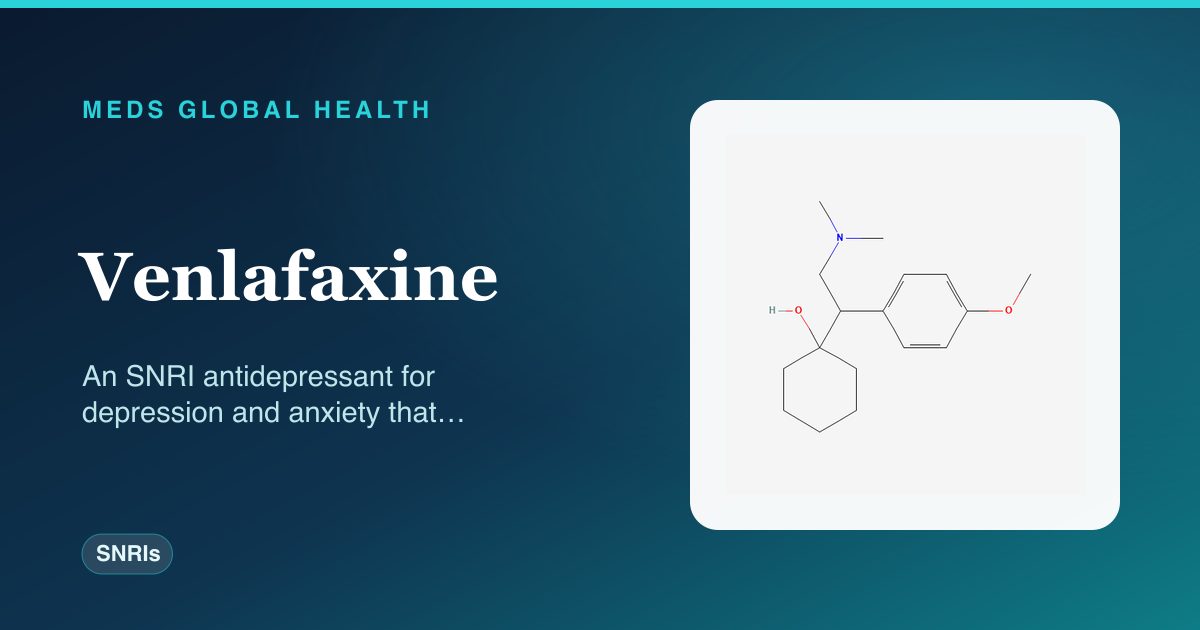
Venlafaxine is a serotonin-noradrenaline reuptake inhibitor (SNRI) used to treat depression and several anxiety disorders, including generalised and social anxiety. It works by increasing the activity of two brain chemicals involved in mood.
Education and reference only. This is a plain-language guide to Venlafaxine — it deliberately contains no doses. Doses depend on the person, the brand and the reason for treatment, and belong with your prescriber. Always check the BNF, the product labelling (SmPC) and follow medical advice.
What it is
Venlafaxine is a serotonin-noradrenaline reuptake inhibitor (SNRI) used to treat depression and several anxiety disorders, including generalised anxiety and social anxiety. It is often chosen when an SSRI has not given enough benefit, as it works on two brain chemical systems rather than one. It is a long-term, once-daily treatment (most commonly the modified-release form) that works gradually over weeks, and it needs a little more care than some antidepressants because of its effects on blood pressure and its notable discontinuation symptoms.
How it works
Venlafaxine increases the levels of two natural messengers in the brain — serotonin and, at higher intensity, noradrenaline — by stopping nerve cells from reabsorbing them too quickly, so more is available to support mood and reduce anxiety. The serotonin effect tends to dominate at lower intensity, with the noradrenaline effect adding in as the amount rises, which is part of why it can help when a serotonin-only medicine has not. That noradrenaline action also explains why it can nudge up blood pressure and heart rate, something that is kept an eye on.
Company & origin
Originated / developed by: Wyeth (now Pfizer).
Venlafaxine, the first serotonin-norepinephrine reuptake inhibitor (SNRI) of its kind, was synthesised in the early 1980s by researchers at Wyeth in the United States. It received US FDA approval in December 1993 and was marketed as Effexor; Wyeth was later acquired by Pfizer.
What it treats
Conditions Venlafaxine is used for
Practical use
How to take Venlafaxine
General, dose-free guidance — always follow your prescriber's and the leaflet's specific instructions.
- Take it as prescribed, usually with food, and keep to a consistent time each day; modified-release forms should be swallowed whole.
- It often takes a few weeks to feel the full benefit, so keep taking it even if you notice little change at first.
- Do not stop it suddenly, as this can cause unpleasant withdrawal (discontinuation) effects; reduce gradually with advice.
- Tell your doctor if you feel more anxious, agitated or have thoughts of self-harm, particularly in the first weeks.
- If you miss a dose, take it when you remember unless the next is nearly due; do not double up.
Weighing it up
Advantages & disadvantages of Venlafaxine
Advantages
- Effective for depression and a range of anxiety disorders.
- An option when other antidepressants have not worked well enough.
- Available in once-daily modified-release forms for convenience.
- Acts on two mood-related chemical systems.
Disadvantages
- Can cause nausea, headache, sweating, raised blood pressure and sleep disturbance.
- Has notable withdrawal effects if stopped suddenly, so needs careful tapering.
- Blood pressure may need monitoring, especially at higher intensities.
- Like other antidepressants, can be associated with increased anxiety or suicidal thoughts early in treatment, particularly in younger people.
Practical use
Good to know
Venlafaxine is taken once a day, usually as a modified-release capsule, and its benefit builds over several weeks rather than straight away — anxiety can even feel slightly worse in the first week or two before it improves. Because it can raise blood pressure, this is checked from time to time, especially as the amount goes up. Its most distinctive practical issue is discontinuation: stopping suddenly or even missing doses can cause unpleasant symptoms such as dizziness, "brain zaps", flu-like feelings and irritability, so it is reduced very slowly when the time comes to stop. As with all antidepressants, mood is watched closely in people under 25 when starting.
Who should not take it / use with caution
- People with poorly controlled or significant high blood pressure need it used cautiously, as it can raise blood pressure further.
- Used with caution in significant heart disease or certain heart rhythm problems, and it must not be combined with MAOI antidepressants.
- Care in people with a history of seizures, bleeding problems, or raised eye pressure (glaucoma), and closer monitoring in those under 25 or at risk of self-harm.
Monitoring
- Mood and any thoughts of self-harm, especially early and in people under 25
- Blood pressure, particularly as the amount is increased
- Response and side effects, with a slow taper planned for stopping
Side effects
- Nausea, headache, dry mouth, sweating and difficulty sleeping — common early on and often easing with time.
- A rise in blood pressure or heart rate, dizziness, and sexual side effects.
- Less commonly, marked discontinuation symptoms if doses are missed or it is stopped abruptly, and rarely serotonin syndrome when combined with other serotonin-raising medicines.
Key interactions
- It must not be taken with MAOI antidepressants, and combining it with other serotonin-raising medicines (other antidepressants, triptans, tramadol, St John's Wort) risks serotonin syndrome.
- Taken with NSAIDs, aspirin or anticoagulants it increases the risk of bleeding, including stomach bleeding.
- Care alongside other medicines that raise blood pressure or affect heart rhythm, and with other sedating medicines.
Available as: Modified-release capsules or tablets (the usual form) and standard-release tablets.
Answers
Venlafaxine: frequently asked questions
Why does my blood pressure need checking on venlafaxine?
Venlafaxine boosts noradrenaline as well as serotonin, and noradrenaline can raise blood pressure and heart rate, especially at higher intensity. So your blood pressure may be checked from time to time, particularly when the amount is increased. If it rises significantly, your prescriber can adjust the plan. This monitoring is routine and not a cause for alarm.
Why is it so important not to stop venlafaxine suddenly?
Venlafaxine is well known for discontinuation symptoms — stopping abruptly, or even missing doses, can cause dizziness, electric "brain zap" sensations, flu-like feelings, nausea and irritability. These are not a sign of addiction but of the body adjusting. To avoid them, venlafaxine is reduced very gradually when stopping, sometimes over several weeks or longer; always do this with your prescriber.
How long before venlafaxine starts to help?
Antidepressants like venlafaxine work gradually, with benefit usually building over a few weeks, and sometimes anxiety feels a little worse for the first week or two before it settles. It is worth persevering and keeping in touch with your prescriber during this time. If there is no improvement after an adequate trial, the plan can be reviewed.
Can I take ibuprofen with venlafaxine?
Be cautious — venlafaxine can increase the risk of bleeding, and anti-inflammatory painkillers (NSAIDs) such as ibuprofen add to that, especially in the stomach. Occasional use may be acceptable, but check with your pharmacist, who may suggest paracetamol or stomach protection if you need regular pain relief.
What is the difference between venlafaxine and Efexor XL?
They are the same medicine — venlafaxine is the generic (active-ingredient) name and Efexor XL is a brand name for the modified-release ("XL") form. Generic venlafaxine contains the identical active ingredient. Because the modified-release versions release the medicine steadily, it is best to stay on the same product once you are settled.
The wider class
About SNRIs
Venlafaxine belongs to the snris class. For how the class as a whole works, its shared safety principles and monitoring, see the full guide.
Browse by body system
Authoritative sources
- BNF: Venlafaxine.
- electronic Medicines Compendium (SmPC): Venlafaxine (Efexor XL).
- NICE CKS: Venlafaxine.
- NICE NG222: Depression in adults - antidepressant treatment.
Keep reading
Related articles
Building a medicines information resource?
We create evidence-led, dose-free drug and formulary references for teams.