A stimulant for ADHD, the active part of methylphenidate
Dexmethylphenidate
A stimulant medicine for ADHD, the active form of methylphenidate, which is a controlled drug.
What is Dexmethylphenidate?
Dexmethylphenidate is a stimulant medicine used to treat ADHD (attention deficit hyperactivity disorder). It is the active part (enantiomer) of methylphenidate and works in the same general way. It is a controlled drug, so it is prescribed and stored carefully. Before starting, the heart is checked because stimulants can affect heart rate and blood pressure; children's growth is monitored during treatment; and it can affect mood and sleep. It also has a potential for dependence and misuse, so it is used under close medical supervision as part of a wider treatment plan.
Education and reference only. This is a plain-language guide to Dexmethylphenidate — it deliberately contains no doses. Doses depend on the person, the brand and the reason for treatment, and belong with your prescriber. Always check the BNF, the product labelling (SmPC) and follow medical advice.
What it is
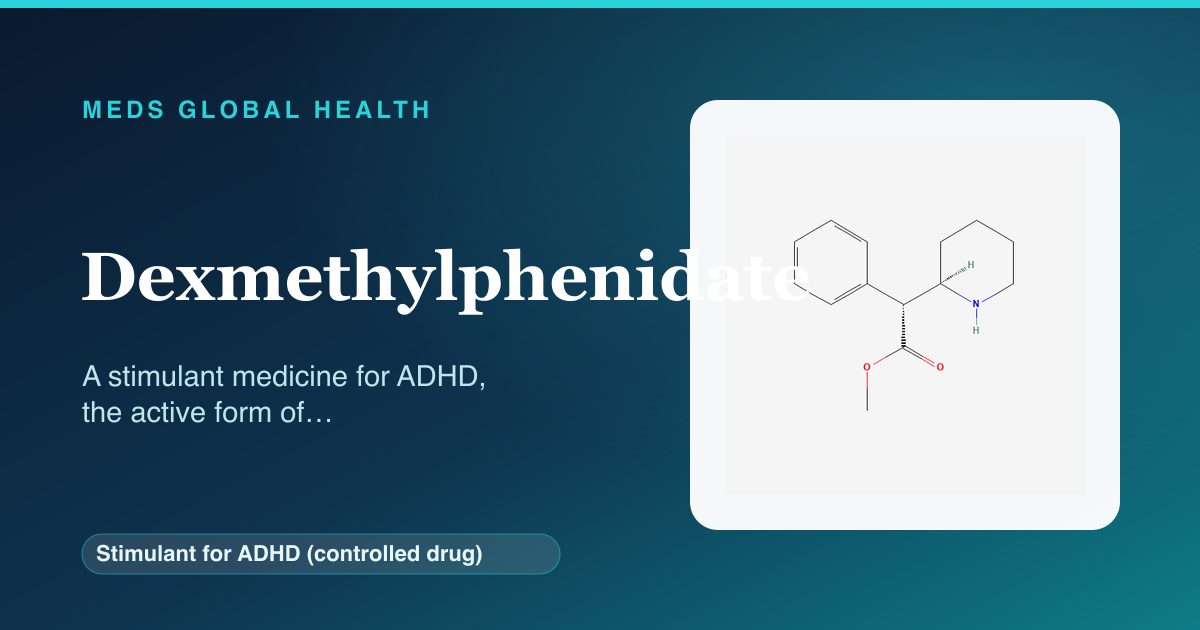
Dexmethylphenidate is a stimulant medicine used to treat ADHD, a condition that affects attention, activity levels and impulse control. It is the active part of methylphenidate, a more familiar ADHD medicine; methylphenidate is a mix of two mirror-image forms, and dexmethylphenidate is the more active one on its own. It is taken by mouth. It is a controlled drug, which means there are extra rules around prescribing and storing it. It is used as one part of a broader treatment plan that usually also includes support and behavioural strategies. It is used more widely in some countries than in the UK.
How it works
Dexmethylphenidate works in the brain by increasing the activity of chemical messengers, mainly dopamine and noradrenaline, in areas involved in attention and self-control. In ADHD, this helps improve concentration and reduces restlessness and impulsive behaviour. Because it is a stimulant that affects these messengers, it can also speed up the heart and raise blood pressure a little, affect appetite and sleep, and influence mood, which is why these are watched. Its effects on the brain's reward system are also the reason it carries a potential for misuse and dependence.
Company & origin
A stimulant medicine for ADHD; it is the active form (enantiomer) of methylphenidate and is used more widely outside the UK.
Practical use
How to take Dexmethylphenidate
General, dose-free guidance — always follow your prescriber's and the leaflet's specific instructions.
- Take it by mouth exactly as prescribed; it is a controlled drug, so follow the rules and never share it.
- Take it earlier in the day as advised, since taking it late can make it hard to sleep.
- Keep your appointments so your heart, blood pressure, mood and (in children) growth can be monitored.
- Tell your prescriber about any heart problems, palpitations, fainting or family history of heart disease.
- Report any new or worsening mood, anxiety or unusual thoughts or behaviour promptly.
Weighing it up
Advantages & disadvantages of Dexmethylphenidate
Advantages
- Can improve attention and reduce restlessness and impulsiveness in ADHD.
- Taken by mouth as part of a broader treatment plan.
- The active form of methylphenidate, with a well-understood way of working.
Disadvantages
- A controlled drug that needs a heart check before starting and careful monitoring.
- Can reduce appetite and slow growth in children, and can disturb sleep and affect mood.
- Carries a potential for dependence and misuse, so it needs close supervision.
Practical use
Good to know
Several safety points stand out. As a controlled drug, dexmethylphenidate is prescribed, supplied and stored under strict rules, and should never be shared. Before starting, the heart is checked, including heart rate, blood pressure and any history of heart problems, because stimulants can affect the heart. In children, growth (height and weight) is monitored during treatment, as appetite can be reduced and growth can slow. It can affect mood, cause anxiety or, rarely, more serious psychiatric effects, which should be reported. It also has a potential for dependence and misuse, so it is used under close supervision. Appetite loss and difficulty sleeping are common, so timing of doses matters; it is part of a wider treatment plan, not a stand-alone fix.
Who should not take it / use with caution
- People with certain serious heart problems, very high blood pressure or a history of severe anxiety or agitation may not be able to take it.
- It must not be taken with, or close to, an MAOI antidepressant, because of the risk of a serious reaction.
- People with a history of certain mental-health conditions, or who have had a serious allergic reaction to it, use it only under careful specialist judgement.
Monitoring
- Checking heart rate and blood pressure before and during treatment.
- Monitoring height and weight in children, as appetite and growth can be affected.
- Reviewing mood, sleep, any psychiatric effects, and how well it is working over time.
Side effects
- Reduced appetite and, in children, slowing of growth that is monitored.
- Difficulty sleeping, headache and a dry mouth.
- Faster heartbeat, a small rise in blood pressure, and feeling anxious or irritable.
- Less commonly, mood changes or, rarely, more serious psychiatric or heart effects, which need attention.
Key interactions
- It must not be combined with MAOI antidepressants, because of the risk of a serious reaction.
- It can interact with some blood-pressure medicines and with other medicines that affect the heart or mood.
- Tell your prescriber about all your medicines, as a controlled drug it needs careful review.
Available as: Tablets and modified-release capsules taken by mouth.
Answers
Dexmethylphenidate: frequently asked questions
What is dexmethylphenidate used for?
It is a stimulant medicine used to treat ADHD, helping improve attention and reduce restlessness and impulsive behaviour as part of a wider plan.
How is it related to methylphenidate?
It is the active mirror-image form of methylphenidate, so it works in the same general way but is the more active part on its own.
Why is a heart check needed first?
Stimulants can affect heart rate and blood pressure, so the heart is checked before starting and monitored during treatment for safety.
Will it affect my child's growth?
It can reduce appetite and slow growth, so children's height and weight are monitored during treatment and reviewed regularly.
Why is it a controlled drug?
It affects the brain's reward system and has a potential for dependence and misuse, so there are strict rules on prescribing and storing it.
The wider class
About Stimulant for ADHD (controlled drug)
Dexmethylphenidate belongs to the stimulant for adhd (controlled drug) class. For how the class as a whole works, its shared safety principles and monitoring, see the full guide.
Browse by body system
Authoritative sources
- BNF
- NICE CKS
Building a medicines information resource?
We create evidence-led, dose-free drug and formulary references for teams.