A medicine for Alzheimer's dementia
Donepezil
A once-daily cholinesterase inhibitor for the symptoms of Alzheimer’s dementia, usually the first one tried because it is simple to take.
What is Donepezil?
Donepezil is a cholinesterase inhibitor used for Alzheimer's disease. It raises levels of a brain chemical (acetylcholine) involved in memory and thinking, which can ease symptoms or slow their progress for a time. It does not cure dementia, but it can help some people stay more able for longer.
Education and reference only. This is a plain-language guide to Donepezil — it deliberately contains no doses. Doses depend on the person, the brand and the reason for treatment, and belong with your prescriber. Always check the BNF, the product labelling (SmPC) and follow medical advice.
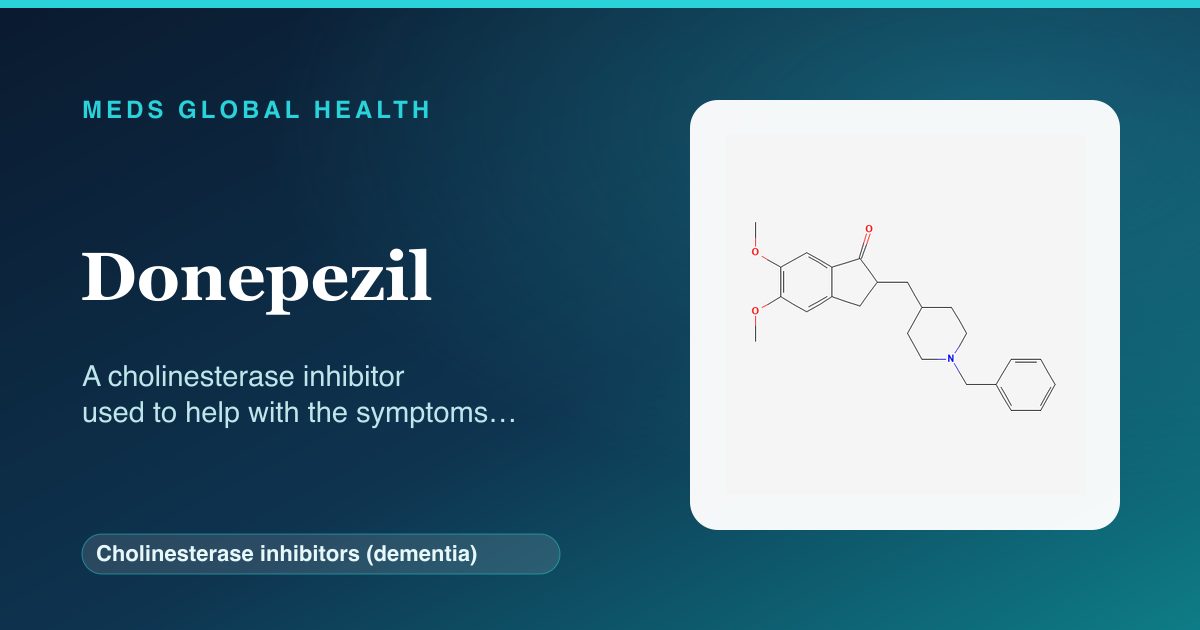
What it is
Donepezil is one of the most commonly prescribed medicines for Alzheimer's disease in the UK. It is used for mild to moderate Alzheimer's dementia, and sometimes in more severe stages on specialist advice. It does not cure the condition or stop it progressing, but it can help with memory, thinking and day-to-day function for a period of time. It is taken as a long-term, once-daily tablet.
How it works
In Alzheimer's disease, levels of a brain chemical messenger called acetylcholine fall, and this is linked to problems with memory and thinking. Donepezil blocks the enzyme (cholinesterase) that normally breaks acetylcholine down. By slowing that breakdown, it keeps more of the messenger available in the brain, which can help symptoms for a while.
Company & origin
Originated / developed by: Eisai and Pfizer (originators).
A cholinesterase inhibitor introduced in the late 1990s for Alzheimer's disease.
What it treats
Conditions Donepezil is used for
Practical use
How to take Donepezil
General, dose-free guidance — always follow your prescriber's and the leaflet's specific instructions.
- It is usually taken once a day, often at bedtime, but in the morning if it disturbs sleep.
- It can be taken with or without food, whichever is easier to remember.
- Orodispersible (melt-in-the-mouth) tablets are placed on the tongue to dissolve, then swallowed.
- Take it regularly each day; a carer or pill organiser can help if memory is a problem.
- If you miss a dose, skip it and take the next one as normal; do not take two doses together.
Weighing it up
Advantages & disadvantages of Donepezil
Advantages
- Can help with memory, thinking and daily activities for a period of time.
- Taken just once a day, which is simple for the person and their carers.
- Well established with many years of UK use, including a melt-in-the-mouth option.
Disadvantages
- Does not cure dementia or stop it progressing, and the benefit eventually fades.
- Can cause nausea, diarrhoea, poor appetite and vivid dreams, especially at first.
- Can slow the heart and is not suitable for everyone, so needs careful checks.
Practical use
Good to know
Donepezil treats symptoms rather than the underlying disease, so its job is to help someone stay as able as possible for longer, not to reverse dementia. The benefit is often gradual and may be most noticeable to family or carers, and treatment is usually reviewed regularly to check it is still helping. It is normally started at a lower strength and increased after a few weeks to reduce side effects. Because it can slow the heart, your doctor will ask about heart problems, dizziness or fainting before and during treatment. If it is stopped, any benefit gradually wears off.
Who should not take it / use with caution
- People with certain slow or irregular heart rhythms, heart block or a history of fainting need caution or may be unsuitable.
- People with asthma or COPD, or a history of stomach ulcers, need careful assessment as symptoms can worsen.
- People who have had an allergic reaction to donepezil or similar medicines should not take it.
Monitoring
- Treatment is reviewed regularly to check it is still helping with memory and daily function.
- Heart rate, dizziness and any fainting are monitored, especially when the dose is increased.
- Weight, appetite and stomach symptoms are kept under review.
Side effects
- Common: nausea, diarrhoea, loss of appetite, headache, dizziness, muscle cramps and vivid dreams.
- It can slow the heart and cause fainting; report dizziness, blackouts or a very slow pulse.
- Seek urgent help for severe stomach pain, black stools, difficulty passing urine or a seizure.
Key interactions
- Other medicines that slow the heart, such as beta-blockers or some heart-rhythm drugs, add to the effect.
- Certain antibiotics, antifungals and antidepressants can raise donepezil levels and side effects.
- Anticholinergic medicines (some for bladder, allergy or sleep) can work against it and worsen confusion.
Available as: Tablets, including orodispersible (melt-in-the-mouth) tablets.
Answers
Donepezil: frequently asked questions
Does donepezil cure Alzheimer's disease?
No. It can ease symptoms and help someone stay more able for a time, but it does not cure dementia or stop it progressing.
Why is it often taken at bedtime?
Taking it at night suits many people, but if it causes vivid dreams or disturbs sleep your doctor may suggest taking it in the morning instead.
How will I know if it is working?
Benefits are often gradual and may be clearer to family or carers. Doctors review memory, thinking and daily activities at follow-up appointments.
What if a dose is missed?
Skip the missed dose and continue as normal. Do not take two doses at once. If several days are missed, ask your doctor before restarting.
Can it affect the heart?
Yes, it can slow the heart and occasionally cause fainting. Tell your doctor about heart problems and report dizziness or blackouts.
The wider class
About Cholinesterase inhibitors (dementia)
Donepezil belongs to the cholinesterase inhibitors (dementia) class. For how the class as a whole works, its shared safety principles and monitoring, see the full guide.
Browse by body system
Authoritative sources
- BNF
- NICE CKS
Building a medicines information resource?
We create evidence-led, dose-free drug and formulary references for teams.