A progestogen used in contraception
Drospirenone
A progestogen used in some contraceptive pills, with a mild water-balancing effect, to prevent pregnancy.
What is Drospirenone?
Drospirenone is a progestogen hormone used in certain contraceptive pills, either combined with an oestrogen (such as Yasmin) or on its own (Slynd). It prevents pregnancy mainly by stopping the ovaries releasing an egg. It has a mild anti-water-retention effect, which is why some people notice less bloating. As with other combined pills, it carries a small risk of blood clots, and because it can affect potassium it needs care alongside certain medicines.
Education and reference only. This is a plain-language guide to Drospirenone — it deliberately contains no doses. Doses depend on the person, the brand and the reason for treatment, and belong with your prescriber. Always check the BNF, the product labelling (SmPC) and follow medical advice.
What it is
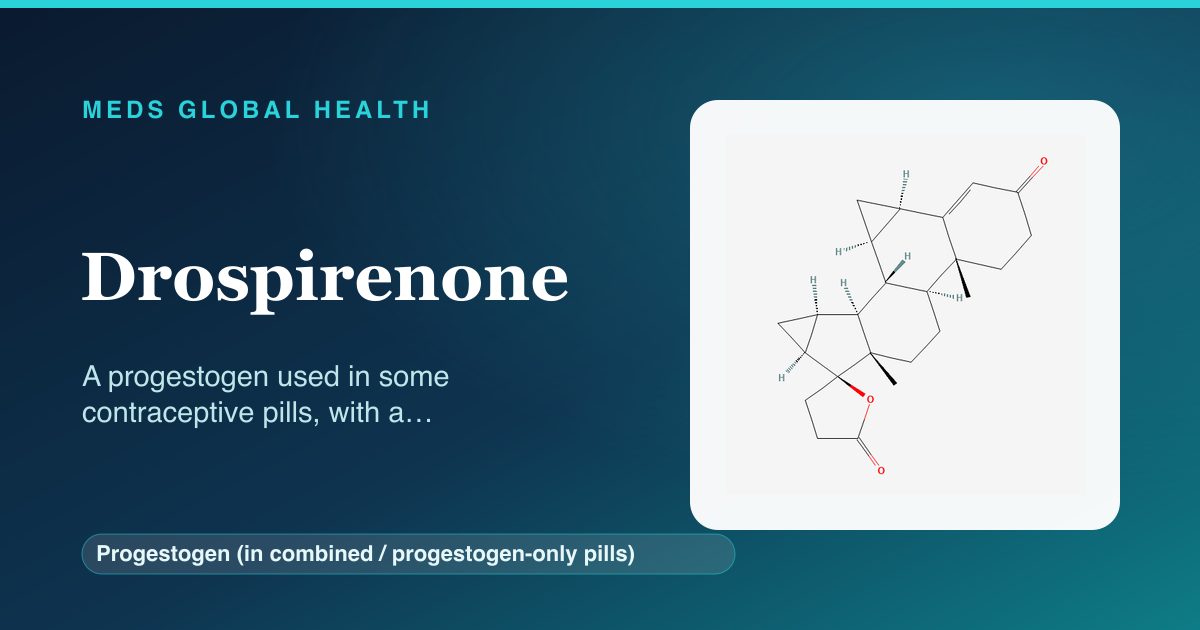
Drospirenone is a progestogen, a man-made hormone similar to the body's natural progesterone, used in contraceptive pills. It appears in combined pills alongside an oestrogen and in a progestogen-only pill. Unlike some other progestogens, it has a mild anti-mineralocorticoid effect, meaning it gently counteracts water retention, which some people find reduces bloating. It is taken by mouth as a daily pill to prevent pregnancy.
How it works
Drospirenone prevents pregnancy mainly by stopping the ovaries from releasing an egg, while also thickening the mucus at the neck of the womb and thinning the womb lining. Its mild anti-mineralocorticoid action means it nudges the body to hold on to less water and salt, which can ease bloating but also slightly raises potassium — important when combined with medicines that do the same. In combined pills the oestrogen partner adds cycle control but also contributes to the small clot risk shared by all combined pills.
Company & origin
A progestogen hormone used in the UK in combined contraceptive pills and a progestogen-only pill.
Practical use
How to take Drospirenone
General, dose-free guidance — always follow your prescriber's and the leaflet's specific instructions.
- Take one pill at about the same time each day, following the instructions for your specific pill.
- Follow the guidance on what to do if you miss a pill, which differs between combined and progestogen-only versions.
- Use condoms as well if you need protection against sexually transmitted infections.
- Learn the warning signs of a blood clot, such as a swollen, painful calf or sudden breathlessness.
- Tell your prescriber about medicines that affect potassium, such as some blood pressure or water tablets.
- Mention risk factors such as smoking, migraine or a family history of clots, especially for combined pills.
Weighing it up
Advantages & disadvantages of Drospirenone
Advantages
- Reliable contraception when taken correctly, with the convenience of a daily pill.
- A mild anti-water-retention effect that some people find reduces bloating.
- Available as both a combined pill and a progestogen-only pill, giving options.
Disadvantages
- Combined versions share the small blood clot risk of all combined hormonal contraceptives.
- Can slightly raise potassium, needing care with certain other medicines.
- It does not protect against sexually transmitted infections.
Practical use
Good to know
Like all combined hormonal contraceptives, drospirenone-containing combined pills carry a small increased risk of blood clots (in the legs or lungs), so it is important to know the warning signs — a painful, swollen calf, sudden breathlessness or chest pain — and to mention risk factors such as smoking, being older, or a family history of clots. Its mild water-balancing effect can slightly raise potassium, so caution is needed with medicines that also raise potassium, such as some blood pressure tablets and water tablets. The progestogen-only version avoids oestrogen and suits some women who cannot take combined pills. You should not use the combined version if you get migraine with aura (warning signs before the headache), and you should tell your doctor before any planned surgery or a long spell of being immobile, as combined pills sometimes need to be stopped for a time because of the clot risk. It does not protect against sexually transmitted infections.
Who should not take it / use with caution
- Women with a history of blood clots, certain migraines or some heart and circulation conditions should not use combined versions.
- It is avoided in current breast cancer and certain liver conditions.
- It is used with caution, or avoided, alongside medicines or conditions that raise potassium.
Monitoring
- A check of blood pressure and review of clot risk factors, especially for combined pills.
- Monitoring potassium where there is a reason to expect it could rise.
- Reviewing any troublesome bleeding pattern and overall suitability over time.
Side effects
- Irregular bleeding or spotting, especially in the early months.
- Headaches, breast tenderness, nausea or mood changes in some women.
- Rarely, blood clots with combined versions, and changes in potassium levels.
Key interactions
- Medicines that raise potassium, such as some blood pressure tablets and water tablets, need caution.
- Enzyme-inducing medicines (some for epilepsy) and St John's wort can reduce contraceptive effect.
- Certain HIV and tuberculosis medicines may interact, so tell your prescriber what you take.
Available as: Tablets taken by mouth, in combined and progestogen-only pills.
Answers
Drospirenone: frequently asked questions
What makes drospirenone different from other pill hormones?
It has a mild anti-water-retention effect, which some people find reduces bloating, and it is used in both combined and progestogen-only pills.
Does it raise the risk of blood clots?
Combined pills containing it carry the small clot risk shared by all combined hormonal contraceptives, so know the warning signs and discuss your risk factors.
Why does it affect potassium?
Its mild water-balancing action can slightly raise potassium, so care is needed with other medicines that also raise it, such as some blood pressure and water tablets.
Is the progestogen-only version safer for clots?
Progestogen-only pills avoid oestrogen and do not carry the same clot risk as combined pills, so they suit some women who cannot take combined methods.
Does it protect against STIs?
No. It prevents pregnancy but not sexually transmitted infections, so use condoms as well if you need that protection.
The wider class
About Progestogen (in combined / progestogen-only pills)
Drospirenone belongs to the progestogen (in combined / progestogen-only pills) class. For how the class as a whole works, its shared safety principles and monitoring, see the full guide.
Browse by body system
Authoritative sources
- BNF
- NICE CKS
Building a medicines information resource?
We create evidence-led, dose-free drug and formulary references for teams.