The oestrogen in the combined pill
Ethinylestradiol
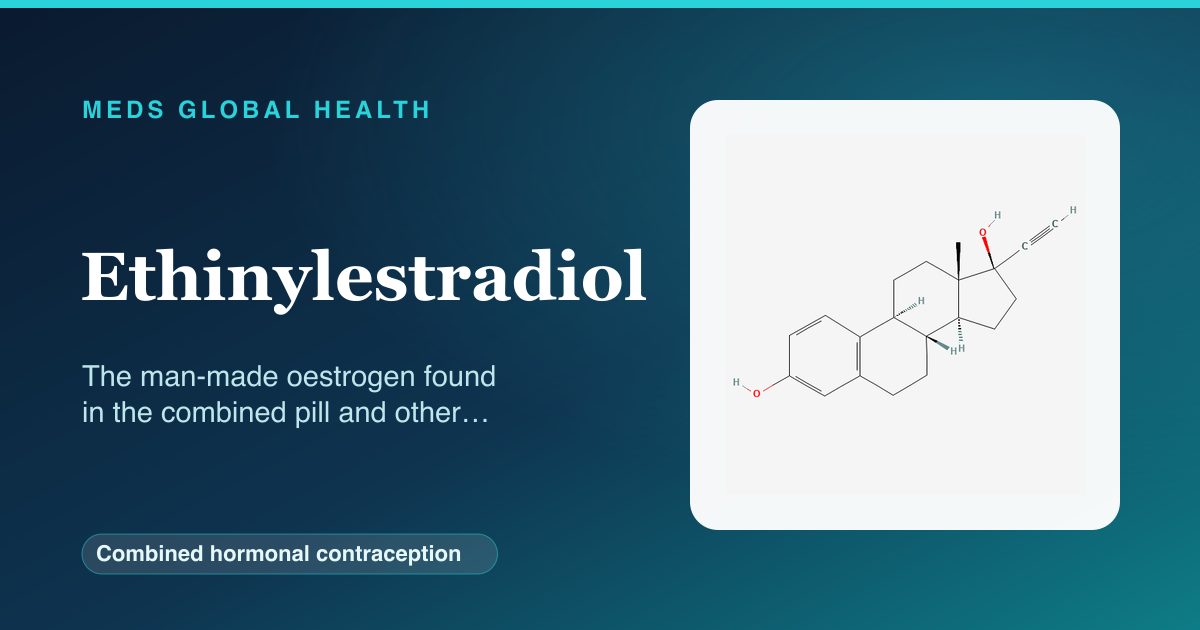
The man-made oestrogen found in the combined pill and other combined hormonal contraceptives.
What is Ethinylestradiol?
Ethinylestradiol is a synthetic (man-made) oestrogen and the oestrogen part of the combined contraceptive pill, patch and ring, where it is combined with a progestogen. It helps prevent pregnancy mainly by stopping the release of an egg each month. Because it is an oestrogen, it carries a small increased risk of blood clots and stroke, so it is avoided in certain people, such as smokers over a certain age, those with migraine with aura, a high body weight or a history of clots.
Education and reference only. This is a plain-language guide to Ethinylestradiol — it deliberately contains no doses. Doses depend on the person, the brand and the reason for treatment, and belong with your prescriber. Always check the BNF, the product labelling (SmPC) and follow medical advice.
What it is
Ethinylestradiol is a synthetic version of the natural hormone oestrogen. On its own it is rarely used; in everyday practice it is one half of the combined hormonal contraceptives, paired with a progestogen in the combined pill, the contraceptive patch and the vaginal ring. The combined pill is one of the most widely used contraceptives in the UK and can also help with heavy or painful periods, acne and premenstrual symptoms.
How it works
As part of combined contraception, ethinylestradiol works mainly by stopping the ovaries releasing an egg each month. It also helps keep the womb lining stable, which gives more predictable, often lighter, bleeding. Together with the progestogen it thickens cervical mucus and thins the womb lining, adding further to its contraceptive effect.
Company & origin
A synthetic oestrogen used in the UK as the oestrogen part of the combined contraceptive pill, patch and vaginal ring.
Practical use
How to take Ethinylestradiol
General, dose-free guidance — always follow your prescriber's and the leaflet's specific instructions.
- Take the combined pill regularly as directed, usually at around the same time each day, or apply the patch or ring as instructed.
- Follow the routine for any pill-free, patch-free or ring-free break, and start the next pack on time so protection is not lost.
- Tell your prescriber if you smoke, get migraines (especially with aura or visual disturbance), have high blood pressure or a family history of clots.
- If you miss pills, are sick or have severe diarrhoea, check the missed-pill advice and use condoms as a back-up if needed.
- If you miss a pill, take it as soon as you remember and follow the leaflet's missed-pill rules, which depend on how many were missed and when.
Weighing it up
Advantages & disadvantages of Ethinylestradiol
Advantages
- Very effective contraception when used correctly, with the bonus of more regular, often lighter periods.
- Can help with heavy or painful periods, acne and premenstrual symptoms.
- Quickly reversible — fertility usually returns soon after stopping.
Disadvantages
- Carries a small increased risk of blood clots, and a smaller risk of stroke and heart attack.
- Not suitable for everyone, including some smokers, those with migraine with aura or a high body weight.
- Effectiveness can be reduced by missed pills, vomiting, diarrhoea and certain interacting medicines.
Practical use
Good to know
Because ethinylestradiol is an oestrogen, the biggest safety issue is a small increased risk of blood clots in the legs or lungs (venous thromboembolism) and, less commonly, stroke or heart attack. This is why the combined pill is generally avoided in people who smoke and are over thirty-five, have migraine with aura, a high body mass index, high blood pressure, or a personal or strong family history of clots. The extra clot risk is still very small and, for most healthy young non-smokers, far lower than the clot risk in pregnancy. Medicines that speed up the liver (enzyme inducers, such as some epilepsy treatments and the herbal remedy St John's wort) can make combined contraception less reliable. Seek urgent help for sudden chest pain, breathlessness, a swollen painful calf, or weakness or numbness on one side.
Who should not take it / use with caution
- People with a history of blood clots, certain heart or circulation problems, or some clotting disorders should not use it.
- It is avoided in migraine with aura, in smokers over thirty-five, and with very high blood pressure or a high body mass index.
- It is not used in pregnancy, in some liver conditions, or with certain breast cancers, and needs care while breastfeeding.
Monitoring
- Blood pressure and weight are usually checked before starting and at reviews.
- Your risk factors for clots, such as smoking, migraine and family history, are reviewed regularly.
- Any new migraines with aura, severe headaches or signs of a clot should prompt urgent review.
Side effects
- Headaches, breast tenderness, nausea and breakthrough bleeding, especially in the first few months.
- Mood changes and changes in libido in some people.
- Rarely but seriously, a blood clot — seek urgent help for calf swelling, chest pain, breathlessness or one-sided weakness.
Key interactions
- Enzyme-inducing medicines (some epilepsy drugs, certain antibiotics for tuberculosis) and St John's wort can make it less reliable.
- It can affect the levels of some other medicines, so tell your prescriber about everything you take.
- Always mention combined contraception when starting any new medicine, including ones bought over the counter.
Available as: Combined tablets (with a progestogen); also a skin patch and a vaginal ring.
Answers
Ethinylestradiol: frequently asked questions
Does the combined pill cause blood clots?
It slightly increases the risk of clots because of its oestrogen, but for most healthy young non-smokers the risk is very small and lower than the clot risk during pregnancy.
Why can't I take it if I get migraine with aura?
Migraine with aura is linked to a higher stroke risk, which the oestrogen can add to, so the combined pill is avoided and a different method is offered.
Will antibiotics stop it working?
Most ordinary antibiotics do not, but certain enzyme-inducing medicines and St John's wort can reduce its reliability, so check with your prescriber.
What if I miss a pill?
Take it as soon as you remember and follow the missed-pill rules in the leaflet; depending on how many you missed you may need condoms as a back-up.
Can it help my periods?
Yes, many people find the combined pill makes periods more regular, lighter and less painful, and it can also help acne and premenstrual symptoms.
The wider class
About Combined hormonal contraception
Ethinylestradiol belongs to the combined hormonal contraception class. For how the class as a whole works, its shared safety principles and monitoring, see the full guide.
Browse by body system
Authoritative sources
- BNF
- NICE CKS
Building a medicines information resource?
We create evidence-led, dose-free drug and formulary references for teams.