A corticosteroid nasal spray for allergic rhinitis
Flunisolide
A steroid nasal spray used to ease the symptoms of allergic rhinitis, such as a blocked, runny or itchy nose.
What is Flunisolide?
Flunisolide is a corticosteroid (steroid) medicine used mainly as a nasal spray to treat allergic rhinitis, the inflammation of the nose caused by allergies such as hay fever. It works by calming inflammation in the lining of the nose, which eases symptoms like a blocked, runny, itchy or sneezy nose. It is used regularly for the best effect and usually has little effect on the rest of the body at normal doses. The most common side effects are local ones, such as nosebleeds or nasal irritation. It has also historically been used as an inhaler for asthma.
Education and reference only. This is a plain-language guide to Flunisolide — it deliberately contains no doses. Doses depend on the person, the brand and the reason for treatment, and belong with your prescriber. Always check the BNF, the product labelling (SmPC) and follow medical advice.
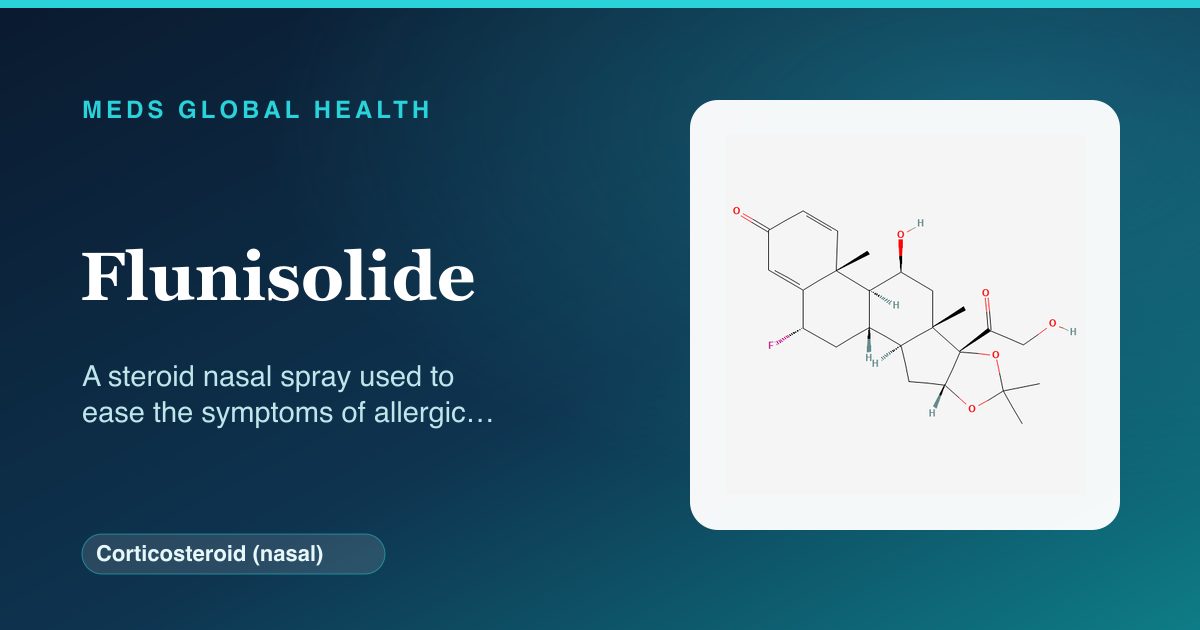
What it is
Flunisolide is a corticosteroid, a type of anti-inflammatory medicine. It is used mainly as a nasal spray to treat allergic rhinitis, where the lining of the nose becomes inflamed in response to allergens such as pollen, dust mites or animal dander, causing a blocked, runny, itchy or sneezy nose. By acting directly on the nasal lining, it dampens this inflammation. Historically, flunisolide has also been used as an inhaled medicine for asthma, working on the airways in the lungs, although nasal use for allergy symptoms is its more familiar role.
How it works
In allergic rhinitis, contact with an allergen triggers inflammation in the lining of the nose, which swells and produces mucus, causing congestion, a runny nose, itching and sneezing. Flunisolide is a corticosteroid that reduces this inflammation where it is sprayed, calming the swelling and the over-reaction of the nasal lining. Because it acts locally and is used in small amounts, it has little effect on the rest of the body at usual doses. It works best when used regularly, as the anti-inflammatory effect builds up over days rather than giving instant relief.
Company & origin
A corticosteroid used in the UK mainly as a nasal spray to treat allergic rhinitis, and historically as an inhaler for asthma.
What it treats
Conditions Flunisolide is used for
Practical use
How to take Flunisolide
General, dose-free guidance — always follow your prescriber's and the leaflet's specific instructions.
- Use the nasal spray regularly, usually every day, for the best effect, as it works by reducing inflammation over time rather than instantly.
- Follow the technique you are shown: clear your nose gently first, then aim the spray slightly away from the central wall of the nose.
- Do not stop and start it randomly during the allergy season; steady use keeps symptoms controlled.
- Tell your pharmacist or doctor if you get frequent nosebleeds, crusting or persistent irritation inside the nose.
- Keep using your other allergy advice, such as avoiding triggers where you can.
Weighing it up
Advantages & disadvantages of Flunisolide
Advantages
- Effectively eases the nasal symptoms of allergic rhinitis, such as congestion, runny nose, itching and sneezing.
- Acts mainly in the nose, so it has little effect on the rest of the body at normal doses.
- A regular, non-drowsy option for controlling allergy symptoms in the nose.
Disadvantages
- Works best with regular daily use, so it is less helpful if used only occasionally.
- Can cause local side effects such as nosebleeds, dryness or irritation inside the nose.
- Takes a few days to build up its full effect rather than giving instant relief.
Practical use
Good to know
The key thing to know is that a steroid nasal spray like flunisolide works best when used regularly, every day during the allergy season or while you have symptoms, rather than only now and then, because its anti-inflammatory effect builds up over a few days. Good spraying technique helps it reach the nasal lining and reduces side effects: aiming the spray slightly away from the central wall (septum) of the nose can help avoid irritation. The most common side effects are local, such as nosebleeds, dryness or irritation inside the nose. At normal doses it has minimal effect on the rest of the body, which is a key advantage over steroid tablets, though very rarely problems affecting the nasal septum can occur with long-term use, so any persistent nosebleeds or crusting should be mentioned.
Who should not take it / use with caution
- People who have had a serious allergic reaction to flunisolide should not use it.
- It is used with care in people with a recent nose operation, injury or untreated infection in the nose.
- It is used with caution, under medical advice, in pregnancy and in children, where appropriate guidance is followed.
Monitoring
- Reviewing how well your nasal symptoms are controlled.
- Checking your spraying technique if you get local side effects.
- Watching for persistent nosebleeds, crusting or irritation, especially with long-term use.
Side effects
- Nosebleeds, dryness, crusting or irritation inside the nose.
- A sore throat, sneezing or an unpleasant taste or smell after spraying.
- Rarely, with long-term use, problems affecting the nasal septum, so persistent nosebleeds or crusting should be reported.
Key interactions
- At normal nasal doses it has few important interactions, but tell your prescriber about all your medicines.
- Medicines that strongly affect how the body breaks down steroids could, rarely, increase steroid effects, so mention them.
- It can be used alongside many other allergy treatments, but check with your pharmacist if combining several.
Available as: A nasal spray; flunisolide has also historically been available as an inhaler.
Answers
Flunisolide: frequently asked questions
What is flunisolide used for?
It is a steroid medicine used mainly as a nasal spray to treat allergic rhinitis, calming inflammation in the lining of the nose to ease symptoms such as a blocked, runny, itchy or sneezy nose.
Do I need to use it every day?
Yes; a steroid nasal spray works best with regular daily use, as its anti-inflammatory effect builds up over a few days rather than giving instant relief.
Will it affect the rest of my body?
At normal nasal doses it acts mainly in the nose and has little effect on the rest of the body, which is a key advantage over steroid tablets.
Why am I getting nosebleeds?
Nosebleeds, dryness and irritation inside the nose are the most common side effects; aiming the spray slightly away from the central wall of the nose can help, and you should report persistent nosebleeds or crusting.
Was it ever used for asthma?
Yes; flunisolide has historically been used as an inhaler for asthma, acting on the airways in the lungs, although nasal use for allergy symptoms is its more familiar role.
The wider class
About Corticosteroid (nasal)
Flunisolide belongs to the corticosteroid (nasal) class. For how the class as a whole works, its shared safety principles and monitoring, see the full guide.
Browse by body system
Authoritative sources
- BNF
- NICE CKS
Building a medicines information resource?
We create evidence-led, dose-free drug and formulary references for teams.