An antimuscarinic for stomach and bowel cramps, related to hyoscine and atropine
Hyoscyamine
An antimuscarinic medicine that relaxes the gut to ease cramps and can dry up secretions.
What is Hyoscyamine?
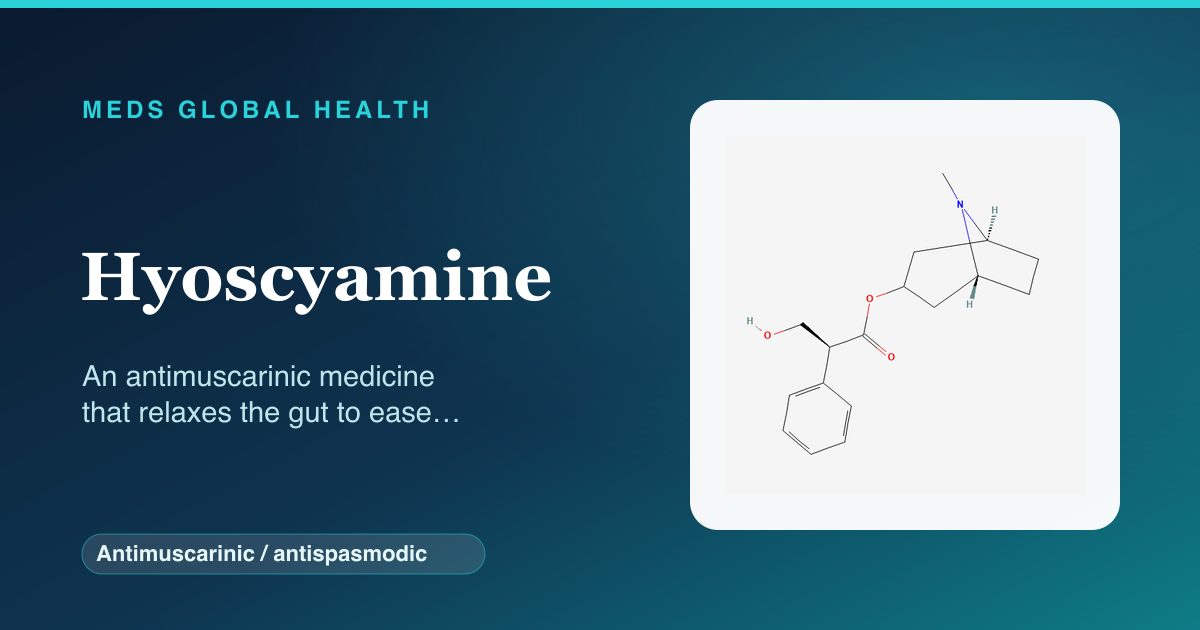
Hyoscyamine is an antimuscarinic medicine, closely related to hyoscine and atropine, used to relieve cramping pain in the stomach and bowel and to help dry up secretions such as saliva. It works by relaxing the muscle in the wall of the gut and blocking the actions of acetylcholine. Its typical side effects come from this same action: dry mouth, blurred vision, constipation and difficulty passing urine. It needs caution in people with glaucoma, an enlarged prostate or a tendency to urinary retention, and in older people who are more sensitive to these effects.
Education and reference only. This is a plain-language guide to Hyoscyamine — it deliberately contains no doses. Doses depend on the person, the brand and the reason for treatment, and belong with your prescriber. Always check the BNF, the product labelling (SmPC) and follow medical advice.
What it is
Hyoscyamine is an antimuscarinic (also called anticholinergic) medicine, part of the same family as hyoscine and atropine, which come from plants such as deadly nightshade. It is used mainly to relieve cramping, colicky pain in the stomach and bowel, including in conditions such as irritable bowel syndrome, and it can also be used to reduce secretions such as saliva. It works by relaxing the smooth muscle of the gut. It is taken by mouth, and is used carefully because its effects on the body are widespread.
How it works
Hyoscyamine blocks the action of acetylcholine, a chemical messenger that, among other things, tells the smooth muscle in the gut to contract. By blocking these signals, it relaxes the muscle in the wall of the stomach and bowel, easing the painful spasms and cramps that cause colicky pain. The same blocking action elsewhere in the body reduces secretions such as saliva, which is why it can be used to dry things up. However, this widespread action also explains its typical side effects, such as a dry mouth, blurred vision, constipation and difficulty passing urine.
Company & origin
An antimuscarinic medicine, related to hyoscine and atropine, used to relieve stomach and bowel cramps and to dry secretions.
What it treats
Conditions Hyoscyamine is used for
Practical use
How to take Hyoscyamine
General, dose-free guidance — always follow your prescriber's and the leaflet's specific instructions.
- Take it by mouth as prescribed, often before meals or when cramps tend to occur, as advised.
- Expect a dry mouth and possibly blurred vision; do not drive if your vision is affected.
- Tell your prescriber if you have glaucoma, prostate trouble or difficulty passing urine before starting.
- Drink fluids and eat fibre to help with constipation, which is a common effect.
- Mention any reaction you have had to hyoscine (also called scopolamine) or atropine, as these are related.
Weighing it up
Advantages & disadvantages of Hyoscyamine
Advantages
- Eases cramping, colicky pain in the stomach and bowel by relaxing the gut muscle.
- Can also help dry up secretions such as saliva.
- Taken by mouth and a long-established option for spasm-type pain.
Disadvantages
- Commonly causes dry mouth, blurred vision, constipation and difficulty passing urine.
- Needs caution in glaucoma, enlarged prostate and urinary retention.
- Older people are more sensitive to its effects, including on memory and confusion.
Practical use
Good to know
It helps to understand that hyoscyamine's side effects are simply the wider results of how it works: by blocking acetylcholine throughout the body, it commonly causes a dry mouth, blurred vision, constipation and difficulty passing urine, along with a fast heartbeat in some people. These 'antimuscarinic' effects are usually mild but can be troublesome, especially in older people, who are more sensitive to them and to effects on memory and confusion. There are important cautions: it can worsen a particular type of glaucoma (raised pressure in the eye), so glaucoma should be flagged, and it can make it harder to pass urine, which matters for men with an enlarged prostate. It is closely related to hyoscine and atropine, so anyone who has reacted badly to those may react to hyoscyamine too. Tell your prescriber about glaucoma, prostate or bladder problems before starting.
Who should not take it / use with caution
- People who have had a serious allergic reaction to it, or to related medicines like hyoscine or atropine, should not take it.
- It is avoided or used with great care in people with the narrow-angle type of glaucoma.
- It is used with caution in men with an enlarged prostate or anyone prone to urinary retention or bowel blockage.
- It is used cautiously in older people and those with heart-rhythm or significant heart problems.
Monitoring
- Reviewing how well cramps are controlled and whether the medicine is still needed.
- Watching for troublesome dry mouth, blurred vision, constipation or urinary problems.
- Being alert to confusion in older people and to any eye symptoms suggesting glaucoma.
Side effects
- Dry mouth, blurred vision and dry eyes.
- Constipation and difficulty passing urine.
- A faster heartbeat, dizziness or flushing.
- In older people especially, confusion or memory problems.
Key interactions
- Other medicines with antimuscarinic effects, such as some antidepressants and bladder medicines, add to the side effects.
- It can affect how some other medicines are absorbed by slowing the gut.
- Tell your prescriber everything you take, including over-the-counter remedies.
Available as: Tablets and liquids taken by mouth.
Answers
Hyoscyamine: frequently asked questions
What is hyoscyamine used for?
It is an antimuscarinic medicine used to relieve cramping pain in the stomach and bowel, such as in irritable bowel syndrome, and to help dry up secretions.
Why does it cause a dry mouth?
It blocks acetylcholine throughout the body, which relaxes the gut but also reduces saliva and causes effects like dry mouth and blurred vision.
Is it related to hyoscine?
Yes, hyoscyamine is closely related to hyoscine (scopolamine) and atropine, so anyone who has reacted badly to those should mention it.
Why does glaucoma matter?
It can raise pressure in the eye and worsen the narrow-angle type of glaucoma, so any glaucoma should be flagged before starting.
Can it affect passing urine?
Yes, it can make it harder to pass urine, which is especially important for men with an enlarged prostate.
The wider class
About Antimuscarinic / antispasmodic
Hyoscyamine belongs to the antimuscarinic / antispasmodic class. For how the class as a whole works, its shared safety principles and monitoring, see the full guide.
Browse by body system
Authoritative sources
- BNF
- NICE CKS
Building a medicines information resource?
We create evidence-led, dose-free drug and formulary references for teams.