An antispasmodic for IBS
Mebeverine
An antispasmodic that relaxes gut muscle to relieve the cramping pain and spasm of irritable bowel syndrome.
What is Mebeverine?
Mebeverine is an antispasmodic used for irritable bowel syndrome (IBS). It relaxes the muscle in the wall of the bowel, easing the cramping tummy pain and spasm of IBS. It does not contain a painkiller and works directly on the gut, and it can be bought from pharmacies as well as prescribed.
Education and reference only. This is a plain-language guide to Mebeverine — it deliberately contains no doses. Doses depend on the person, the brand and the reason for treatment, and belong with your prescriber. Always check the BNF, the product labelling (SmPC) and follow medical advice.
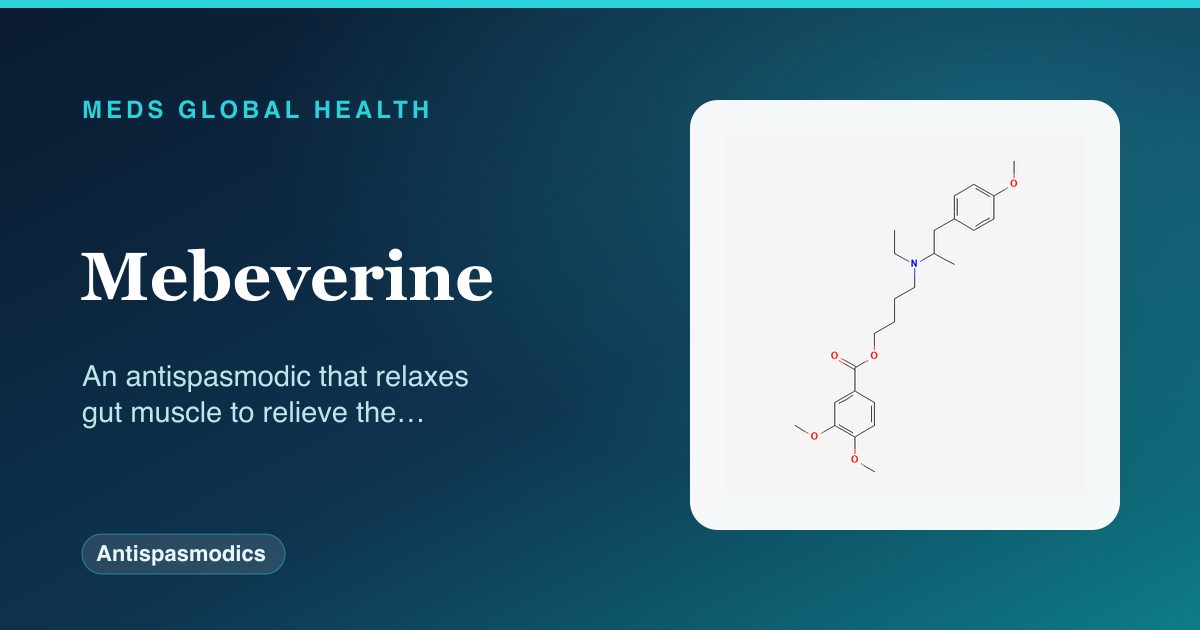
What it is
Mebeverine is an antispasmodic medicine used to ease the cramping tummy pain and spasm that come with irritable bowel syndrome (IBS). It does not contain a painkiller; instead it works directly on the muscle of the bowel wall. It is one of the long-established options for IBS in the UK and is available both on prescription and to buy from a pharmacy.
How it works
The wall of the bowel contains muscle that normally contracts in a smooth, coordinated way. In IBS this muscle can go into painful spasm, causing cramping and discomfort. Mebeverine relaxes this gut muscle directly, helping to settle the spasm without affecting normal bowel movement or causing the side effects seen with some older antispasmodics.
Company & origin
Originated / developed by: A long-established antispasmodic.
An antispasmodic used in the UK for many years to ease the cramping pain of irritable bowel syndrome.
What it treats
Conditions Mebeverine is used for
Practical use
How to take Mebeverine
General, dose-free guidance — always follow your prescriber's and the leaflet's specific instructions.
- It is usually taken before meals, which is when IBS cramping often comes on.
- Swallow the tablets or capsules with water; do not chew the modified-release capsules.
- Take it regularly for a fair trial rather than only on bad days, then review with your pharmacist or GP.
- Combine it with the usual IBS self-care advice on diet, fibre, fluids and stress.
- If you miss a dose, take it before your next meal as usual; do not take a double dose to make up for a missed one.
Weighing it up
Advantages & disadvantages of Mebeverine
Advantages
- Works directly on the gut without containing a sedating painkiller.
- Does not usually cause the dry mouth or blurred vision seen with older antispasmodics.
- Available to buy from a pharmacy as well as on prescription.
Disadvantages
- Helps the spasm and pain but does not cure the underlying IBS.
- Needs to be taken regularly, often before meals, to get the best effect.
- Does not help every symptom of IBS, such as bloating or altered bowel habit.
Practical use
Good to know
Mebeverine is usually taken before meals, as this is when cramping is often triggered. It tends to be well tolerated and does not cause the dry mouth or blurred vision seen with some other antispasmodics. It works best alongside the general IBS measures recommended by the NHS, such as managing diet, fibre, fluid and stress. If your symptoms do not improve after a few weeks, or you notice new or alarming symptoms such as bleeding, weight loss or a change in bowel habit, see your GP rather than continuing to self-treat.
Who should not take it / use with caution
- People who have had an allergic reaction to mebeverine in the past.
- People with a blocked or inactive bowel (paralytic ileus) should not take it.
- Used with caution in pregnancy and breastfeeding; discuss it with your pharmacist or GP first.
- Not suitable as self-treatment if you have alarm symptoms such as bleeding, unexplained weight loss or a sudden change in bowel habit — see your GP.
Monitoring
- Whether your cramping and pain improve over a few weeks of regular use.
- Any new or alarm symptoms, such as bleeding, weight loss or a change in bowel habit.
- Whether you still need it, as IBS symptoms often come and go.
Side effects
- Most people have no side effects, and it is generally well tolerated.
- Occasionally it can cause heartburn, indigestion or a mild upset tummy.
- Rarely, an allergic reaction such as a rash, itching or swelling can occur — seek help if this happens.
Key interactions
- Mebeverine has very few known interactions with other medicines.
- Still tell your pharmacist about everything you take, including over-the-counter and herbal products.
- It can be taken alongside many other IBS treatments, but check with a pharmacist if unsure.
Available as: Tablets and modified-release capsules; also a liquid.
Answers
Mebeverine: frequently asked questions
Is mebeverine a painkiller?
No. It does not contain a painkiller. It relaxes the muscle in the bowel wall to ease the cramping spasm of IBS, which in turn reduces the pain.
When should I take it?
It is usually taken before meals, as eating can trigger IBS cramping. Follow the directions on your pack or from your pharmacist.
Can I buy it without a prescription?
Yes. Mebeverine can be bought from pharmacies for IBS that has already been diagnosed, as well as being prescribed by your GP.
Will it cure my IBS?
No. It eases the cramping pain and spasm but does not cure IBS. It works best alongside diet and lifestyle measures.
What if it does not help?
If symptoms do not improve after a few weeks, or you develop alarm symptoms such as bleeding or weight loss, see your GP rather than continuing to self-treat.
The wider class
About Antispasmodics
Mebeverine belongs to the antispasmodics class. For how the class as a whole works, its shared safety principles and monitoring, see the full guide.
Browse by body system
Authoritative sources
- BNF
- NICE CKS
Building a medicines information resource?
We create evidence-led, dose-free drug and formulary references for teams.