Calcium-channel blockers
Isradipine
A calcium-channel blocker tablet that relaxes blood vessels to lower blood pressure, now rarely used in the UK.
What is Isradipine?
Isradipine is a calcium-channel blocker of the dihydropyridine type, used to lower high blood pressure. It works by relaxing the muscle in artery walls so blood flows more easily. Common effects include flushing, ankle swelling and headache, and grapefruit should be avoided.
Education and reference only. This is a plain-language guide to Isradipine — it deliberately contains no doses. Doses depend on the person, the brand and the reason for treatment, and belong with your prescriber. Always check the BNF, the product labelling (SmPC) and follow medical advice.
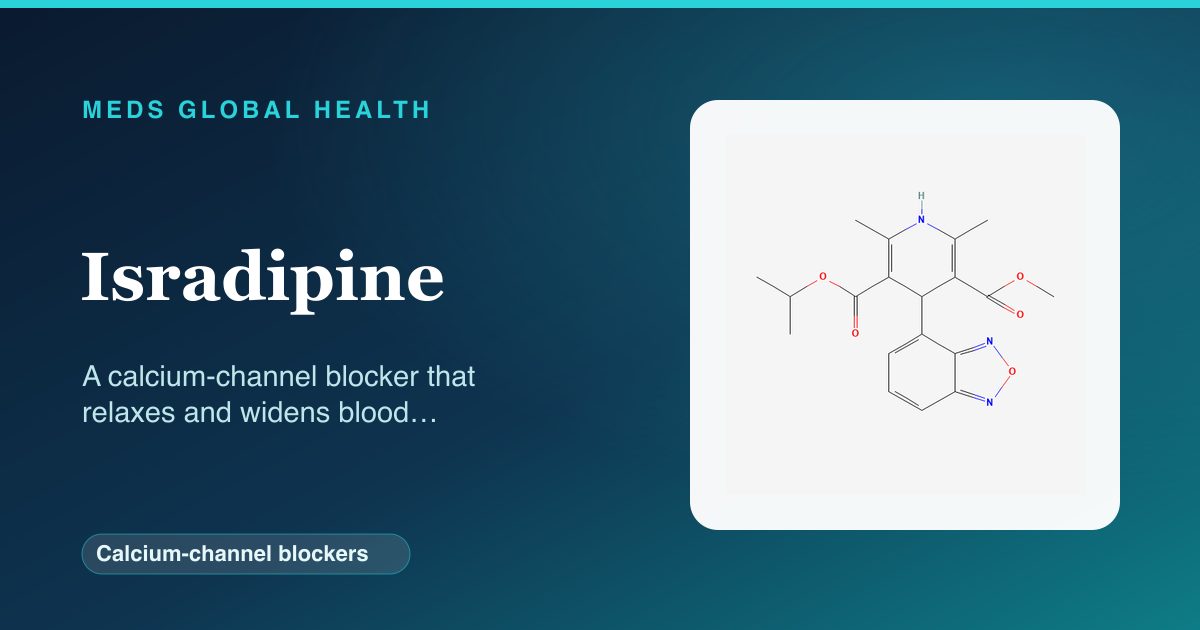
What it is
Isradipine is a dihydropyridine calcium-channel blocker, in the same broad family as amlodipine and nifedipine. It is used to treat high blood pressure (hypertension) by relaxing the arteries. Within this class, amlodipine is the more commonly prescribed option in the UK, but isradipine works in the same overall way.
How it works
Isradipine blocks the channels that let calcium enter the muscle cells in the walls of arteries. With less calcium getting in, the muscle relaxes and the arteries widen. This lowers the resistance the heart has to pump against, so blood pressure falls.
Company & origin
Originated / developed by: Originally developed by Sandoz (now Novartis); availability varies in the UK..
Introduced in the 1980s as a dihydropyridine calcium-channel blocker and used for high blood pressure.
What it treats
Conditions Isradipine is used for
Practical use
How to take Isradipine
General, dose-free guidance — always follow your prescriber's and the leaflet's specific instructions.
- Take it regularly at the same times each day to keep blood pressure steady.
- Swallow the tablet or capsule whole with a drink of water.
- Avoid grapefruit and grapefruit juice while taking it.
- Stand up slowly, particularly when you first start, to reduce dizziness.
- If a dose is missed, take it when you remember unless the next one is near, then skip it; never double up.
- Do not stop suddenly without advice, as this can unsettle your blood pressure.
Weighing it up
Advantages & disadvantages of Isradipine
Advantages
- Effectively lowers blood pressure by relaxing and widening the arteries.
- Does not slow the heart rate in the way some other heart medicines do.
- Works steadily over the day to keep blood pressure controlled.
Disadvantages
- Vessel-widening effects such as flushing, headache and ankle swelling are common.
- Can cause a fast or pounding heartbeat as the body responds to lower blood pressure.
- Interacts with grapefruit and several other medicines, and is less widely stocked than amlodipine.
Practical use
Good to know
Isradipine widens blood vessels, so flushing, headache and swollen ankles are common, particularly when you first start. Stand up slowly at first, as it can cause dizziness. Avoid grapefruit and grapefruit juice, which can raise the amount of medicine in your blood. Tell your prescriber if you have heart or liver problems.
Who should not take it / use with caution
- People with very narrow heart valves (significant aortic stenosis) or unstable, severe heart problems.
- People who have recently had a heart attack or have advanced heart failure, without specialist advice.
- People with severe liver disease, who may need closer review.
Monitoring
- Blood pressure
- Ankle swelling and any troublesome side effects
Side effects
- Flushing, headache and swollen ankles, especially at the start.
- Dizziness and a fast or pounding heartbeat.
- Tiredness or, occasionally, a skin rash; report severe or persistent swelling.
Key interactions
- Grapefruit juice can raise isradipine levels — avoid it.
- Certain antibiotics, antifungals and other medicines can raise its levels, while some can lower them.
- Other blood-pressure medicines can add to its effect and cause low pressure.
Available as: Tablets and capsules.
Answers
Isradipine: frequently asked questions
Why do my ankles swell on isradipine?
Calcium-channel blockers widen small blood vessels, which can let fluid collect in the ankles. It is usually harmless but tell your prescriber if it is troublesome, as a change may help.
Can I drink grapefruit juice with isradipine?
No. Grapefruit and grapefruit juice can raise the amount of medicine in your blood and increase side effects, so they are best avoided while taking it.
Does isradipine slow my heart?
No. Unlike some other heart medicines, this type of calcium-channel blocker does not slow the heart rate; if anything the heart can beat a little faster as blood pressure falls.
Why was I given isradipine rather than amlodipine?
They work in the same overall way. Amlodipine is more commonly prescribed, but your prescriber may choose isradipine based on how you respond or other medicines you take.
Will I feel different on isradipine?
Many people feel no different once any early flushing or headache settles. It lowers blood pressure quietly, and the benefit is reduced long-term risk of heart attack and stroke.
The wider class
About Calcium-channel blockers
Isradipine belongs to the calcium-channel blockers class. For how the class as a whole works, its shared safety principles and monitoring, see the full guide.
Browse by body system
Authoritative sources
- BNF
- NICE CKS
Building a medicines information resource?
We create evidence-led, dose-free drug and formulary references for teams.