A somatostatin analogue
Lanreotide
A long-acting injection for acromegaly and certain neuroendocrine tumours, usually given about once a month.
What is Lanreotide?
Lanreotide is a long-acting somatostatin analogue, a medicine that mimics a natural hormone (somatostatin) which slows down the release of several other hormones. It is given as a deep injection under the skin, usually about once a month, to treat acromegaly (too much growth hormone) and certain neuroendocrine tumours, where it can control symptoms and help slow tumour growth. Common effects include gallstones, loose or fatty stools and changes in blood sugar. The main UK brand is Somatuline.
Education and reference only. This is a plain-language guide to Lanreotide — it deliberately contains no doses. Doses depend on the person, the brand and the reason for treatment, and belong with your prescriber. Always check the BNF, the product labelling (SmPC) and follow medical advice.
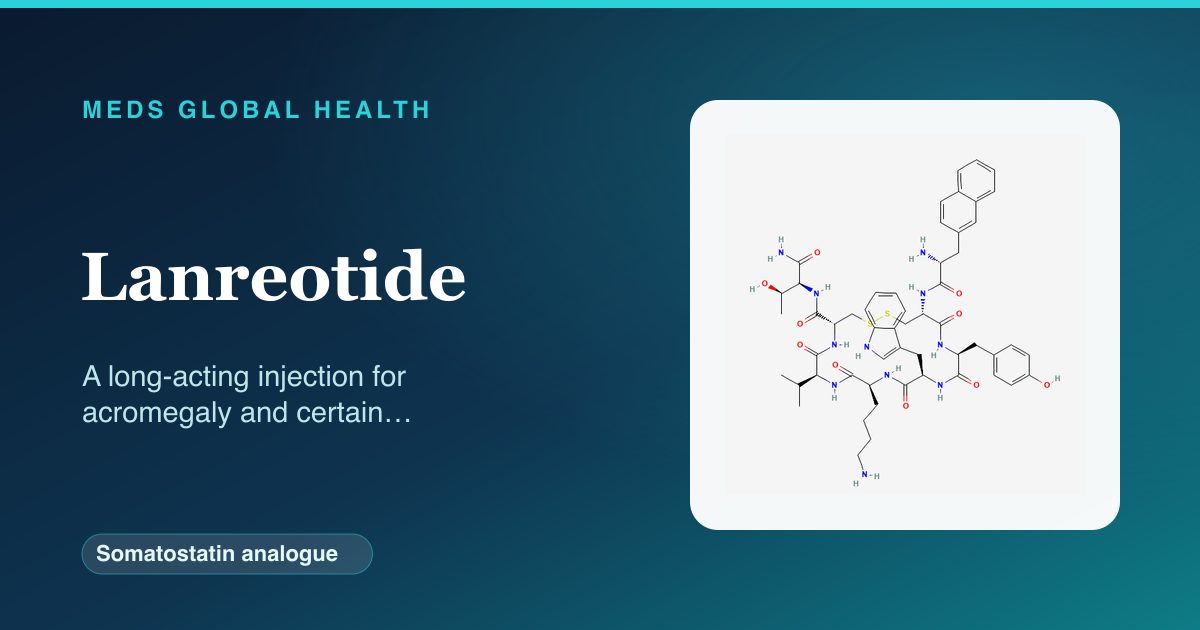
What it is
Lanreotide is a man-made version of somatostatin, a natural hormone that acts as a brake on the release of growth hormone and several gut hormones. It is used mainly in two situations: acromegaly, where the body makes too much growth hormone (often from a small pituitary tumour) causing enlarged hands, feet and features; and certain neuroendocrine tumours, including some in the gut and pancreas, where it can ease hormone-related symptoms such as flushing and diarrhoea and help slow the tumour. It comes as a long-acting injection given deep under the skin, usually about every four weeks.
How it works
Somatostatin naturally tells various glands to release less of their hormones. Lanreotide copies this effect over a long period. In acromegaly it reduces the amount of growth hormone and the related hormone (IGF-1) the body produces, easing symptoms and helping to shrink or control the tumour. In neuroendocrine tumours it dampens the excess hormones the tumour releases, calming symptoms such as flushing and diarrhoea, and can slow tumour growth. Because it is formulated to release slowly, a single injection lasts around a month.
Company & origin
Originated / developed by: Ipsen.
A long-acting somatostatin analogue injection used in the UK for acromegaly and certain neuroendocrine tumours.
Practical use
How to take Lanreotide
General, dose-free guidance — always follow your prescriber's and the leaflet's specific instructions.
- It is given as a deep injection under the skin, usually about once every four weeks.
- It is often given by a nurse, though you or a carer may be trained to give it at home.
- The injection site is usually rotated, often in the upper outer buttock or upper outer thigh.
- Keep to your regular injection schedule, as it is designed to last about a month.
- Report severe tummy pain, which could be a sign of gallstones, and monitor blood sugar if advised.
Weighing it up
Advantages & disadvantages of Lanreotide
Advantages
- A long-acting injection that only needs giving about once a month.
- Controls symptoms and hormone levels in acromegaly and certain neuroendocrine tumours.
- Can help slow the growth of some neuroendocrine tumours.
Disadvantages
- Makes gallstones more likely by slowing the gallbladder.
- Commonly causes loose, fatty stools, wind and tummy cramps.
- Can change blood sugar and cause injection-site reactions, and must be given by injection.
Practical use
Good to know
Lanreotide slows the release of many hormones, which is why it has wide-ranging effects. By slowing the gallbladder it makes gallstones more likely, so people are watched for tummy pain that could mean gallstone trouble. By affecting digestion it commonly causes loose, fatty or frequent stools, wind and tummy cramps, which often settle over time. It also changes how the body handles blood sugar, so glucose may need monitoring, particularly in people with diabetes, as it can go either up or down. Injection-site reactions such as redness, lumps or discomfort are common. The injection is deep under the skin and is often given by a nurse, though some people or carers are trained to give it at home. Treatment is usually long term, guided by blood tests for hormone levels and by symptoms.
Who should not take it / use with caution
- It is used with caution in people with gallstones or gallbladder problems.
- People with diabetes need careful blood-sugar monitoring, as it can change glucose control.
- It is used cautiously in those with certain heart rhythm problems or a very slow heart rate.
Monitoring
- Blood tests for growth hormone and IGF-1 in acromegaly, or tumour markers in neuroendocrine tumours.
- Scans of the gallbladder, as gallstones can develop during treatment.
- Blood-sugar monitoring, particularly in people with diabetes.
Side effects
- Loose, fatty or frequent stools, wind, tummy cramps and nausea are common.
- Gallstones, which may cause tummy pain, and changes in blood sugar.
- Injection-site redness, lumps or discomfort, and sometimes a slower heart rate.
Key interactions
- It can change blood-sugar control, so medicines for diabetes such as insulin may need adjusting.
- It can reduce absorption of ciclosporin, an immune-suppressing medicine, so levels may need checking.
- Caution is needed with medicines that slow the heart rate, as it can add to this effect.
Available as: Long-acting solution given by deep injection under the skin.
Answers
Lanreotide: frequently asked questions
What is lanreotide used for?
It is used for acromegaly (too much growth hormone) and certain neuroendocrine tumours, where it controls symptoms and hormone levels and can help slow tumour growth.
How often is the injection given?
It is a long-acting injection given deep under the skin, usually about once every four weeks.
Why does it cause gallstones?
It slows the gallbladder, which makes gallstones more likely, so you may have gallbladder scans and should report severe tummy pain.
Will it affect my blood sugar?
It can raise or lower blood sugar, so glucose is monitored, especially if you have diabetes, and your diabetes medicines may need adjusting.
Can I give the injection myself at home?
It is often given by a nurse, but you or a carer can be trained to give it at home if suitable.
The wider class
About Somatostatin analogue
Lanreotide belongs to the somatostatin analogue class. For how the class as a whole works, its shared safety principles and monitoring, see the full guide.
Browse by body system
Authoritative sources
- BNF
- NICE CKS
Building a medicines information resource?
We create evidence-led, dose-free drug and formulary references for teams.