A medicine for acromegaly and hormone-secreting tumours
Octreotide
A man-made form of the hormone somatostatin, used to control acromegaly and the symptoms of certain hormone-secreting tumours.
What is Octreotide?
Octreotide is a man-made version of somatostatin, a natural hormone that switches off the release of several other hormones. It is used to treat acromegaly, where there is too much growth hormone, and to control the symptoms of certain neuroendocrine tumours, such as the flushing and diarrhoea of carcinoid syndrome. It is given by injection, either as a short-acting form under the skin or as a long-acting form into a muscle every few weeks. Common issues include gallstones over time, stomach upset, and changes in blood sugar, so the gallbladder and glucose are monitored.
Education and reference only. This is a plain-language guide to Octreotide — it deliberately contains no doses. Doses depend on the person, the brand and the reason for treatment, and belong with your prescriber. Always check the BNF, the product labelling (SmPC) and follow medical advice.
Two pages cover Octreotide, for two different questions. This one answers what it is prescribed for and how to take it. For the clinical reference — how the class works, what to monitor, interactions and safety — read Octreotide: clinical reference.
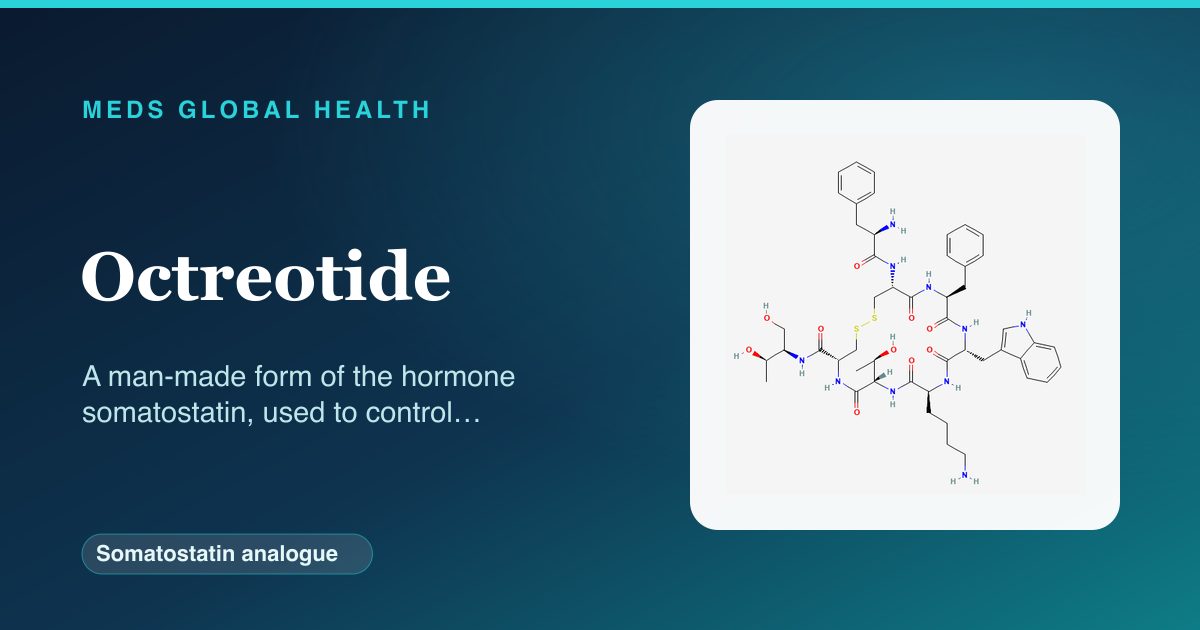
What it is
Octreotide is a medicine that copies somatostatin, a hormone the body uses to put the brakes on the release of several other hormones, including growth hormone and various gut and pancreas hormones. It is used to treat acromegaly, a condition of excess growth hormone, and to relieve symptoms caused by certain neuroendocrine tumours, including carcinoid tumours that cause flushing and diarrhoea, and some other hormone-secreting tumours. It is given by injection: a short-acting form under the skin, or a long-acting depot into a muscle that lasts several weeks. It is prescribed and supervised by a specialist team.
How it works
Somatostatin is the body's natural 'off switch' for many hormones. Octreotide acts in the same way, attaching to somatostatin receptors and damping down the release of growth hormone and a range of gut and pancreas hormones. In acromegaly this lowers growth hormone and the hormone IGF-1 it drives, easing symptoms. In hormone-secreting tumours it reduces the excess hormones responsible for symptoms such as flushing and diarrhoea. Because somatostatin also influences the gallbladder, digestion and blood sugar, octreotide can affect these too, which is why side effects such as gallstones, digestive upset and changes in glucose can occur.
Company & origin
A specialist medicine used in the UK for acromegaly and for symptoms caused by certain hormone-producing (neuroendocrine) tumours.
Practical use
How to take Octreotide
General, dose-free guidance — always follow your prescriber's and the leaflet's specific instructions.
- Use it as prescribed: the short-acting form is injected under the skin, while the long-acting form is given into a muscle by a healthcare professional every few weeks.
- For the short-acting injection, rotate the site each time to reduce discomfort and skin reactions.
- Attend your scans and blood tests, as the gallbladder, blood sugar and thyroid are monitored over time.
- If you have diabetes, check your blood sugar as advised, as octreotide can raise or lower it.
- Report tummy pain, especially after fatty meals, as this can be a sign of gallstones.
Weighing it up
Advantages & disadvantages of Octreotide
Advantages
- Effectively controls growth hormone in acromegaly and eases the symptoms of certain hormone-secreting tumours.
- A long-acting form is available that is given only every few weeks.
- Can greatly reduce troublesome symptoms such as the flushing and diarrhoea of carcinoid syndrome.
Disadvantages
- Can cause gallstones over time because it slows how the gallbladder empties.
- Can change blood sugar control, which may matter for people with diabetes.
- Given by injection and can cause digestive side effects, especially when starting.
Practical use
Good to know
A few practical points help with octreotide. Over time it can lead to gallstones, because it slows how the gallbladder empties, so the gallbladder is monitored with scans and any tummy pain after fatty meals should be mentioned. It also affects blood sugar, sometimes raising it and sometimes lowering it, so glucose is checked, particularly in people with diabetes, whose treatment may need adjusting. Digestive side effects such as tummy cramps, wind, loose stools and nausea are common when starting and usually settle. With the short-acting injection, injection-site discomfort is common, and rotating sites helps; the long-acting form is given less often, into a muscle, by a healthcare professional. It can slightly slow the heart rate and affect thyroid tests, which the team keeps an eye on.
Who should not take it / use with caution
- People who have had a serious allergic reaction to octreotide should not use it.
- It is used with particular care in people with gallstones or diabetes, with closer monitoring.
- It is used in pregnancy only where the benefit is judged to outweigh the risk, under specialist guidance.
Monitoring
- Scans of the gallbladder to watch for gallstones over time.
- Blood sugar checks, particularly in people with diabetes.
- Reviewing growth hormone and IGF-1 in acromegaly, or symptoms and hormone levels in tumours, plus thyroid blood tests.
Side effects
- Tummy cramps, wind, loose stools, nausea or fatty stools, especially when starting treatment.
- Gallstones over longer-term use, sometimes causing tummy pain after fatty meals.
- Changes in blood sugar, which can rise or fall.
- Injection-site discomfort, a slightly slower heart rate, or changes in thyroid blood tests.
Key interactions
- It can change how the body handles blood sugar, so diabetes medicines, including insulin, may need adjusting.
- It can affect the absorption of some other medicines from the gut, so timing may matter.
- It can add to the effect of medicines that slow the heart rate, so tell your team about all your medicines.
Available as: A solution for injection under the skin (short-acting) and a long-acting depot injection into a muscle.
Answers
Octreotide: frequently asked questions
What is octreotide used for?
It is used to treat acromegaly, a condition of too much growth hormone, and to control the symptoms of certain neuroendocrine tumours, such as the flushing and diarrhoea of carcinoid syndrome.
How does it work?
It is a man-made form of somatostatin, the body's natural 'off switch' for many hormones, so it damps down the release of growth hormone and various gut and pancreas hormones.
Why might it cause gallstones?
Octreotide slows how the gallbladder empties, which over time can lead to gallstones, so the gallbladder is monitored and tummy pain after fatty meals should be reported.
Will it affect my blood sugar?
It can raise or lower blood sugar, so glucose is checked, especially in people with diabetes, whose treatment may need adjusting.
How often is it given?
The short-acting form is injected under the skin, while a long-acting depot form is given into a muscle by a healthcare professional only every few weeks.
The wider class
About Somatostatin analogue
Octreotide belongs to the somatostatin analogue class. For how the class as a whole works, its shared safety principles and monitoring, see the full guide.
Browse by body system
Authoritative sources
- BNF
- NICE CKS
Building a medicines information resource?
We create evidence-led, dose-free drug and formulary references for teams.