A fluoroquinolone antibiotic
Levofloxacin
A fluoroquinolone antibiotic reserved for certain serious infections because of important safety warnings.
What is Levofloxacin?
Levofloxacin is a fluoroquinolone antibiotic used for some chest, urinary and other bacterial infections, particularly when first-choice antibiotics are unsuitable. Because of recognised risks to tendons, nerves and the heart's rhythm, it is now used cautiously and reserved for specific situations. It is usually taken once a day as a tablet for the full course prescribed.
Education and reference only. This is a plain-language guide to Levofloxacin — it deliberately contains no doses. Doses depend on the person, the brand and the reason for treatment, and belong with your prescriber. Always check the BNF, the product labelling (SmPC) and follow medical advice.
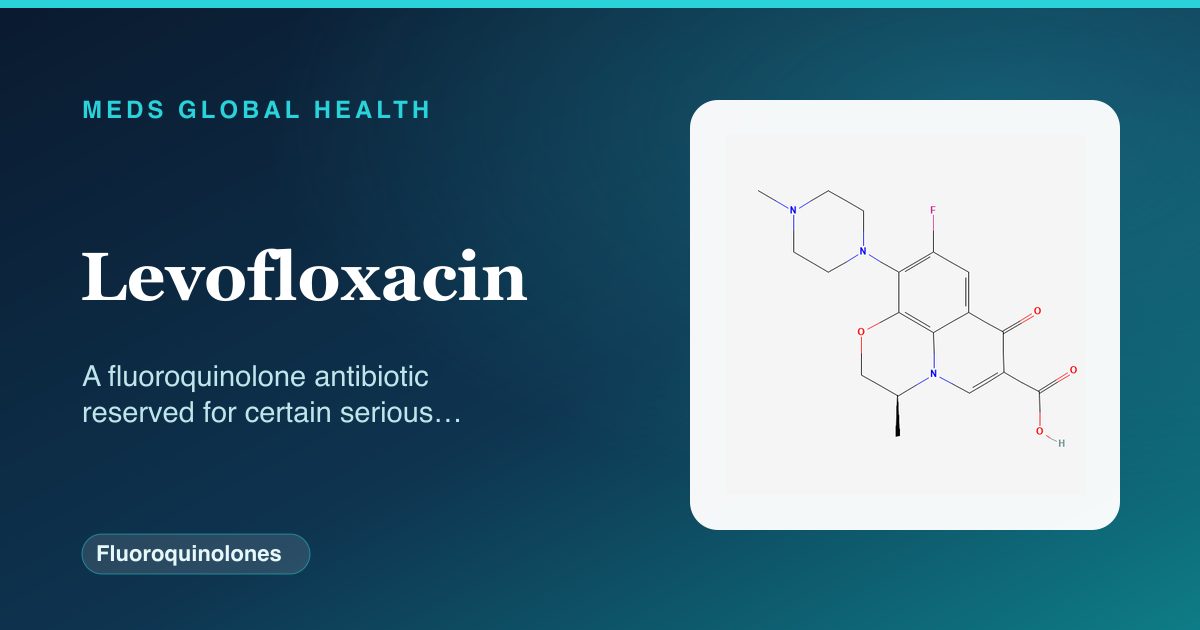
What it is
Levofloxacin is a fluoroquinolone antibiotic and is the more active half of an older medicine called ofloxacin. It is used for certain infections such as some types of pneumonia, complicated urinary infections and sinus infections, often when other antibiotics cannot be used. As with the whole class, MHRA safety advice means it is now reserved rather than routine, because of rare but serious and sometimes lasting side effects.
How it works
Levofloxacin blocks bacterial enzymes (DNA gyrase and topoisomerase IV) that bacteria rely on to copy and repair their DNA. With these enzymes disabled, the bacteria cannot multiply and die off. It is well absorbed and reaches the lungs and urine well, which is why it is used for some respiratory and urinary infections.
Practical use
How to take Levofloxacin
General, dose-free guidance — always follow your prescriber's and the leaflet's specific instructions.
- Take the tablet once a day with water, at about the same time each day, with or without food.
- Keep dairy, antacids and iron, zinc, calcium or magnesium supplements a few hours apart from your dose.
- Drink plenty of fluids and avoid excessive sun exposure or sunbeds during treatment.
- Complete the whole course even once you feel better, unless told otherwise.
- Seek prompt advice if you develop tendon, nerve, mood or heart-rhythm symptoms.
Weighing it up
Advantages & disadvantages of Levofloxacin
Advantages
- Effective once-daily dosing makes it straightforward to take.
- Penetrates lung tissue and urine well, useful for some respiratory and urinary infections.
- Available as both tablets and an infusion, allowing a switch from drip to tablet.
Disadvantages
- Subject to the same serious MHRA warnings as the rest of the class, so it is reserved.
- Rarely causes long-lasting, disabling tendon, nerve, muscle or mental-health effects.
- Absorption is impaired by dairy, antacids and mineral supplements.
- Can prolong the QT interval, raising concern alongside some other medicines.
Practical use
Good to know
It is usually taken once a day and the full course should be completed. Tablets should be separated in time from dairy, antacids and supplements containing iron, zinc, calcium or magnesium, which block absorption. Drink plenty of fluids, avoid strong sun, and stop and seek advice if you notice tendon pain, new tingling or numbness, or a sudden change in mood.
Who should not take it / use with caution
- People who have reacted seriously to levofloxacin or another fluoroquinolone, or had tendon problems with one.
- Generally avoided in pregnancy and breastfeeding, and in children and growing teenagers, unless essential.
- Caution with epilepsy or a lowered seizure threshold, a known QT (heart-rhythm) problem, or myasthenia gravis, which it can worsen.
- Used with caution and usually avoided in people with, or at risk of, an aneurysm or tear of a major artery (the aorta) — for example existing aneurysm, certain connective-tissue conditions (such as Marfan or Ehlers-Danlos syndrome), or poorly controlled high blood pressure.
Monitoring
- Response of the infection and completion of the course
- For tendon, nerve, mood or heart-rhythm symptoms
- Blood sugar in people with diabetes, and kidney function where relevant
Side effects
- Nausea, diarrhoea, stomach upset, headache or dizziness, and disturbed sleep.
- Tendon pain or swelling that can rarely progress to rupture — stop and seek advice.
- Rarely, lasting nerve symptoms, low mood or confusion, heart-rhythm changes, or aortic (major artery) problems needing urgent care.
Key interactions
- Dairy, antacids and iron, zinc, calcium or magnesium supplements reduce absorption — separate the timing.
- Other QT-prolonging medicines, and some that lower the seizure threshold, increase risk when combined.
- Care with warfarin (bleeding risk) and with NSAIDs; monitor diabetes medicines as blood sugar can shift.
Available as: Tablets, with a solution for infusion used in hospital.
Answers
Levofloxacin: frequently asked questions
How is levofloxacin different from ofloxacin?
Levofloxacin is the more active component of ofloxacin, so it is essentially a purified, more potent version of the same kind of antibiotic. Both belong to the fluoroquinolone class and carry the same safety warnings.
Why is it described as a 'reserve' antibiotic?
Because of rare but serious effects on tendons, nerves, muscles and mental health, the MHRA advises fluoroquinolones be kept for infections where other antibiotics are unsuitable. Your prescriber will have judged it the right choice for your situation.
Can I take it with my multivitamin or indigestion tablets?
Not together. Iron, zinc, calcium and magnesium in supplements, and antacids, bind levofloxacin and stop it working, so keep them a few hours apart. Dairy has the same effect.
What symptoms mean I should stop and get help?
Stop and seek advice promptly for tendon pain or swelling, new tingling or numbness, sudden low mood or confusion, or palpitations. These can be early signs of the serious effects.
Does it interact with warfarin?
It can increase the blood-thinning effect of warfarin, so closer monitoring of your INR may be needed. Tell your prescriber and anticoagulant clinic that you have been given levofloxacin.
The wider class
About Fluoroquinolones
Levofloxacin belongs to the fluoroquinolones class. For how the class as a whole works, its shared safety principles and monitoring, see the full guide.
Browse by body system
Authoritative sources
- BNF: Levofloxacin.
- MHRA Drug Safety Update: Fluoroquinolone antibiotics.
- NICE CKS: Antibiotics.
Building a medicines information resource?
We create evidence-led, dose-free drug and formulary references for teams.