A reserve fluoroquinolone antibiotic
Moxifloxacin
A broad-spectrum fluoroquinolone antibiotic kept in reserve for certain serious infections; it carries important safety warnings, including tendon, nerve and heart-rhythm risks.
What is Moxifloxacin?
Moxifloxacin is a fluoroquinolone antibiotic used for certain bacterial infections, such as some chest, sinus and skin infections, usually when other antibiotics cannot be used. It works by stopping bacteria from copying their genetic material so they cannot multiply. Because of serious safety warnings — including tendon, nerve, mental-health and heart-rhythm effects — it is now reserved for situations where other antibiotics are unsuitable.
Education and reference only. This is a plain-language guide to Moxifloxacin — it deliberately contains no doses. Doses depend on the person, the brand and the reason for treatment, and belong with your prescriber. Always check the BNF, the product labelling (SmPC) and follow medical advice.
What it is
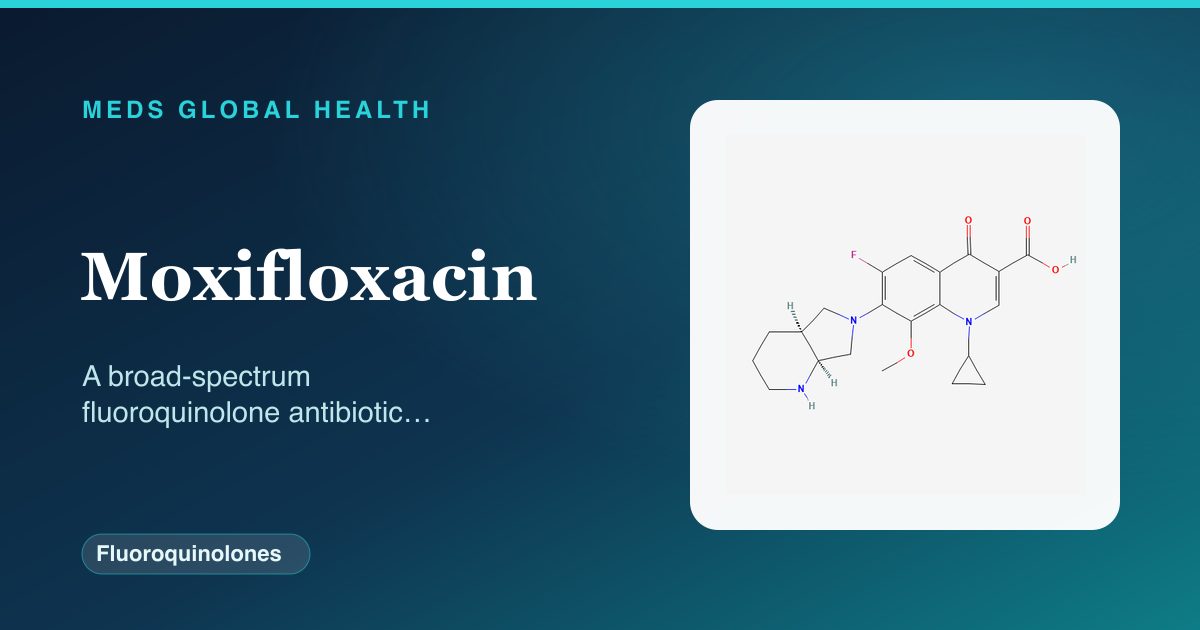
Moxifloxacin is a broad-spectrum fluoroquinolone antibiotic used in the UK for selected bacterial infections, including some respiratory infections (such as certain pneumonias, acute worsening of bronchitis and severe sinusitis) and some skin infections, generally when first-choice antibiotics cannot be used. Following safety reviews by the medicines regulator (MHRA), fluoroquinolones such as moxifloxacin are now restricted and treated as reserve antibiotics rather than routine choices. It treats bacterial infections only and has no effect on viral illnesses such as colds and flu.
How it works
Bacteria need to copy and repackage their DNA in order to grow and divide. Moxifloxacin blocks bacterial enzymes (DNA gyrase and topoisomerase) that are essential for this process. By stopping the bacteria from organising and copying their genetic material, it prevents them multiplying and leads to their death, which clears the infection. Because it has a broad range of activity, it can tackle several types of bacteria, but this same breadth means it should be used carefully to avoid encouraging resistance.
Company & origin
Originated / developed by: Originally developed by Bayer..
Moxifloxacin is a fluoroquinolone antibiotic developed by Bayer and introduced around the turn of the 2000s, used for certain serious bacterial infections when other antibiotics are unsuitable.
Practical use
How to take Moxifloxacin
General, dose-free guidance — always follow your prescriber's and the leaflet's specific instructions.
- Take it as prescribed, at about the same time each day, and finish the whole course even if you feel better.
- Separate it by a few hours from dairy products, antacids and supplements containing calcium, magnesium, aluminium, iron or zinc, which can stop it working.
- Drink plenty of fluids and protect your skin from strong sunlight, as it can make you more sensitive to the sun.
- Stop taking it and seek advice straight away if you get sudden tendon pain, swelling or difficulty moving a joint.
- Report any new numbness, tingling, severe headache, palpitations, low mood or unusual thoughts promptly, as the medicine may need to be stopped.
- Tell your prescriber about all your other medicines, as some combinations affect the heart rhythm.
Weighing it up
Advantages & disadvantages of Moxifloxacin
Advantages
- It is active against a broad range of bacteria, including some that resist other antibiotics.
- It is well absorbed when taken by mouth, so tablets can often be used instead of a drip.
- It can be a valuable option for certain serious infections when first-choice antibiotics are unsuitable.
Disadvantages
- It carries serious safety warnings, including tendon damage, nerve and mental-health effects and a small risk of an artery bulge or tear.
- It affects the heart's rhythm (QT prolongation) more than most other quinolones, limiting who can take it.
- Because of these risks it is a reserve antibiotic, not a routine choice, and resistance can develop if it is overused.
Practical use
Good to know
Moxifloxacin carries a number of serious safety warnings that the MHRA has highlighted. It can cause tendon pain, swelling or even rupture (often the Achilles tendon) — if you get sudden tendon pain or swelling, stop taking it and seek advice. It has been linked to serious and sometimes lasting effects on the nerves, muscles, joints and mental health, and to a small risk of a bulge or tear in the body's main artery (aortic aneurysm or dissection). Importantly, it affects the heart's electrical rhythm (QT prolongation) more than most other quinolones, so it is avoided where this is a concern. Take it well separated from dairy products, antacids and supplements containing calcium, magnesium, aluminium, iron or zinc, as these stop it being absorbed. Complete the full course even if you feel better, and report severe or bloody diarrhoea, which can signal a serious bowel infection.
Who should not take it / use with caution
- People who have had tendon problems linked to a fluoroquinolone before, or who have had a serious reaction to this group of antibiotics.
- People with certain heart-rhythm problems, a long QT interval, or who take other medicines that affect heart rhythm.
- People with myasthenia gravis (fluoroquinolones can worsen the muscle weakness).
- People with, or at risk of, an aneurysm or tear of a major artery (the aorta) — for example Marfan or Ehlers-Danlos syndrome, or poorly controlled high blood pressure.
- Children and young people, and women who are pregnant or breastfeeding, unless a specialist advises otherwise.
Monitoring
- Watching for tendon, nerve and mental-health effects, with the medicine stopped if they occur.
- Considering a heart tracing (ECG) and checking salts such as potassium where there is a heart-rhythm concern.
- Reviewing whether the infection is responding and whether a narrower antibiotic can be used instead.
Side effects
- Nausea, diarrhoea and indigestion.
- Tendon pain, swelling or rupture, sometimes affecting the Achilles tendon.
- Changes to the heart's electrical rhythm (QT prolongation), which can cause palpitations.
- Nerve effects such as numbness or tingling, dizziness, headache, and mood or sleep changes.
Key interactions
- Dairy products, antacids and supplements containing calcium, magnesium, aluminium, iron or zinc reduce how much is absorbed, so take them well apart.
- Other medicines that affect heart rhythm (some antiarrhythmics, certain antidepressants and antipsychotics) add to the QT-prolongation risk.
- Corticosteroids may increase the risk of tendon problems, so tell your prescriber if you take them.
Available as: Tablets; an infusion into a vein is used in hospital.
Answers
Moxifloxacin: frequently asked questions
Why is moxifloxacin only used when other antibiotics will not do?
Safety reviews by the MHRA found that fluoroquinolones such as moxifloxacin can occasionally cause serious and sometimes lasting effects on tendons, nerves, muscles, joints and mental health. Because of this it is kept as a reserve antibiotic, used mainly when first-choice options are unsuitable.
What tendon symptoms should make me stop it?
Sudden pain, swelling, tenderness or difficulty moving a tendon or joint — often the Achilles tendon at the back of the ankle — can be a warning of tendon damage. If this happens, stop taking the medicine, rest the area and seek medical advice promptly.
Can I take it with milk or indigestion remedies?
Not at the same time. Dairy products, antacids and supplements containing calcium, magnesium, aluminium, iron or zinc bind to moxifloxacin and stop it being absorbed. Separate them by a few hours so the antibiotic can work properly.
Why does moxifloxacin affect the heart more than other quinolones?
Moxifloxacin can lengthen part of the heart's electrical cycle (the QT interval) more than most other fluoroquinolones, which can disturb the heart rhythm. For this reason it is avoided in people with certain heart conditions or who take other medicines that have the same effect.
Should I finish the whole course?
Yes. Even if you feel better, stopping early can leave some bacteria behind and encourage resistance. Take the full course exactly as prescribed, and report severe or bloody diarrhoea, which can be a sign of a serious bowel infection.
The wider class
About Fluoroquinolones
Moxifloxacin belongs to the fluoroquinolones class. For how the class as a whole works, its shared safety principles and monitoring, see the full guide.
Browse by body system
Authoritative sources
- BNF
- NICE CKS
- MHRA
Building a medicines information resource?
We create evidence-led, dose-free drug and formulary references for teams.