A tetracycline antibiotic
Lymecycline
A tetracycline antibiotic taken by mouth, used mainly for moderate acne.
What is Lymecycline?
Lymecycline is a tetracycline antibiotic taken by mouth, used mainly for moderate inflammatory acne. It reduces the bacteria and inflammation involved in acne, and is usually taken for a few months alongside a skin treatment. Like other tetracyclines, it is avoided in pregnancy and in young children and can make the skin more sensitive to sunlight.
Education and reference only. This is a plain-language guide to Lymecycline — it deliberately contains no doses. Doses depend on the person, the brand and the reason for treatment, and belong with your prescriber. Always check the BNF, the product labelling (SmPC) and follow medical advice.
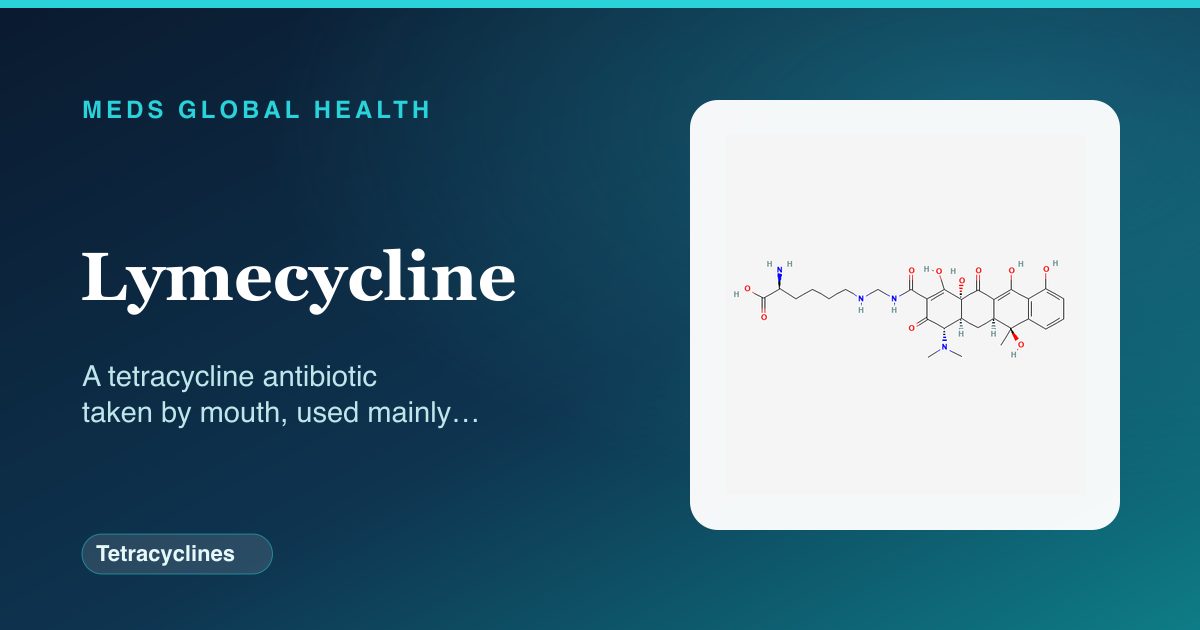
What it is
Lymecycline is a tetracycline antibiotic widely used in UK practice for moderate inflammatory acne. Rather than acting quickly like an antibiotic for a short infection, it is taken as a course over several months to calm acne, usually combined with a topical (skin) treatment to improve results and limit antibiotic use. It is a once-daily option, which many people find easier than older tetracyclines that are taken more often.
How it works
Lymecycline works in acne in two ways. It reduces the skin bacteria (Cutibacterium acnes) that contribute to spots by interfering with the proteins bacteria need to grow, and it also has a direct calming effect on the inflammation that makes acne red and sore. Together these reduce the number and severity of spots over weeks to months.
What it treats
Conditions Lymecycline is used for
Practical use
How to take Lymecycline
General, dose-free guidance — always follow your prescriber's and the leaflet's specific instructions.
- Swallow it whole with a full glass of water while sitting or standing upright, and avoid lying down straight afterwards.
- Take it at the same time each day; follow the label as to whether it is taken with or without food.
- Keep using it for the full course — acne can take a couple of months to improve.
- Protect your skin from strong sunlight and use sunscreen, as it can increase sun sensitivity.
- Do not take it if you are or might be pregnant, while breastfeeding, or give it to children under 12, because tetracyclines can stain developing teeth and affect bone growth.
Weighing it up
Advantages & disadvantages of Lymecycline
Advantages
- Effective for moderate inflammatory acne, reducing both bacteria and inflammation.
- Taken once daily, which is simpler than older tetracyclines.
- Well established, and works well combined with a topical acne treatment to limit antibiotic use.
Disadvantages
- Must be avoided in pregnancy, breastfeeding and in young children, as tetracyclines can stain developing teeth and affect growing bone.
- Can make the skin more sensitive to sunlight, raising the risk of sunburn.
- Works slowly, taking weeks to months, and overuse contributes to antibiotic resistance, so courses are kept time-limited.
Practical use
Good to know
Acne improves slowly, so it usually takes a couple of months before the benefit is clear, and the course is kept time-limited to reduce antibiotic resistance. It should be swallowed while sitting or standing upright with a full glass of water, and not just before lying down. It can make skin more sensitive to sunlight, so sun protection is sensible. It is not used in children under 12, or in pregnancy or breastfeeding, because tetracyclines can stain developing teeth and affect bone growth.
Who should not take it / use with caution
- Not used in children under 12, or in pregnancy or breastfeeding, because tetracyclines can stain developing teeth and affect bone growth.
- Anyone with a known allergy to tetracycline antibiotics.
- Used with caution in significant liver or kidney problems, and in conditions such as lupus or myasthenia gravis.
Monitoring
- Mainly clinical — reviewing how the acne responds and keeping the course time-limited.
- Checking for sunburn, persistent headache or visual changes.
- Liver function with prolonged use or in people with liver problems.
Side effects
- Nausea, indigestion and other tummy upset.
- Increased sensitivity of the skin to sunlight, so sunburn happens more easily.
- Rarely, headache with visual disturbance (raised pressure around the brain), or an allergic reaction — these should be reported promptly.
Key interactions
- Calcium, antacids, iron and some mineral supplements bind it and stop it being absorbed, so they must be separated from it.
- Can enhance the effect of warfarin, so clotting may need closer checking.
- Used with care alongside oral retinoid acne medicines, as both can raise pressure around the brain.
Available as: Capsules taken by mouth.
Answers
Lymecycline: frequently asked questions
How long does lymecycline take to clear acne?
Acne improves gradually, so it usually takes around two months before the benefit is clear, and a course often runs for several months. It is normally combined with a topical (skin) treatment for better results, and the course is kept time-limited to reduce antibiotic resistance.
Why is it avoided in pregnancy and in children?
Tetracyclines like lymecycline can be deposited in developing teeth and bone, staining children's teeth and potentially affecting growth. For this reason it is not used during pregnancy or breastfeeding, or in children under 12, and a different acne treatment is chosen instead.
Does lymecycline make me more likely to get sunburnt?
Yes, tetracyclines can make the skin more sensitive to sunlight, so you may burn more easily. Use sunscreen, cover up in strong sun and avoid sunbeds while taking it, and seek advice if you develop an unusual or severe skin reaction in the sun.
Can I take it with my calcium or iron supplement?
Not at the same time. Calcium, iron, antacids and similar minerals bind lymecycline in the gut and stop it being absorbed, so they need to be separated by a few hours. Tell your pharmacist about any supplements so they can advise on timing.
What is the difference between lymecycline and Tetralysal?
They are the same medicine — lymecycline is the active-ingredient name and Tetralysal is a brand name. Generic lymecycline contains the identical active ingredient.
The wider class
About Tetracyclines
Lymecycline belongs to the tetracyclines class. For how the class as a whole works, its shared safety principles and monitoring, see the full guide.
Browse by body system
Authoritative sources
- BNF: Lymecycline.
- NICE CKS: Lymecycline.
- NICE guidance on acne vulgaris management.
Building a medicines information resource?
We create evidence-led, dose-free drug and formulary references for teams.