A tetracycline antibiotic
Methacycline
An older tetracycline antibiotic used by mouth for bacterial infections.
What is Methacycline?
Methacycline is an older antibiotic from the tetracycline family, taken by mouth to treat various bacterial infections. It works by stopping bacteria from growing. Like other tetracyclines, it can stain developing teeth, so it is avoided in pregnancy and in young children. It commonly makes the skin more sensitive to sunlight (photosensitivity), so sun protection matters. It must be taken apart from dairy products, antacids and iron supplements, which bind to it and stop it being absorbed. It is largely obsolete and is not in routine use in the UK.
Education and reference only. This is a plain-language guide to Methacycline — it deliberately contains no doses. Doses depend on the person, the brand and the reason for treatment, and belong with your prescriber. Always check the BNF, the product labelling (SmPC) and follow medical advice.
What it is
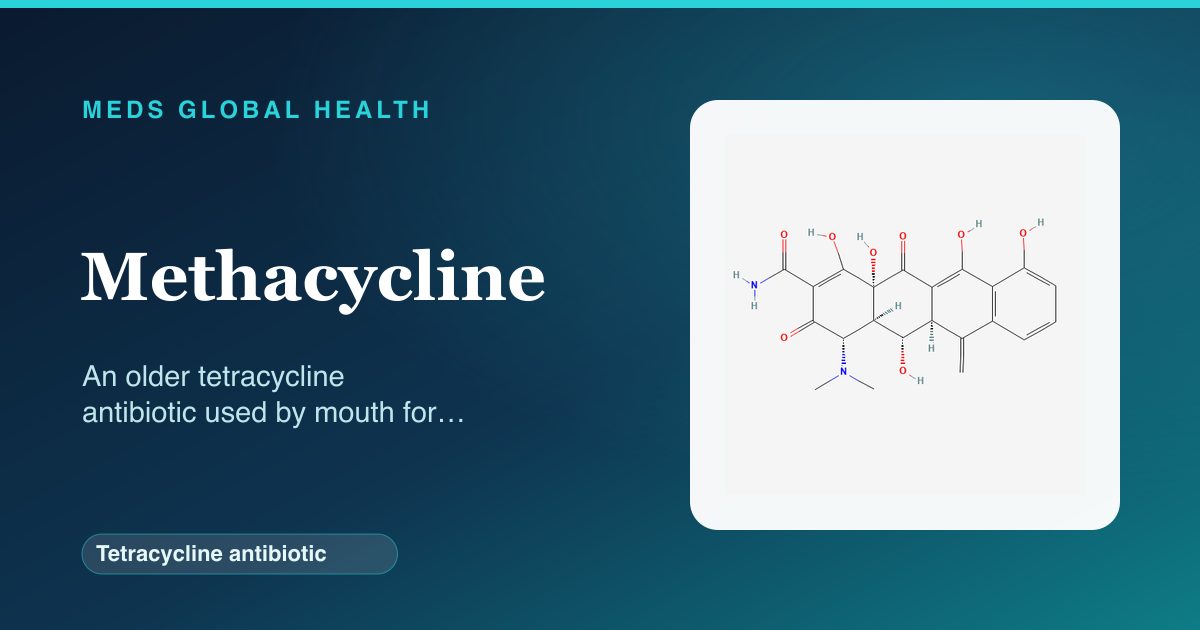
Methacycline is an antibiotic from the tetracycline group, taken by mouth. Tetracyclines are broad-acting antibiotics that have been used for many kinds of bacterial infection, including chest, skin and certain other infections. Methacycline is one of the older members of the family and is now largely obsolete, having been replaced by newer tetracyclines and other antibiotics; it is not in routine use in the UK. It works against bacteria rather than viruses, so it does not help colds or flu.
How it works
Methacycline stops bacteria from making the proteins they need to grow and multiply, which halts the infection and lets the body clear it. As a tetracycline, it shares the family's characteristic behaviours, both helpful and unwanted: it binds strongly to calcium, which is why it can stain developing teeth and why dairy, antacids and iron stop it being absorbed, and it makes the skin more reactive to sunlight. Like all antibiotics, it works only against bacteria, not viruses, and unnecessary use contributes to resistance.
Company & origin
An older tetracycline antibiotic taken by mouth; it is largely obsolete and not in routine use in the UK.
Practical use
How to take Methacycline
General, dose-free guidance — always follow your prescriber's and the leaflet's specific instructions.
- Take it by mouth with plenty of water and stay upright for a while afterwards, to avoid irritating the gullet.
- Keep it well apart from milk, dairy products, antacids and iron or mineral supplements, which stop it being absorbed.
- Protect your skin from strong sunlight and avoid sunbeds, as it can make the skin more sensitive to sun.
- Do not take it in pregnancy or breastfeeding, or give it to young children, because it can stain developing teeth.
- Finish the full course even if you feel better, to help clear the infection and limit resistance.
Weighing it up
Advantages & disadvantages of Methacycline
Advantages
- A broad-acting antibiotic that has been used for a range of bacterial infections.
- Taken by mouth rather than by injection.
- Part of the long-established and well-understood tetracycline family.
Disadvantages
- Can permanently stain developing teeth, so it is avoided in pregnancy and young children.
- Commonly makes the skin more sensitive to sunlight.
- Must be kept apart from dairy, antacids and iron, and it is largely obsolete in the UK.
Practical use
Good to know
Several tetracycline traits matter most with methacycline. It can permanently stain teeth that are still forming, so it is avoided during pregnancy and breastfeeding and in children under about 12. It commonly makes the skin much more sensitive to sunlight, so covering up and using sun protection, and avoiding sunbeds, is sensible while taking it. A key practical point is that it must be separated from milk and dairy products, antacids and iron or other mineral supplements, because the calcium and minerals bind to it in the gut and stop it being absorbed; it is usually taken with plenty of water and not lying down, to avoid irritating the gullet. It works only against bacterial infections, and finishing the course helps prevent resistance. In practice it is largely obsolete and not in routine UK use.
Who should not take it / use with caution
- People who have had a serious allergic reaction to methacycline or other tetracyclines should not take it.
- It must not be used in pregnancy or breastfeeding, as it can affect developing teeth and bones.
- It must not be given to children under about 12, because it can permanently stain forming teeth.
- It is used with caution in people with kidney or liver problems, under medical guidance.
Monitoring
- Reviewing whether the infection is responding to treatment.
- Watching for skin reactions to sunlight and for stomach or gullet upset.
- Checking kidney or liver function during longer use where appropriate.
Side effects
- Increased sensitivity of the skin to sunlight, sometimes causing an exaggerated sunburn.
- Nausea, stomach upset or diarrhoea, and irritation of the gullet if taken without enough water.
- Permanent staining of developing teeth if used in pregnancy or in young children.
- Thrush (a yeast infection) in some people, and rarely serious allergic reactions needing urgent help.
Key interactions
- Milk, dairy, antacids and iron or mineral supplements bind to it and stop it being absorbed, so keep them apart.
- It can increase the effect of warfarin and similar blood thinners, so tell your prescriber if you take one.
- It may reduce how well some other medicines work, so tell your prescriber everything you take.
Available as: Capsules taken by mouth.
Answers
Methacycline: frequently asked questions
What is methacycline used for?
It is an older tetracycline antibiotic taken by mouth to treat various bacterial infections; it works against bacteria, not viruses such as colds or flu.
Why is it avoided in pregnancy and children?
Like other tetracyclines, it can permanently stain teeth that are still forming, so it is avoided in pregnancy and breastfeeding and in children under about 12.
Why must I avoid dairy and antacids with it?
The calcium in dairy and the minerals in antacids and iron supplements bind to methacycline in the gut and stop it being absorbed, so they must be kept well apart.
Will it make me more sensitive to the sun?
Yes. It commonly makes the skin more sensitive to sunlight, so cover up, use sun protection and avoid sunbeds while taking it.
Is methacycline still used?
It is largely obsolete and not in routine use in the UK, having been replaced by newer tetracyclines and other antibiotics.
The wider class
About Tetracycline antibiotic
Methacycline belongs to the tetracycline antibiotic class. For how the class as a whole works, its shared safety principles and monitoring, see the full guide.
Browse by body system
Authoritative sources
- BNF
- NICE CKS
Building a medicines information resource?
We create evidence-led, dose-free drug and formulary references for teams.