An older hydantoin anti-epileptic medicine
Mephenytoin
An old hydantoin anti-epileptic medicine, now obsolete because it caused serious blood and skin problems.
What is Mephenytoin?
Mephenytoin is an old anti-epileptic medicine of the hydantoin family, closely related to phenytoin. It was used in the past to control seizures, but it is no longer used in modern UK practice because it caused serious side effects, in particular dangerous drops in white blood cells (agranulocytosis) and severe skin reactions. It was considered more toxic than phenytoin, which is why safer alternatives replaced it. It is included here mainly for completeness and historical reference rather than as a current treatment.
Education and reference only. This is a plain-language guide to Mephenytoin — it deliberately contains no doses. Doses depend on the person, the brand and the reason for treatment, and belong with your prescriber. Always check the BNF, the product labelling (SmPC) and follow medical advice.
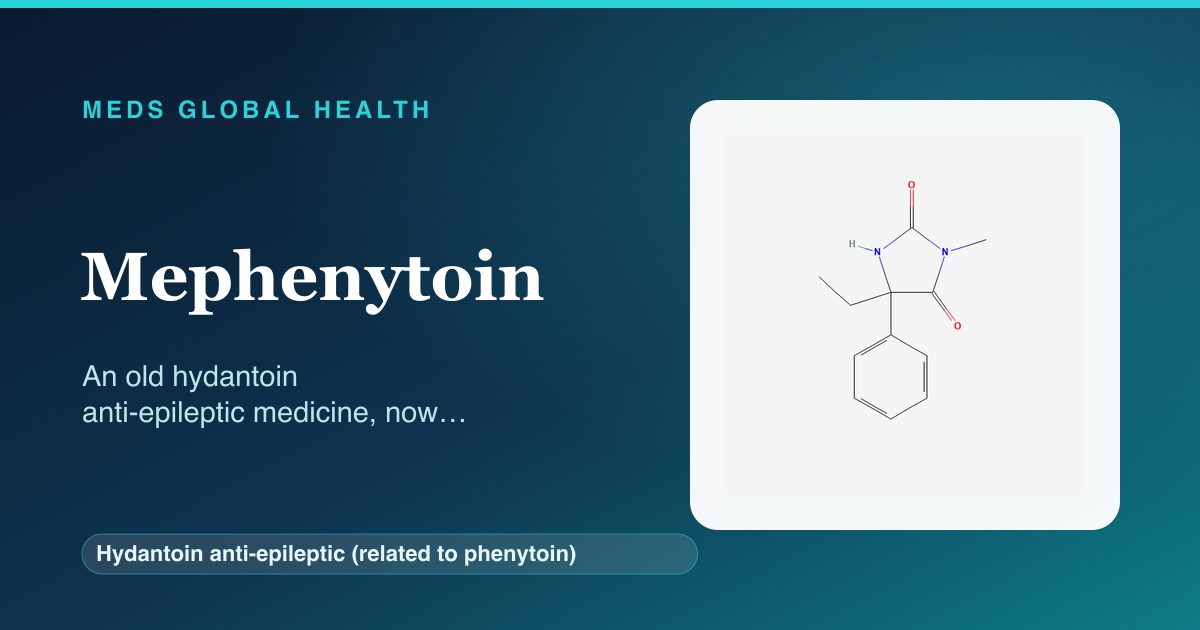
What it is
Mephenytoin is an anti-epileptic (anticonvulsant) medicine that belongs to the hydantoin group, the same family as phenytoin. Medicines in this group calm the abnormal electrical activity in the brain that causes seizures. Mephenytoin was used decades ago to treat epilepsy that had not responded to other treatments, but it has been replaced by safer medicines and is now essentially obsolete. It is not part of current UK epilepsy treatment, and this entry describes it for background and historical understanding rather than as something a person would be started on today.
How it works
Like other hydantoin anti-epileptics, mephenytoin works mainly by stabilising the electrical activity of nerve cells in the brain. It dampens down the rapid, repeated firing of nerve signals that can spread and cause a seizure, helping to prevent seizures from starting or spreading. Although this mechanism can control seizures, mephenytoin was found to carry a higher risk of serious harm than related medicines, especially to the blood and skin. Because the balance of benefit and risk was poor compared with newer treatments, it was withdrawn from routine use.
Company & origin
An old anti-epileptic medicine related to phenytoin, now obsolete and not used in modern UK practice because of its serious side effects.
Practical use
How to take Mephenytoin
General, dose-free guidance — always follow your prescriber's and the leaflet's specific instructions.
- This is an obsolete medicine that is not used in modern UK epilepsy care, so it would not normally be started today.
- Never stop or change epilepsy medicine suddenly, as this can trigger seizures; any changes are made by a specialist.
- If you have old records mentioning it, ask your epilepsy team to explain the safer treatments now used instead.
- Report any signs of infection, fever, sore throat, mouth ulcers or unusual bruising urgently with any hydantoin medicine.
- Report any new rash promptly, as severe skin reactions are a serious concern with this drug family.
Weighing it up
Advantages & disadvantages of Mephenytoin
Advantages
- Could control seizures in an era before safer anti-epileptics were available.
- Belongs to a well-understood family of medicines (the hydantoins).
- Largely of historical interest, having been replaced by better-tolerated treatments.
Disadvantages
- Caused serious blood disorders, including agranulocytosis (a dangerous fall in infection-fighting white cells).
- Caused severe skin reactions and was considered more toxic than phenytoin.
- Obsolete and no longer part of modern UK epilepsy treatment.
Practical use
Good to know
The most important thing to understand about mephenytoin is why it is no longer used. While it could control seizures, it was associated with serious and potentially life-threatening side effects, most notably agranulocytosis, a severe fall in the white blood cells that fight infection, and severe skin reactions. These risks were considered greater than those of phenytoin, so it was regarded as more toxic and was replaced by safer anti-epileptics. Anyone reading about it should know that it is a historical medicine: modern epilepsy care uses medicines with far better safety profiles. If you have any old records mentioning it or any questions about epilepsy treatment, your neurology or epilepsy team can explain the current, much safer options.
Who should not take it / use with caution
- It is not used in modern practice, so in effect no one is started on it today.
- People who have had a serious allergic reaction to it or to related hydantoin medicines should not take it.
- It would be wholly unsuitable for anyone with a history of serious blood disorders or severe drug skin reactions.
Monitoring
- Had it been used, it would have needed close blood-count monitoring to catch agranulocytosis.
- Watching for any new rash or signs of a severe skin reaction.
- Checking liver function and overall tolerance, reflecting its poor safety profile.
Side effects
- Serious drops in white blood cells (agranulocytosis), a potentially life-threatening blood disorder.
- Severe skin reactions, including serious rashes.
- Drowsiness, unsteadiness and other effects typical of older anti-epileptics.
- Other blood and liver problems, which is part of why it was abandoned.
Key interactions
- Like other hydantoins, it interacted with many medicines, both affecting them and being affected by them.
- Combining it with other medicines that affect the blood cells would have added to the risk of serious blood problems.
- Its many interactions and narrow safety margin were among the reasons it was replaced.
Available as: Tablets taken by mouth (historical formulation).
Answers
Mephenytoin: frequently asked questions
What was mephenytoin used for?
It was an old anti-epileptic medicine, related to phenytoin, used in the past to control seizures; it is no longer used in modern UK practice.
Why is it no longer used?
It caused serious side effects, especially dangerous falls in white blood cells (agranulocytosis) and severe skin reactions, and was considered more toxic than phenytoin, so safer medicines replaced it.
How is it related to phenytoin?
It belongs to the same family, the hydantoins, and works in a similar way, but it carried greater risks, which is why phenytoin and newer medicines are used instead.
Could I be prescribed it today?
No. It is essentially obsolete and is not part of current UK epilepsy treatment, which uses medicines with much better safety profiles.
What replaced it?
Modern epilepsy care uses a range of safer anti-epileptic medicines; your neurology or epilepsy team can explain which options suit your situation.
The wider class
About Hydantoin anti-epileptic (related to phenytoin)
Mephenytoin belongs to the hydantoin anti-epileptic (related to phenytoin) class. For how the class as a whole works, its shared safety principles and monitoring, see the full guide.
Browse by body system
Authoritative sources
- BNF
- NICE CKS
Building a medicines information resource?
We create evidence-led, dose-free drug and formulary references for teams.