An oral androgen for testosterone replacement
Methyltestosterone
An older oral androgen used for testosterone replacement and some conditions, now largely replaced by other testosterone forms.
What is Methyltestosterone?
Methyltestosterone is an oral androgen, a man-made male hormone taken by mouth for testosterone replacement and certain other conditions. Its most important safety concern is that oral androgens of this type can damage the liver, including, rarely, liver tumours, which is why it is largely superseded by patches, gels and injections that avoid this. It causes virilising effects (male features) and must not be used in pregnancy. It is used under specialist supervision with liver monitoring, and modern testosterone forms are usually preferred.
Education and reference only. This is a plain-language guide to Methyltestosterone — it deliberately contains no doses. Doses depend on the person, the brand and the reason for treatment, and belong with your prescriber. Always check the BNF, the product labelling (SmPC) and follow medical advice.
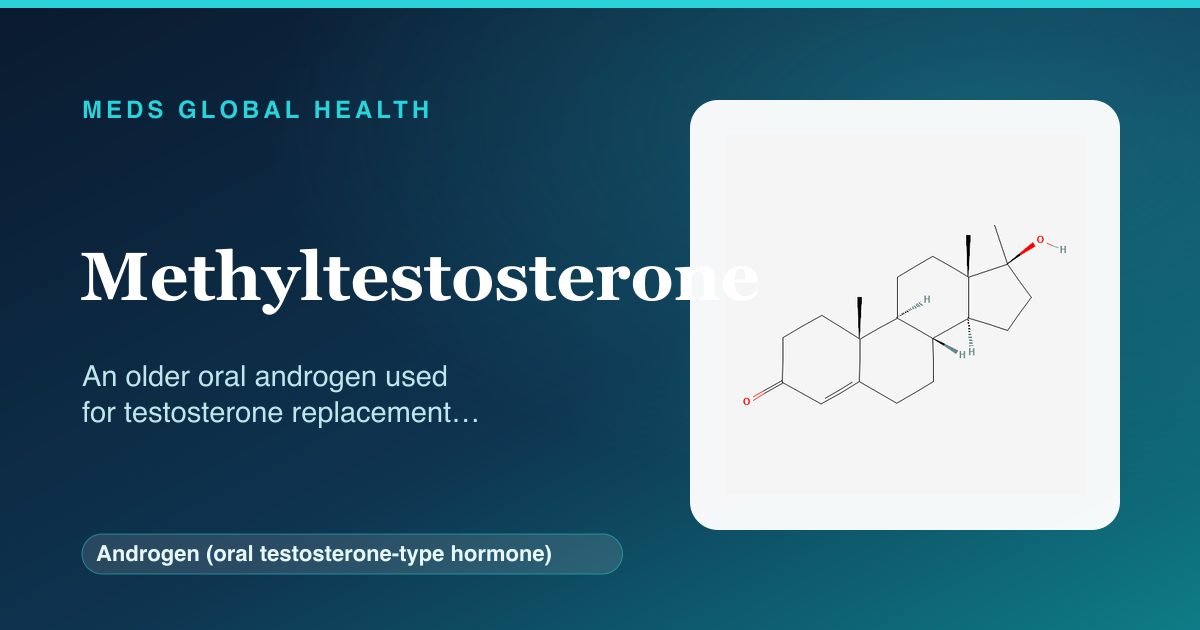
What it is
Methyltestosterone is an androgen, meaning a male sex hormone, made in a form that can be taken by mouth. It has been used for testosterone replacement in men with low testosterone and in some other hormone-related situations. It is an older medicine, and because oral androgens of this chemical type can be hard on the liver, it has largely been replaced by other forms of testosterone, such as gels, patches and injections, which avoid that risk. Where it is used at all, it is under specialist supervision with careful monitoring.
How it works
Methyltestosterone acts like the body's own testosterone, attaching to androgen receptors and producing the effects of the male hormone, such as supporting male physical characteristics and other testosterone-driven functions. It is chemically altered so that it survives being taken by mouth, but this same alteration is what makes it potentially harmful to the liver. By providing androgen activity, it can correct the effects of low testosterone, but because of the liver risk and the availability of safer forms, it is rarely the preferred choice today.
Company & origin
An older oral androgen (male hormone) used for testosterone replacement and some conditions; largely superseded by other testosterone forms.
Practical use
How to take Methyltestosterone
General, dose-free guidance — always follow your prescriber's and the leaflet's specific instructions.
- Take it by mouth only as prescribed and under specialist supervision.
- Keep up with the liver blood tests arranged, as oral androgens of this type can harm the liver.
- It must not be used in pregnancy because of harm to a developing baby.
- Tell your specialist about any liver problems, prostate problems or heart disease before starting.
- Discuss whether a more modern testosterone form, such as a gel, patch or injection, would suit you better.
Weighing it up
Advantages & disadvantages of Methyltestosterone
Advantages
- Provides androgen (male hormone) activity for testosterone replacement.
- Can be taken by mouth rather than as an injection.
- A long-established medicine with decades of use behind it.
Disadvantages
- Oral androgens of this type can damage the liver, including, rarely, liver tumours.
- Causes virilising effects and must not be used in pregnancy.
- Largely superseded by safer modern testosterone forms such as gels, patches and injections.
Practical use
Good to know
The dominant safety concern with methyltestosterone is its effect on the liver: oral androgens of this type can cause liver damage and, rarely, liver tumours, which is the main reason modern testosterone treatments use gels, patches or injections instead. It produces virilising effects, the development of male characteristics, which is an expected part of its action in men but a serious problem if it reaches a developing baby, so it must not be used in pregnancy and women of childbearing potential need to be careful. Like other androgens it can affect mood, blood counts, cholesterol and the prostate, so monitoring is important. Overall it is regarded as an older option that has largely been superseded; a specialist will usually recommend a more modern form of testosterone.
Who should not take it / use with caution
- It must not be used in pregnancy or by women who might become pregnant, because of harm to a developing baby.
- People with liver problems, liver tumours or known prostate or breast cancer should not take it.
- People who have had a serious allergic reaction to it, or with significant heart disease, should avoid it or use it only under specialist care.
Monitoring
- Regular liver blood tests, because of the risk of liver damage.
- Checking testosterone-related effects, blood counts, cholesterol and the prostate.
- Reviewing whether a more modern testosterone form would be safer and more suitable.
Side effects
- Liver damage and, rarely, liver tumours, which is the main concern with this oral androgen.
- Virilising effects, such as deepening of the voice, increased body hair and acne.
- Mood changes, fluid retention, changes in cholesterol and effects on the prostate.
- Changes in blood counts and, in some, effects on fertility.
Key interactions
- It can affect blood-thinning medicines such as warfarin, so clotting may need closer monitoring.
- It can affect blood-sugar control, so diabetes medicines may need reviewing.
- Tell your specialist about all your medicines, as androgens interact with several treatments.
Available as: Tablets and capsules taken by mouth.
Answers
Methyltestosterone: frequently asked questions
What is methyltestosterone used for?
It is an older oral androgen used for testosterone replacement and some other conditions, though it is now largely replaced by safer testosterone forms.
Why is it considered risky for the liver?
Oral androgens of this chemical type can damage the liver and, rarely, cause liver tumours, which is why modern treatments use gels, patches or injections instead.
Can it be used in pregnancy?
No, it must not be used in pregnancy because it can cause male characteristics in a developing baby and other harm.
Are there better alternatives?
Yes, modern testosterone forms such as gels, patches and injections are usually preferred because they avoid the liver risk of this oral type.
What monitoring is needed?
Regular liver blood tests are important, along with checks on blood counts, cholesterol and the prostate, under specialist supervision.
The wider class
About Androgen (oral testosterone-type hormone)
Methyltestosterone belongs to the androgen (oral testosterone-type hormone) class. For how the class as a whole works, its shared safety principles and monitoring, see the full guide.
Browse by body system
Authoritative sources
- BNF
- NICE CKS
Building a medicines information resource?
We create evidence-led, dose-free drug and formulary references for teams.