Testosterone replacement therapy
Testosterone
Replacement of the male sex hormone testosterone for men with proven low levels (hypogonadism).
What is Testosterone?
Testosterone replacement is used for men whose bodies do not make enough testosterone, a condition called hypogonadism, confirmed by symptoms and blood tests. It comes as a skin gel, an injection or other forms, and it can ease symptoms such as low energy, low mood, reduced sex drive and loss of muscle. With gels, an important warning is to avoid skin-to-skin transfer to partners and children. It is not a treatment for fertility and needs ongoing monitoring of the prostate, blood count and hormone levels.
Education and reference only. This is a plain-language guide to Testosterone — it deliberately contains no doses. Doses depend on the person, the brand and the reason for treatment, and belong with your prescriber. Always check the BNF, the product labelling (SmPC) and follow medical advice.
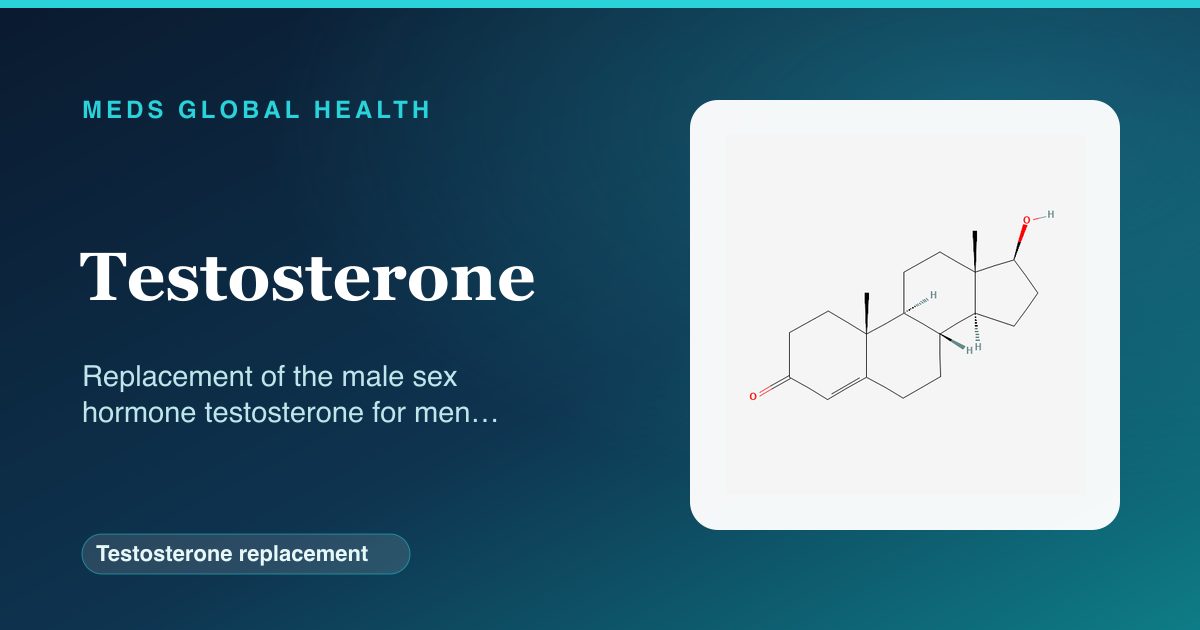
What it is
Testosterone is the main male sex hormone, important for sex drive, erections, muscle and bone strength, mood and energy. When the testicles or the glands that control them do not produce enough — a condition called hypogonadism — replacement testosterone can restore levels towards normal. It is given as a gel applied to the skin, a long-acting injection, or other preparations, and is prescribed only when low levels are confirmed by symptoms and blood tests.
How it works
Replacement testosterone tops up the body's level of the hormone, allowing it to act on tissues throughout the body — supporting sex drive, erections, muscle and bone, mood and energy. Gels are absorbed slowly through the skin to give steady levels, while long-acting injections release the hormone gradually over weeks. By bringing levels back towards the normal range, symptoms of deficiency often improve, though it does not cure the underlying cause and is continued as ongoing therapy.
Company & origin
The main male sex hormone, given in the UK as replacement therapy for men whose bodies do not make enough of it.
Practical use
How to take Testosterone
General, dose-free guidance — always follow your prescriber's and the leaflet's specific instructions.
- Use it exactly as prescribed — gel applied to clean, dry skin each day, or long-acting injections given by a healthcare professional.
- With gels, wash your hands after applying, let it dry fully and cover the area with clothing.
- Avoid skin-to-skin contact at the application site with women and children, as transferred testosterone can harm them.
- Do not use it as a treatment for fertility — tell your prescriber if you are hoping to father a child.
- Attend your blood tests and prostate checks, as ongoing monitoring is part of safe treatment.
- Report symptoms such as difficulty passing urine, breast changes or unusual mood changes to your prescriber.
Weighing it up
Advantages & disadvantages of Testosterone
Advantages
- Can relieve the symptoms of genuine testosterone deficiency, such as low energy, low mood and reduced sex drive.
- Helps maintain muscle, bone strength and sexual function when levels are restored.
- Available in convenient forms, including daily skin gels and long-acting injections.
Disadvantages
- Skin gels can transfer to partners and children through skin contact, which must be carefully avoided.
- It can reduce fertility and is not a treatment for trying to conceive.
- It requires ongoing monitoring of the prostate, blood count and hormone levels.
Practical use
Good to know
Testosterone is for confirmed deficiency, not a general tonic, and is not a treatment for low fertility — in fact it can reduce sperm production, so men hoping to father children should discuss this first. With skin gels, the crucial safety point is avoiding transfer to others: wash your hands after applying, let it dry, cover the area with clothing, and keep close skin contact away from women and children, as transferred testosterone can affect them. It can thicken the blood and affect the prostate, so blood count, testosterone level and prostate checks (including PSA) are part of monitoring. Symptoms such as energy, mood and sex drive often improve over weeks to months. It must not be used in men with prostate or breast cancer.
Who should not take it / use with caution
- Men with prostate cancer or male breast cancer must not use it.
- It is avoided in men who are trying to father a child, as it can reduce sperm production.
- It is used with caution in heart, liver or kidney disease and in those who make too many red blood cells.
Monitoring
- Regular testosterone blood levels to keep them in the right range.
- Prostate checks including PSA, especially in older men, before and during treatment.
- Blood count to detect thickening of the blood, plus review of symptoms and any side effects.
Side effects
- Acne, oily skin, fluid retention and mood changes can occur.
- Thickening of the blood (raised red blood cell count), and prostate enlargement with urinary symptoms.
- Skin reactions at the application or injection site, and breast tenderness in some men.
Key interactions
- Can increase the effect of blood-thinning medicines such as warfarin, needing closer monitoring.
- May change the dose needed for diabetes medicines, as it can affect blood sugar.
- Other hormone-affecting or fluid-retaining medicines, including steroids, may interact.
Available as: Skin gels, long-acting injections, and other preparations as prescribed.
Answers
Testosterone: frequently asked questions
Who is testosterone replacement for?
It is for men with confirmed low testosterone (hypogonadism), shown by symptoms and blood tests. It is not a general energy tonic for normal levels.
Can the gel affect my partner or children?
Yes. Testosterone gel can transfer through skin contact and harm women and children, so wash your hands, let it dry, cover the area and avoid close skin contact there.
Will it help me father a child?
No. Testosterone is not a fertility treatment and can actually reduce sperm production, so tell your prescriber if you are hoping to conceive.
Why do I need prostate and blood tests?
Testosterone can affect the prostate and thicken the blood, so PSA, prostate checks and blood counts are done to keep treatment safe.
How long until I feel a difference?
Symptoms such as energy, mood and sex drive often improve over several weeks to months as levels are restored and treatment is reviewed.
The wider class
About Testosterone replacement
Testosterone belongs to the testosterone replacement class. For how the class as a whole works, its shared safety principles and monitoring, see the full guide.
Browse by body system
Authoritative sources
- BNF
- NICE CKS
Building a medicines information resource?
We create evidence-led, dose-free drug and formulary references for teams.