An old irreversible MAOI antidepressant, now withdrawn
Nialamide
An old MAOI antidepressant, now withdrawn, known for dangerous food and medicine interactions.
What is Nialamide?
Nialamide is an old antidepressant of the irreversible monoamine oxidase inhibitor (MAOI) type. Its defining problem is the danger of the 'cheese reaction': eating tyramine-rich foods such as mature cheese, or taking certain medicines, can cause a sudden, dangerous rise in blood pressure (a hypertensive crisis). It can also cause liver toxicity. Because of these serious risks, it has been withdrawn and is now obsolete, replaced by safer antidepressants. It is included here for historical reference rather than current use.
Education and reference only. This is a plain-language guide to Nialamide — it deliberately contains no doses. Doses depend on the person, the brand and the reason for treatment, and belong with your prescriber. Always check the BNF, the product labelling (SmPC) and follow medical advice.
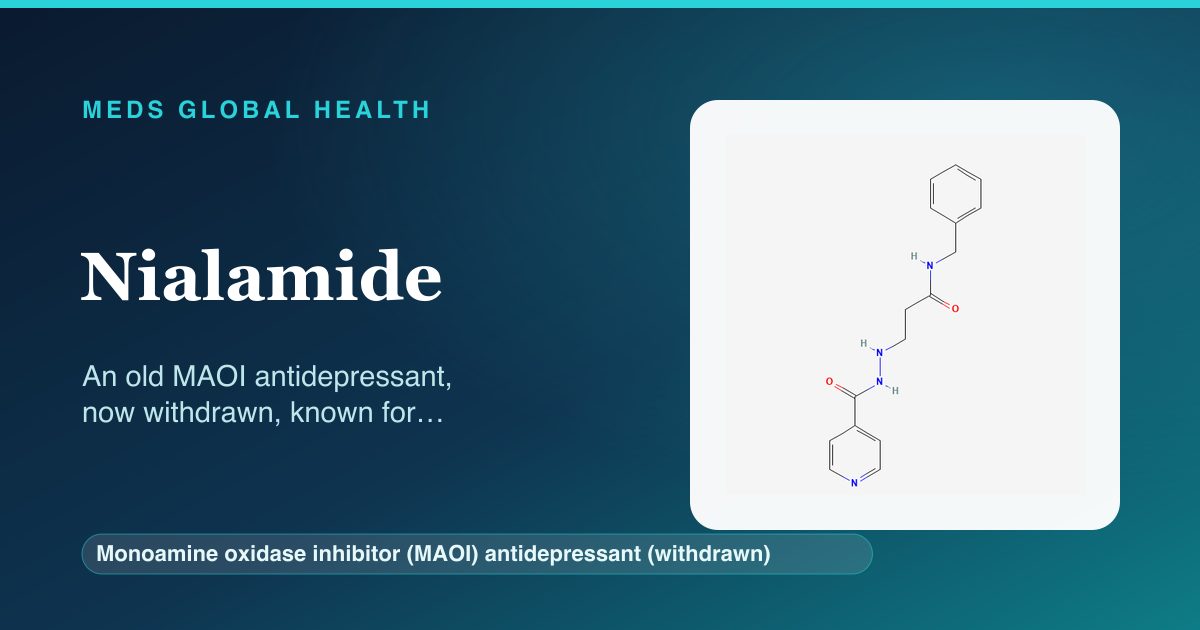
What it is
Nialamide is an older antidepressant belonging to a group called monoamine oxidase inhibitors, or MAOIs, of the irreversible kind. These were among the first antidepressants but carry serious safety problems. Nialamide is no longer in use, having been withdrawn because of dangerous interactions with certain foods and medicines and a risk of liver damage. It is described here mainly for historical and educational reasons, as it has been replaced by safer treatments for depression.
How it works
Nialamide blocks an enzyme called monoamine oxidase, which normally breaks down mood-related brain chemicals such as serotonin and noradrenaline. With the enzyme blocked, more of these messengers are available, which was intended to lift mood. The catch is that this same enzyme also breaks down tyramine, a substance found in many foods. With the enzyme blocked, tyramine can build up and trigger a sudden, dangerous surge in blood pressure, the so-called cheese reaction. Because the block is irreversible, this risk lasts until the body makes new enzyme.
Company & origin
An old antidepressant of the MAOI type that has been withdrawn because of dangerous food and medicine interactions and liver toxicity.
What it treats
Conditions Nialamide is used for
Practical use
How to take Nialamide
General, dose-free guidance — always follow your prescriber's and the leaflet's specific instructions.
- Nialamide is withdrawn and no longer prescribed, so it is not a current treatment option.
- With MAOIs in general, strict avoidance of tyramine-rich foods such as mature cheese and cured meats was essential.
- Many other medicines, including some cold and decongestant remedies, had to be strictly avoided.
- A sudden severe headache, palpitations or feeling very unwell needed emergency care as a possible hypertensive crisis.
- For depression today, ask your prescriber about modern, safer antidepressants instead.
Weighing it up
Advantages & disadvantages of Nialamide
Advantages
- As an early antidepressant, it showed that adjusting brain chemicals could help low mood.
- Historically offered an option before safer antidepressants existed.
- Of mainly historical interest in understanding how antidepressants developed.
Disadvantages
- Can cause a dangerous hypertensive crisis (the cheese reaction) with tyramine-rich foods or certain medicines.
- Interacts dangerously with a long list of medicines and can cause liver toxicity.
- Withdrawn and obsolete, with far safer antidepressants now available.
Practical use
Good to know
The most important thing to understand about nialamide, and MAOIs in general, is the danger of the tyramine or cheese reaction: foods rich in tyramine, such as mature cheese, cured meats, some fermented or pickled foods and certain drinks, can cause a sudden, life-threatening rise in blood pressure. The same applies to a long list of medicines, including some cold and decongestant remedies and other antidepressants, so combining them can be dangerous. Nialamide can also harm the liver. Warning signs of a hypertensive crisis include a severe, sudden headache, palpitations and feeling very unwell, and need emergency care. Because of all this, nialamide has been withdrawn and replaced by far safer antidepressants; it is no longer prescribed.
Who should not take it / use with caution
- It is withdrawn and no longer available, so it should not be used.
- MAOIs of this type must never be combined with tyramine-rich foods or with many interacting medicines.
- People with liver problems or certain other conditions were particularly at risk from it.
Monitoring
- Historically, careful dietary advice and avoidance of interacting medicines were essential.
- Blood pressure and warning signs of a hypertensive crisis needed close attention.
- Liver function needed watching because of the risk of liver toxicity.
Side effects
- A dangerous rise in blood pressure (hypertensive crisis) if tyramine-rich foods or interacting medicines were taken.
- Dizziness, especially on standing, dry mouth and difficulty sleeping.
- Rarely but seriously, liver toxicity.
Key interactions
- Tyramine-rich foods such as mature cheese and cured meats could trigger a dangerous rise in blood pressure.
- Many medicines, including some cold and decongestant remedies and other antidepressants, interacted dangerously.
- Combining it with other medicines that raise serotonin could cause a serious reaction.
Available as: Tablets taken by mouth (no longer available).
Answers
Nialamide: frequently asked questions
What was nialamide used for?
It was an old MAOI antidepressant used to treat depression, but it is now withdrawn and no longer used.
What is the 'cheese reaction'?
It is a sudden, dangerous rise in blood pressure that can happen when MAOIs like nialamide are combined with tyramine-rich foods such as mature cheese.
Why was it withdrawn?
Because of dangerous interactions with foods and medicines that could cause a hypertensive crisis, along with a risk of liver toxicity.
Is it still available?
No. Nialamide is obsolete and no longer prescribed, having been replaced by far safer antidepressants.
What should I use instead?
For depression today, your prescriber can advise on modern, safer antidepressants rather than an old MAOI like this one.
The wider class
About Monoamine oxidase inhibitor (MAOI) antidepressant (withdrawn)
Nialamide belongs to the monoamine oxidase inhibitor (maoi) antidepressant (withdrawn) class. For how the class as a whole works, its shared safety principles and monitoring, see the full guide.
Browse by body system
Authoritative sources
- BNF
- NICE CKS
Building a medicines information resource?
We create evidence-led, dose-free drug and formulary references for teams.