An MAOI antidepressant
Phenelzine
An older, effective antidepressant that needs a special low-tyramine diet to avoid dangerous blood-pressure surges.
What is Phenelzine?
Phenelzine is a monoamine oxidase inhibitor (MAOI), an older type of antidepressant usually reserved for depression that has not responded to other treatments, including some forms with strong anxiety or unusual features. It is effective but needs care: you must avoid foods high in tyramine — such as mature cheese, cured or aged meats and yeast extracts — because together they can cause a dangerous surge in blood pressure. A severe, sudden throbbing headache is a warning sign that needs emergency help. It also interacts dangerously with many other medicines.
Education and reference only. This is a plain-language guide to Phenelzine — it deliberately contains no doses. Doses depend on the person, the brand and the reason for treatment, and belong with your prescriber. Always check the BNF, the product labelling (SmPC) and follow medical advice.
What it is
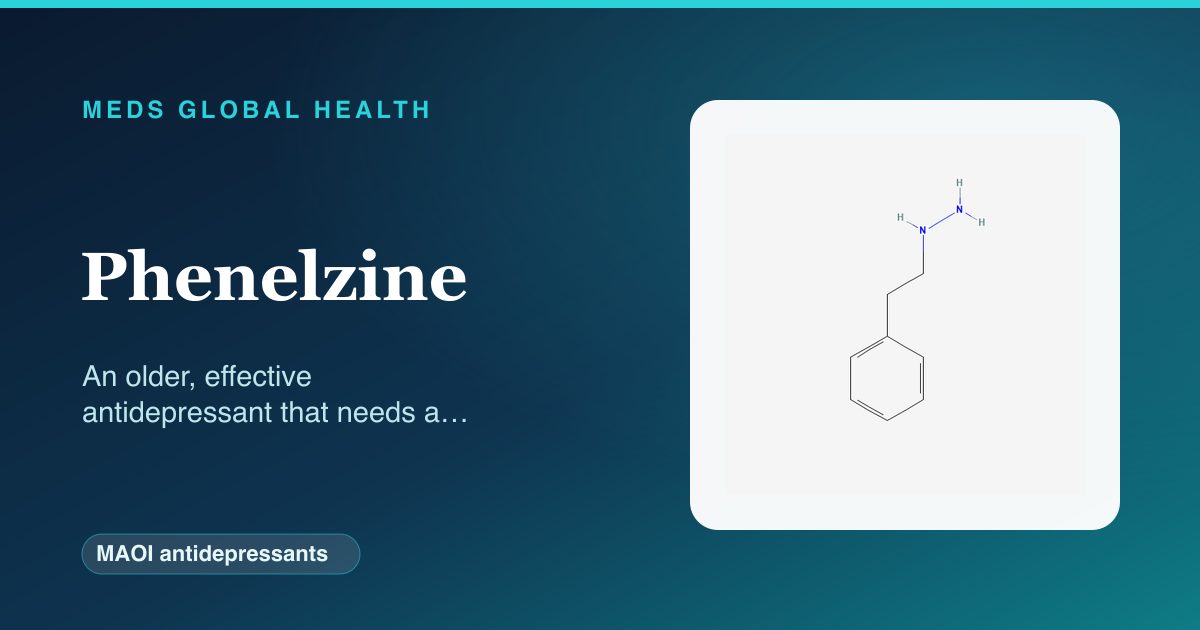
Phenelzine is one of the original antidepressants, a monoamine oxidase inhibitor (MAOI). In modern UK practice it is usually started by a specialist and reserved for depression that has not responded to newer antidepressants, sometimes including depression with marked anxiety or other particular features. It works well for some people but requires strict attention to diet and to other medicines because of the risk of serious interactions.
How it works
Phenelzine blocks an enzyme called monoamine oxidase, which normally breaks down mood-related brain chemicals such as serotonin, noradrenaline and dopamine. With the enzyme blocked, more of these chemicals are available, which over weeks helps lift mood. The same enzyme also breaks down tyramine from food and certain medicines, which is why these must be restricted to avoid a dangerous build-up.
Company & origin
An older MAOI antidepressant used in the UK for depression, usually when other antidepressants have not worked.
What it treats
Conditions Phenelzine is used for
Practical use
How to take Phenelzine
General, dose-free guidance — always follow your prescriber's and the leaflet's specific instructions.
- Follow the low-tyramine diet carefully, avoiding mature cheese, cured or aged meats, yeast extracts and the other foods on your list.
- Do not take other medicines, including over-the-counter cold, flu or decongestant remedies, without checking they are safe with an MAOI.
- Carry an MAOI warning card and tell any doctor, dentist or pharmacist that you take phenelzine.
- Continue the diet and medicine precautions for a couple of weeks after stopping, as the effect lingers; a washout is needed before switching antidepressants.
- If you miss a dose, take it when you remember unless it is nearly time for the next, then skip it — do not double up, and do not stop suddenly.
Weighing it up
Advantages & disadvantages of Phenelzine
Advantages
- Can be effective for depression that has not responded to other antidepressants.
- May help depression with prominent anxiety or particular features.
- An established option when a specialist judges other treatments have not worked.
Disadvantages
- Requires a strict low-tyramine diet to avoid dangerous blood-pressure surges.
- Interacts dangerously with many medicines, including other antidepressants and decongestants.
- Precautions continue for weeks after stopping, and a washout is needed before switching.
Practical use
Good to know
The key safety issue with phenelzine is a strict low-tyramine diet: you must avoid mature and aged cheeses, cured, smoked or aged meats, yeast and meat extracts (such as Marmite, Bovril and OXO), some fermented foods and certain alcoholic drinks. Eating these can cause a sudden, dangerous rise in blood pressure (a hypertensive crisis); a severe, sudden, throbbing headache, often with a stiff neck, sweating or palpitations, is an emergency. It also interacts dangerously with many medicines, including other antidepressants, some painkillers (especially pethidine), and decongestants and other sympathomimetics found in cold and flu remedies. These cautions continue for a couple of weeks after stopping it, because the enzyme takes time to recover, and a washout period is needed before starting or switching to another antidepressant. Never stop it abruptly, and always carry a card or tell health professionals you take an MAOI.
Who should not take it / use with caution
- It must not be combined with other antidepressants, certain painkillers such as pethidine, or decongestants and similar stimulant medicines.
- People with phaeochromocytoma, significant liver disease or certain heart and circulation problems should not take it.
- Anyone unable to follow the dietary and medicine restrictions, or with a history of serious reactions to MAOIs, should avoid it.
Monitoring
- Blood pressure is checked, and you are taught to recognise the warning signs of a hypertensive crisis.
- Mood and any thoughts of self-harm are reviewed, especially early in treatment.
- Adherence to the diet and medicine restrictions is reviewed at appointments.
Side effects
- Dizziness (especially on standing), drowsiness or insomnia, dry mouth and constipation.
- Weight gain, swelling of the ankles and difficulty passing urine.
- Dangerously, a hypertensive crisis from tyramine — a sudden severe throbbing headache needs emergency care.
Key interactions
- Other antidepressants (including SSRIs and tricyclics) must be avoided, with a washout when switching.
- Some painkillers, especially pethidine, and decongestants or stimulants can cause severe reactions.
- Many cold and flu remedies and certain foods interact, so always check before taking anything new.
Available as: Tablets taken by mouth.
Answers
Phenelzine: frequently asked questions
Why do I have to avoid certain foods?
Phenelzine blocks the enzyme that breaks down tyramine, so foods high in tyramine like mature cheese and cured meats can cause a dangerous rise in blood pressure.
What are the warning signs of a serious reaction?
A sudden, severe throbbing headache, often with a stiff neck, sweating or palpitations, can signal a hypertensive crisis and needs emergency help.
Can I take cold and flu remedies?
Not without checking, as many contain decongestants that can react dangerously with phenelzine; always ask a pharmacist first.
Do the precautions stop as soon as I stop the tablets?
No. The effect lingers for a couple of weeks after stopping, so the diet and medicine precautions, and a washout before switching, are still needed.
Can I switch straight to another antidepressant?
No, a washout period is needed before starting most other antidepressants, because combining them too soon can be dangerous.
The wider class
About MAOI antidepressants
Phenelzine belongs to the maoi antidepressants class. For how the class as a whole works, its shared safety principles and monitoring, see the full guide.
Browse by body system
Authoritative sources
- BNF
- NICE CKS
Building a medicines information resource?
We create evidence-led, dose-free drug and formulary references for teams.