A steroid given by injection for inflammation and allergies
Triamcinolone
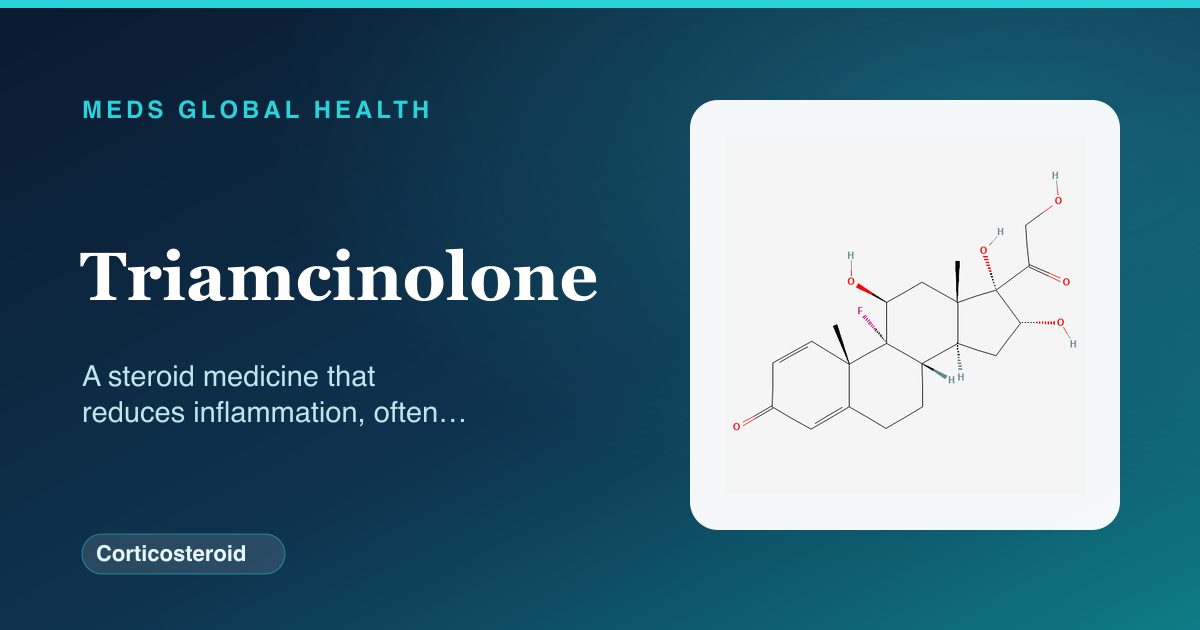
A steroid medicine that reduces inflammation, often given as an injection into a joint or muscle for arthritis or stubborn allergies such as hay fever.
What is Triamcinolone?
Triamcinolone is a corticosteroid, a type of steroid that powerfully calms inflammation in the body. It is often given as an injection straight into a painful, inflamed joint to ease conditions such as rheumatoid arthritis or osteoarthritis, and is sometimes given as a muscle injection for severe hay fever or other allergies. It can also be found in some skin creams and dental pastes. As a steroid it brings strong relief but carries the typical steroid effects, so it is used carefully and not too often. Joint injections are usually spaced out and there is a limit to how many a joint should have over time.
Education and reference only. This is a plain-language guide to Triamcinolone — it deliberately contains no doses. Doses depend on the person, the brand and the reason for treatment, and belong with your prescriber. Always check the BNF, the product labelling (SmPC) and follow medical advice.
What it is
Triamcinolone is a corticosteroid, a man-made version of a steroid hormone the body makes naturally. It is a strong anti-inflammatory medicine used to settle swelling, pain and irritation caused by an overactive inflammatory response. It comes in several forms: an injection placed directly into an inflamed joint, an injection into a muscle (sometimes used for severe seasonal allergies such as hay fever), and topical preparations for the skin or inside the mouth. Because it is a potent steroid, it is prescribed to bring inflammation under control rather than used casually, and the form chosen depends on the problem being treated.
How it works
Triamcinolone works by damping down the body's inflammatory response. When inflammation flares, the body releases chemicals that cause swelling, redness, heat and pain; this steroid switches down the production of those chemicals and calms the immune cells involved. Given straight into a joint, it concentrates its effect where the trouble is, easing pain and stiffness for weeks or longer. Given into a muscle, it is released more slowly to give a longer, body-wide anti-inflammatory effect, which is why it is sometimes used for stubborn allergies. On the skin, it settles the inflammation that drives redness and itching.
Company & origin
A corticosteroid used in the UK to calm inflammation, given as an injection into a joint or muscle, and sometimes used in skin or dental preparations.
What it treats
Conditions Triamcinolone is used for
Practical use
How to take Triamcinolone
General, dose-free guidance — always follow your prescriber's and the leaflet's specific instructions.
- It is given by a healthcare professional as an injection into a joint or a muscle, so you do not take it yourself.
- After a joint injection, rest the joint for a day or two as advised and avoid heavy use straight away.
- Expect the full effect to build over a few days rather than instantly, and tell your team if pain does not settle.
- Do not ask for joint injections too frequently, as there is a limit to how often a joint should be injected.
- Mention any recent steroid injection to other healthcare professionals, especially before surgery or if you become unwell.
Weighing it up
Advantages & disadvantages of Triamcinolone
Advantages
- A powerful way to calm inflammation, often easing a painful joint for weeks or longer.
- Targeting a single joint means the medicine works mainly where it is needed.
- A muscle injection can give lasting relief from severe seasonal allergies when other treatments have not been enough.
Disadvantages
- As a steroid, it can affect blood sugar, mood, sleep and the body's defences, especially with frequent use.
- A particular joint can only be injected a limited number of times before it may cause harm.
- A muscle injection exposes the whole body to steroid for a period, which is why milder allergy treatments are usually tried first.
Practical use
Good to know
The most useful thing to understand is that triamcinolone is a strong steroid, so the aim is to use the smallest effect needed to control inflammation rather than to use it freely. With joint injections, there is a sensible limit to how often a particular joint should be injected over time, because repeated injections can affect the joint, and the team will space them out. A muscle injection for hay fever gives lasting relief but exposes the whole body to steroid for a while, which is why other treatments such as steroid nasal sprays and antihistamines are usually tried first. Like other steroids, it can affect blood sugar, mood, sleep and the body's defences, and these effects are more likely with larger or more frequent use. It is best to tell any healthcare professional that you have recently had a steroid injection.
Who should not take it / use with caution
- People who have had a serious allergic reaction to triamcinolone or its ingredients should not have it.
- It is not injected into a joint that is, or might be, infected, and active infections elsewhere need care.
- It is used with caution in people with diabetes, uncontrolled high blood pressure, or certain mental-health conditions, under medical guidance.
Monitoring
- Reviewing how well the inflammation or pain responds and how long the relief lasts.
- Keeping track of how often a joint has been injected to stay within safe limits.
- Watching blood sugar in people with diabetes and mood or sleep changes after treatment.
Side effects
- A temporary flare of pain in the joint in the first day or two after an injection.
- A short rise in blood sugar, changes in mood or sleep, and a flushed feeling in some people.
- With repeated use, thinning of the skin or tissue around the injection site, or weakening of the joint.
- Rarely, infection in an injected joint, which needs urgent medical attention.
Key interactions
- It can raise blood sugar, so people with diabetes may need to watch their levels more closely.
- Taken with other steroids, the steroid effects add up, so tell your team about all steroid medicines you use.
- Some medicines change how the body handles steroids, so give your prescriber a full list of what you take.
Available as: An injection into a joint or muscle, and some skin and dental preparations.
Answers
Triamcinolone: frequently asked questions
What is triamcinolone used for?
It is a steroid used to calm inflammation, often injected into a painful joint for arthritis, and sometimes given as a muscle injection for severe allergies such as hay fever.
How long does a joint injection last?
Relief usually builds over a few days and can last weeks or longer, though this varies from person to person and joint to joint.
Can I have joint injections as often as I like?
No. There is a limit to how often a particular joint should be injected, because repeated injections can harm the joint, so your team will space them out.
Is the muscle injection for hay fever safe?
It can give lasting relief, but it exposes the whole body to steroid for a while, so steroid nasal sprays and antihistamines are usually tried first.
Why might my joint hurt more at first?
A short flare of pain in the first day or two after an injection is common and usually settles; tell your team if pain is severe or the joint becomes hot and swollen.
Authoritative sources
- BNF
- NICE CKS
Building a medicines information resource?
We create evidence-led, dose-free drug and formulary references for teams.