A once-yearly bisphosphonate infusion
Zoledronic acid
A strong bisphosphonate usually given as a once-yearly drip to strengthen bone in osteoporosis; flu-like symptoms can follow the first infusion.
What is Zoledronic acid?
Zoledronic acid is a bisphosphonate medicine used to strengthen bone and reduce fracture risk in osteoporosis, and in different settings for bone problems related to cancer. For osteoporosis it is usually given as a drip (infusion) into a vein, often only once a year. Flu-like symptoms can follow the infusion for a day or two, and good hydration and dental care are important.
Education and reference only. This is a plain-language guide to Zoledronic acid — it deliberately contains no doses. Doses depend on the person, the brand and the reason for treatment, and belong with your prescriber. Always check the BNF, the product labelling (SmPC) and follow medical advice.
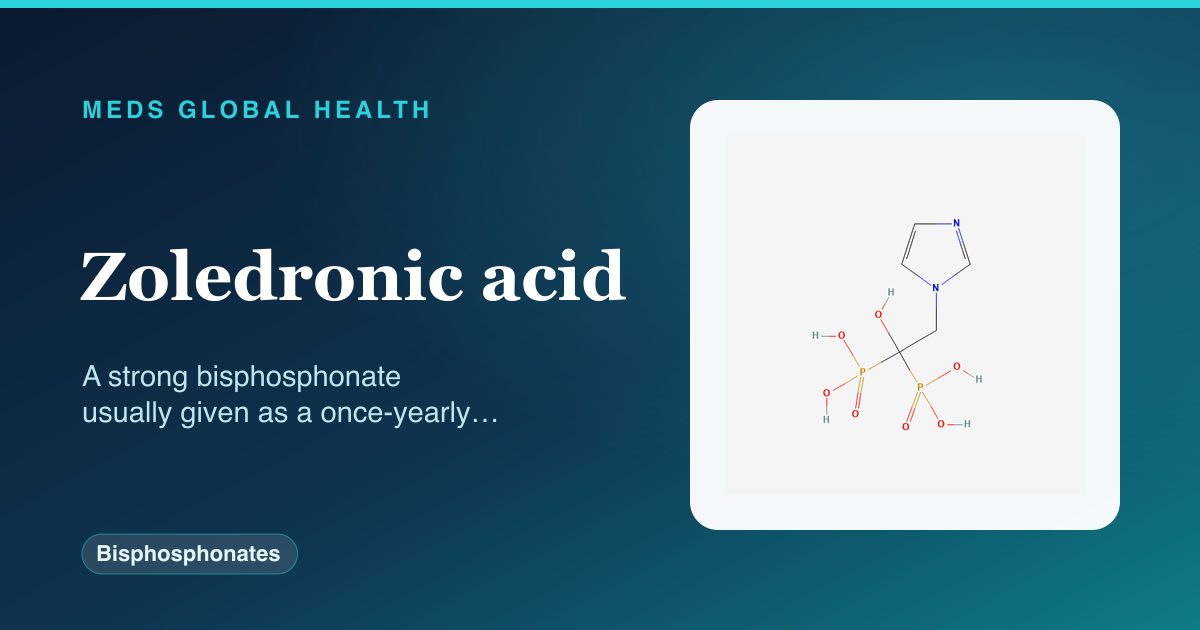
What it is
Zoledronic acid is a bisphosphonate used in the UK to strengthen bone and lower the risk of fractures in osteoporosis, and in separate, more intensive regimens for high blood calcium and bone complications linked to cancer. For osteoporosis it is given as an intravenous infusion (a drip into a vein) by a healthcare team, often only once a year, which is convenient for people who find daily or weekly tablets difficult. It does not relieve symptoms directly; instead it works in the background to keep bone stronger and reduce the chance of breaks.
How it works
Bone is constantly being broken down and rebuilt. Zoledronic acid attaches to bone and slows the activity of osteoclasts, the cells that break bone down. By reducing this bone loss it allows bone to become denser and stronger over time, lowering the risk of fractures. Because the medicine binds to bone, a single infusion keeps working for many months, which is why it can be given as infrequently as once a year for osteoporosis.
Company & origin
Originated / developed by: Developed by Novartis..
Zoledronic acid is a bisphosphonate developed by Novartis and introduced in the early 2000s, used for osteoporosis and certain bone conditions linked to cancer.
What it treats
Conditions Zoledronic acid is used for
Practical use
How to take Zoledronic acid
General, dose-free guidance — always follow your prescriber's and the leaflet's specific instructions.
- It is given as a slow drip into a vein by a healthcare team, so you do not take it yourself at home.
- Drink plenty of fluids before and after the infusion to help protect your kidneys, unless you have been told to limit fluids.
- Expect possible flu-like symptoms for a day or two afterwards, especially after the first infusion; simple painkillers can help if your team agrees.
- Make sure you are getting enough calcium and vitamin D as advised, as the treatment relies on these to work safely.
- Have a dental check-up before starting if you can, keep up good mouth care, and tell your dentist you receive this medicine.
- Attend your blood tests so your kidney function and calcium levels can be checked.
Weighing it up
Advantages & disadvantages of Zoledronic acid
Advantages
- A single infusion can provide cover for many months, often only once a year, which avoids daily or weekly tablets.
- It avoids the swallowing and stomach precautions needed with bisphosphonate tablets.
- It is well proven to reduce the risk of fractures in osteoporosis.
Disadvantages
- Flu-like symptoms are common after the infusion, particularly the first one.
- It must be given by a healthcare team as a drip, so it requires a clinic visit.
- Kidney function and calcium levels must be checked, and there is a small risk of jaw and, rarely, thigh-bone problems with long-term use.
Practical use
Good to know
After the infusion, especially the first one, many people get flu-like symptoms — aches, fever, tiredness and headache — usually for a day or two; staying well hydrated and taking simple painkillers as advised can help, and these effects tend to be milder with later infusions. Your team will check your kidney function and your calcium and vitamin D levels, and you usually need enough calcium and vitamin D for the treatment to work safely. A rare problem affecting the jaw bone (osteonecrosis of the jaw) means it is sensible to have a dental check-up and keep your mouth healthy before and during treatment. Tell your dentist you are receiving it.
Who should not take it / use with caution
- People with significantly reduced kidney function.
- People with low blood calcium that has not been corrected.
- Pregnant or breastfeeding women, and anyone with a serious allergy to zoledronic acid or other bisphosphonates.
Monitoring
- Kidney function checked before each infusion.
- Calcium and vitamin D levels checked and corrected as needed.
- Dental health reviewed before and during treatment, with prompt reporting of any jaw or thigh pain.
Side effects
- Flu-like symptoms such as fever, aching muscles and joints, tiredness and headache after the infusion.
- Low calcium levels, which is why calcium and vitamin D are checked and topped up.
- Eye inflammation (redness and pain) in rare cases — seek advice if this happens.
- Rarely, jaw bone problems (osteonecrosis of the jaw) or unusual thigh-bone fractures with long-term use.
Key interactions
- Other medicines that can affect the kidneys may add to kidney risk and should be reviewed.
- Medicines or supplements affecting calcium levels may need to be taken into account.
- Tell your team about all medicines, as some combinations need extra monitoring of kidney function.
Available as: Intravenous infusion (a drip into a vein) given by a healthcare team.
Answers
Zoledronic acid: frequently asked questions
How often is zoledronic acid given for osteoporosis?
For osteoporosis it is usually given as a drip into a vein once a year. The medicine binds to bone and keeps working in the background for many months, which is why such an infrequent schedule is possible.
Why do I feel like I have flu after the infusion?
Flu-like symptoms such as aches, fever and tiredness are a common reaction, especially after the first infusion. They usually settle within a day or two; staying hydrated and taking simple painkillers (if your team agrees) can help, and later infusions tend to cause fewer symptoms.
Why do I need a dental check before starting?
There is a rare risk of a jaw bone problem called osteonecrosis of the jaw. Having a dental check-up and keeping your mouth healthy before and during treatment lowers this risk, so it is sensible to see your dentist and let them know you receive this medicine.
Do I still need calcium and vitamin D?
Yes. The treatment works best and most safely when you have enough calcium and vitamin D, and these help prevent your blood calcium dropping too low. Your team will advise on what you need and check your levels.
Why does my kidney function need checking?
Zoledronic acid is cleared by the kidneys and can affect them, so your kidney function is checked before each infusion. Drinking plenty of fluids around the time of the infusion also helps protect your kidneys.
The wider class
About Bisphosphonates
Zoledronic acid belongs to the bisphosphonates class. For how the class as a whole works, its shared safety principles and monitoring, see the full guide.
Browse by body system
Authoritative sources
- BNF
- NICE CKS
Building a medicines information resource?
We create evidence-led, dose-free drug and formulary references for teams.