An antiepileptic medicine
Zonisamide
An antiepileptic taken to help control seizures in epilepsy, often added to another medicine.
What is Zonisamide?
Zonisamide is an antiepileptic medicine used to help control seizures in adults with epilepsy, often added on to another medicine. It is related to sulfonamide drugs, can cause weight loss and kidney stones, and should not be stopped suddenly.
Education and reference only. This is a plain-language guide to Zonisamide — it deliberately contains no doses. Doses depend on the person, the brand and the reason for treatment, and belong with your prescriber. Always check the BNF, the product labelling (SmPC) and follow medical advice.
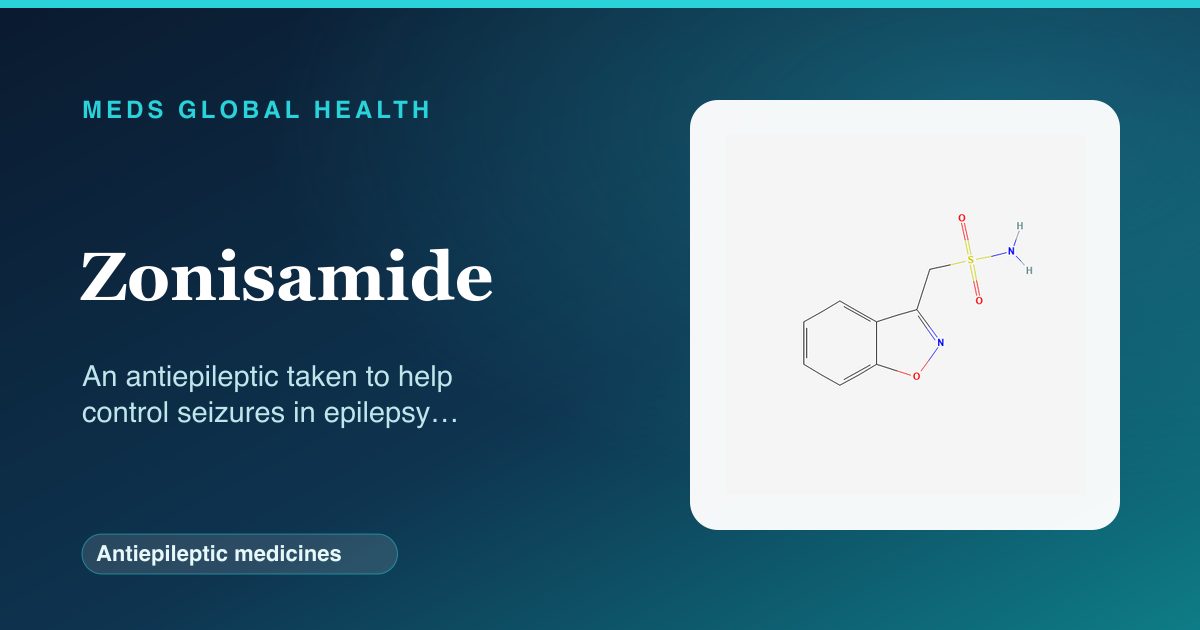
What it is
Zonisamide is an antiepileptic (anti-seizure) medicine used to help control epilepsy in adults, usually as an add-on to another medicine and sometimes on its own. It is related chemically to sulfonamide medicines, which matters for people with a sulfonamide allergy. It is taken as a long-term, regular tablet or capsule.
How it works
Zonisamide calms the excessive electrical activity in the brain that causes seizures. It does this by acting on sodium and calcium channels in nerve cells, helping to stabilise them and make a seizure less likely to start or spread. It is taken regularly to keep a steady level in the body and reduce how often seizures happen.
Company & origin
Originated / developed by: Dainippon Sumitomo / Eisai (originators).
An antiepileptic medicine, chemically related to sulfonamides, used for epilepsy.
What it treats
Conditions Zonisamide is used for
Practical use
How to take Zonisamide
General, dose-free guidance — always follow your prescriber's and the leaflet's specific instructions.
- Take it regularly, around the same times each day, to keep a steady level in your body.
- It can be taken with or without food; drink plenty of fluids to lower the risk of kidney stones.
- Don't stop suddenly — stopping abruptly can bring on seizures, so any change is made gradually with your prescriber.
- In hot weather, keep cool and well hydrated, especially in children, as it can reduce sweating.
- If you miss a dose, take it as soon as you remember unless it is nearly time for the next one, then skip it — do not double up.
Weighing it up
Advantages & disadvantages of Zonisamide
Advantages
- Can improve seizure control when added to another antiepileptic medicine.
- Taken in a once- or twice-daily routine that is straightforward to follow.
- Often associated with weight loss rather than weight gain, which suits some people.
Disadvantages
- Can cause kidney stones and reduced sweating with a risk of overheating.
- Not suitable for people allergic to sulfonamide medicines.
- Like other antiepileptics, it can harm a developing baby in pregnancy.
Practical use
Good to know
It is taken regularly, long-term, and must not be stopped suddenly because this can trigger seizures — any change is made gradually. Because it is related to sulfonamides, it is not suitable for people allergic to those medicines. It can cause weight loss, kidney stones and, in hot weather, reduced sweating with a risk of overheating (particularly in children, but possible in adults too), so staying well hydrated is important. Like other antiepileptics it carries a risk of harm to a baby in pregnancy, so contraception and pre-pregnancy planning should be discussed.
Who should not take it / use with caution
- People allergic to zonisamide or to sulfonamide medicines.
- Used with great caution and specialist advice in women who could become pregnant, because of the risk of harm to a baby.
- Caution in significant kidney or liver problems, in people prone to kidney stones, and in children at risk of overheating.
Monitoring
- Seizure frequency and how well treatment is working.
- Body weight, hydration and any symptoms of kidney stones; kidney function and acid balance as advised.
- Mood and any thoughts of self-harm, and signs of a serious skin reaction.
Side effects
- Drowsiness, dizziness, poor concentration, loss of appetite and weight loss are common.
- Kidney stones, reduced sweating and a higher temperature (especially in hot weather), and a pins-and-needles feeling can occur.
- Rarely, a serious skin rash, blood disorders, metabolic acidosis or worsening mood and thoughts of self-harm — seek prompt advice.
Key interactions
- Other medicines that affect the brain or cause drowsiness can add to its sedating effect.
- Some medicines, including certain other antiepileptics, can change zonisamide levels, and care is needed with medicines that also raise the risk of kidney stones or acidosis (such as topiramate or acetazolamide).
- Tell your pharmacist about all your medicines, including anything bought over the counter.
Available as: Capsules and tablets.
Answers
Zonisamide: frequently asked questions
Can I take zonisamide if I'm allergic to sulfa antibiotics?
No — zonisamide is related to sulfonamide medicines, so it is not suitable if you have a sulfonamide allergy. Tell your prescriber about any such allergy.
Does zonisamide cause weight loss?
It often reduces appetite and can lead to weight loss. Mention significant or unwanted weight changes to your prescriber.
Why do I need to drink plenty of fluids?
Zonisamide can increase the risk of kidney stones, and staying well hydrated helps reduce that risk. It can also reduce sweating, so keeping cool and hydrated in hot weather matters.
Can I stop taking it if my seizures stop?
Never stop suddenly. Stopping abruptly can trigger seizures, so any change must be made gradually under your prescriber's guidance.
Is zonisamide safe in pregnancy?
Like other antiepileptics it can harm a developing baby, so pregnancy planning, contraception and specialist advice are important. Do not stop it on your own if you become pregnant — get urgent advice.
The wider class
About Antiepileptic medicines
Zonisamide belongs to the antiepileptic medicines class. For how the class as a whole works, its shared safety principles and monitoring, see the full guide.
Browse by body system
Authoritative sources
- BNF: Zonisamide.
- NICE CKS: Epilepsy medicines.
Building a medicines information resource?
We create evidence-led, dose-free drug and formulary references for teams.