A DPP-4 inhibitor (gliptin)
Alogliptin
A once-daily tablet for type 2 diabetes that gently lowers blood sugar with a low hypo risk.
What is Alogliptin?
Alogliptin is a once-daily tablet used to improve blood sugar control in type 2 diabetes. It belongs to the DPP-4 inhibitor (gliptin) family and works with the body's own gut hormones to lower blood sugar after meals. On its own it carries a low risk of hypos and is weight-neutral.
Education and reference only. This is a plain-language guide to Alogliptin — it deliberately contains no doses. Doses depend on the person, the brand and the reason for treatment, and belong with your prescriber. Always check the BNF, the product labelling (SmPC) and follow medical advice.
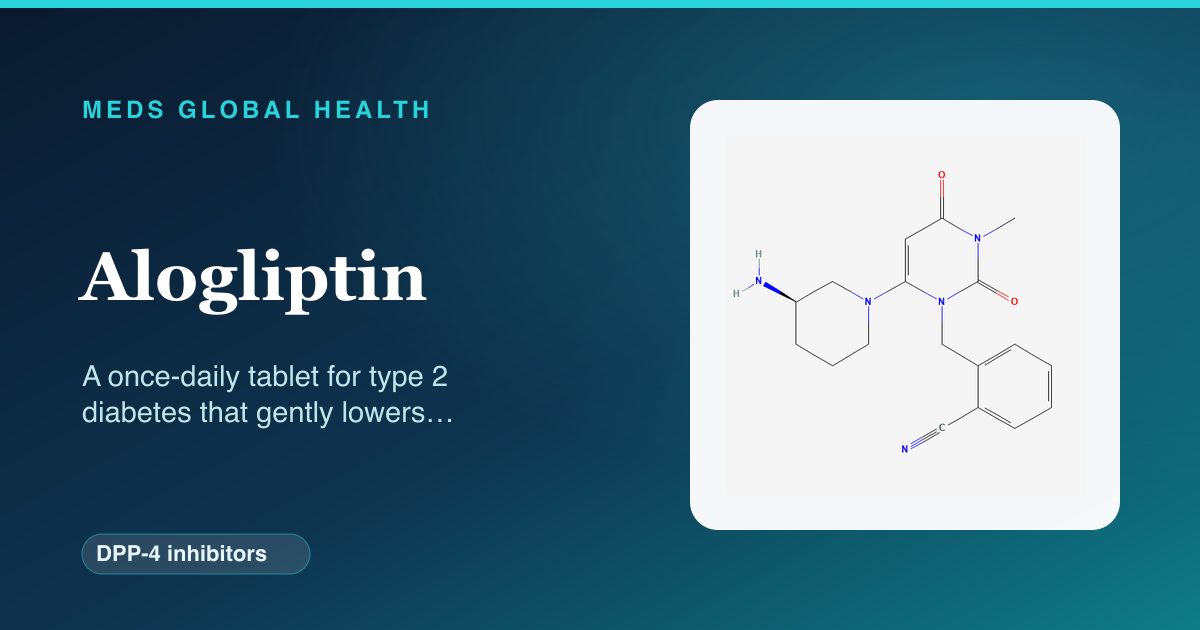
What it is
Alogliptin, sold as Vipidia, is a tablet for type 2 diabetes. It belongs to the DPP-4 inhibitor or 'gliptin' group of medicines and is taken by mouth once a day.
How it works
It blocks an enzyme called DPP-4, which normally breaks down the gut hormones (incretins) that help control blood sugar. By keeping these hormones active for longer, it helps the pancreas release insulin when blood sugar is high and reduces the amount of sugar the liver makes, mainly after meals.
Company & origin
Originated / developed by: Takeda.
What it treats
Conditions Alogliptin is used for
Practical use
How to take Alogliptin
General, dose-free guidance — always follow your prescriber's and the leaflet's specific instructions.
- Take one tablet by mouth once a day.
- Take it at about the same time each day to build a routine.
- It can be taken with or without food.
- If you miss a dose, take it when you remember unless it is nearly time for the next one.
- Do not take a double dose to make up for a missed one.
Weighing it up
Advantages & disadvantages of Alogliptin
Advantages
- Simple once-daily tablet.
- Low risk of hypos when used on its own.
- Generally weight-neutral and well tolerated.
Disadvantages
- The blood-sugar-lowering effect is modest compared with some other medicines.
- The dose may need lowering if kidney function is reduced.
- There is a small risk of inflammation of the pancreas.
Practical use
Good to know
It is taken once a day and is generally well tolerated, with a low risk of hypos when used on its own and little effect on weight. The dose may be adjusted if your kidneys are not working well. As with other gliptins, there is a small risk of pancreatitis to be aware of.
Who should not take it / use with caution
- People who have had an allergic reaction to alogliptin.
- People who have had pancreatitis should use it with caution and specialist advice.
- It is not used in type 1 diabetes or for diabetic ketoacidosis.
- Use in pregnancy and breastfeeding is generally avoided.
Monitoring
- Blood sugar control (HbA1c) is reviewed periodically.
- Kidney function is checked, as the dose depends on it.
- Be alert for symptoms of pancreatitis.
Side effects
- Headache and symptoms like a common cold.
- Tummy upset such as indigestion.
- Rarely, inflammation of the pancreas (severe, persistent tummy pain needs urgent help).
- Rarely, joint pain or skin reactions.
Key interactions
- Combining it with insulin or a sulfonylurea raises hypo risk, so those doses may be reduced.
- It has relatively few interactions compared with some diabetes medicines.
- Tell your team about all your medicines so combinations can be checked.
Available as: Available as tablets taken by mouth.
Answers
Alogliptin: frequently asked questions
When should I take alogliptin?
It is taken once a day, ideally at the same time each day, and can be taken with or without food.
Can it cause a hypo?
On its own the risk of a hypo is low. The risk rises if it is combined with insulin or a sulfonylurea, in which case those doses may be lowered.
Will it affect my weight?
Alogliptin is generally weight-neutral, meaning it does not usually cause weight gain or loss.
Does it work if my kidneys are not great?
It can be used with reduced kidney function, but the dose may be lowered, so your kidneys are checked before and during treatment.
What should I watch out for?
Severe, persistent tummy pain that may spread to your back can signal inflammation of the pancreas and needs urgent medical attention.
The wider class
About DPP-4 inhibitors
Alogliptin belongs to the dpp-4 inhibitors class. For how the class as a whole works, its shared safety principles and monitoring, see the full guide.
Browse by body system
Authoritative sources
- BNF
- NICE CKS
Building a medicines information resource?
We create evidence-led, dose-free drug and formulary references for teams.