A DPP-4 inhibitor (gliptin) for type 2 diabetes
Sitagliptin
A once-daily tablet for type 2 diabetes that gently lowers blood sugar with little risk of hypos and a neutral effect on weight.
What is Sitagliptin?
Sitagliptin is a DPP-4 inhibitor, sometimes called a gliptin, used to help control blood sugar in type 2 diabetes. It is usually added when diet, lifestyle and other medicines such as metformin are not enough on their own.
Education and reference only. This is a plain-language guide to Sitagliptin — it deliberately contains no doses. Doses depend on the person, the brand and the reason for treatment, and belong with your prescriber. Always check the BNF, the product labelling (SmPC) and follow medical advice.
What it is
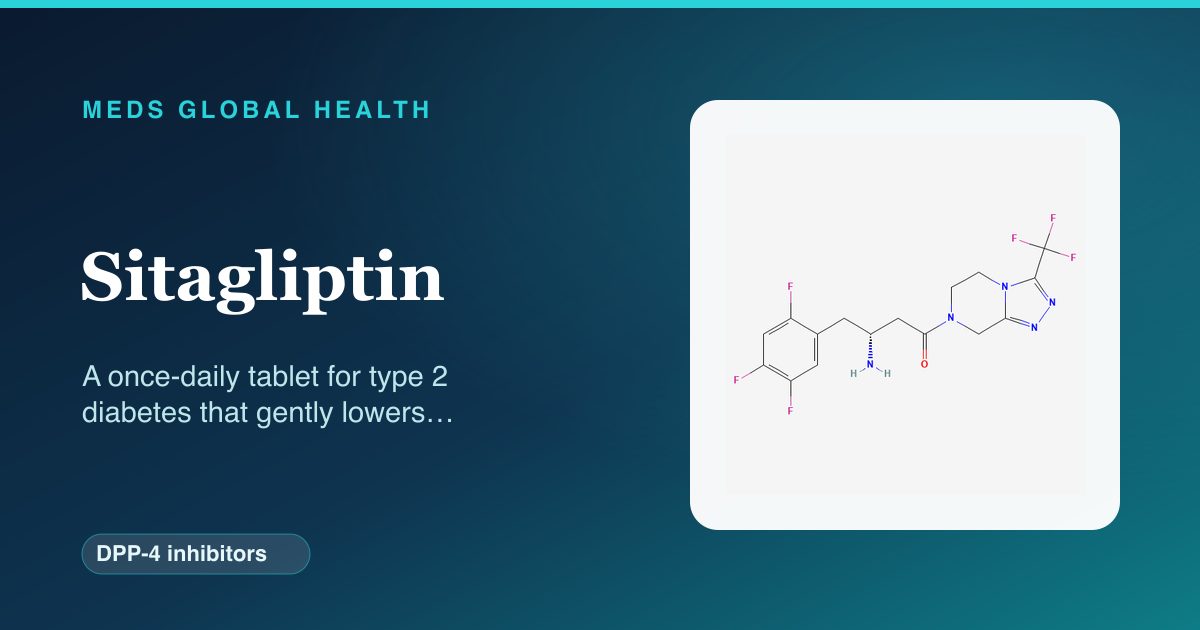
Sitagliptin is a DPP-4 inhibitor (sometimes called a "gliptin") used to help control blood sugar in type 2 diabetes. It is usually added when diet, lifestyle and metformin are not enough on their own, and it can be combined with several other diabetes medicines. It is taken as a once-daily tablet and is popular because it is generally well tolerated, has a low risk of causing low blood sugar (hypos) when used by itself, and does not tend to cause weight gain. A common brand in the UK and US is Januvia.
How it works
After a meal, the gut releases hormones called incretins (such as GLP-1) that prompt the body to produce more insulin and less glucose-raising hormone, helping to keep blood sugar in check. These incretins are normally broken down quickly by an enzyme called DPP-4. Sitagliptin blocks DPP-4, so the body's own incretins last longer and work harder — but only when blood sugar is raised, such as after eating. This "glucose-dependent" action is why it rarely causes hypos when used on its own.
Company & origin
Originated / developed by: Merck & Co..
Sitagliptin was developed by Merck & Co. in the United States and became the first DPP-4 inhibitor approved by the FDA in October 2006, marketed as Januvia for type 2 diabetes.
What it treats
Conditions Sitagliptin is used for
Practical use
How to take Sitagliptin
General, dose-free guidance — always follow your prescriber's and the leaflet's specific instructions.
- Take it once a day, with or without food, at around the same time each day.
- Use it alongside a healthy diet and physical activity, which remain central to managing diabetes.
- On its own it is unlikely to cause low blood sugar, but the risk rises if combined with insulin or sulfonylureas.
- Tell your doctor about kidney problems, as the dose may need adjusting.
- Stop and seek urgent advice for severe, persistent stomach pain, which can rarely signal inflammation of the pancreas.
- Keep up your usual diabetes monitoring and reviews.
Weighing it up
Advantages & disadvantages of Sitagliptin
Advantages
- Convenient once-daily tablet that can be taken with or without food.
- Low risk of causing low blood sugar when used alone.
- Weight-neutral, so it does not typically cause weight gain.
- Combines well with other diabetes medicines.
Disadvantages
- Lowers blood sugar more modestly than some other treatments.
- Can rarely cause inflammation of the pancreas.
- May cause joint pain or, rarely, allergic skin reactions.
- Needs dose adjustment in reduced kidney function.
Practical use
Good to know
Sitagliptin is taken once a day and can be taken with or without food. On its own it carries a low risk of hypos and is weight-neutral, which makes it a useful option for many people. The approach is adjusted in people with reduced kidney function, so kidney function is checked from time to time. A rare but important risk is inflammation of the pancreas (pancreatitis): severe, persistent tummy pain — often spreading to the back and with vomiting — should prompt stopping the medicine and seeking urgent medical advice. Some people also notice joint pain, which settles on stopping.
Who should not take it / use with caution
- People with type 1 diabetes — it is not a treatment for type 1.
- People who have had pancreatitis (inflammation of the pancreas) before, or a serious allergic reaction to sitagliptin.
- Used with a gentler approach in significant kidney impairment, and with care in people with heart failure.
Monitoring
- Blood glucose and HbA1c to confirm response
- Kidney function (which guides the approach)
- For any severe tummy pain or joint pain
Side effects
- Often well tolerated. Headache, cold-like symptoms (such as a stuffy or runny nose) and mild tummy upset can occur.
- Joint pain, which can sometimes be severe but settles after stopping.
- Rarely, pancreatitis (severe ongoing tummy pain — stop and seek urgent help), allergic skin reactions, or skin blistering conditions — all reasons to seek medical advice.
Key interactions
- It has relatively few interactions, but the risk of hypos rises when it is combined with insulin or a sulfonylurea (such as gliclazide), so the dose of those may be reduced.
- Care alongside other medicines that affect blood sugar.
- Tell your prescriber about all your medicines so combinations affecting blood sugar can be reviewed.
Available as: Tablets. It is also available in combination tablets with metformin.
Answers
Sitagliptin: frequently asked questions
Will sitagliptin cause low blood sugar (hypos)?
On its own, sitagliptin rarely causes hypos because it only boosts your body's blood-sugar-lowering hormones when blood sugar is raised, such as after eating. The risk goes up when it is combined with insulin or a sulfonylurea (like gliclazide), in which case those doses may be reduced.
Will it make me put on weight?
No — sitagliptin is generally weight-neutral, meaning it does not tend to cause weight gain or loss. This can make it a helpful option for people who want to avoid the weight gain seen with some other diabetes medicines.
What is the severe tummy pain I should watch for?
Very rarely, gliptins like sitagliptin can trigger inflammation of the pancreas (pancreatitis). The warning sign is severe, persistent tummy pain that may spread to the back, often with being sick. If this happens, stop the tablets and seek urgent medical help.
Why does my kidney function get checked?
Sitagliptin is partly cleared by the kidneys, so the approach is gentler if your kidney function is reduced. Periodic blood tests let your team adjust treatment safely and pick up any change over time.
What is the difference between sitagliptin and Januvia?
They are the same medicine — sitagliptin is the generic (active-ingredient) name and Januvia is a brand name. Generic sitagliptin contains the identical active ingredient.
The wider class
About DPP-4 inhibitors
Sitagliptin belongs to the dpp-4 inhibitors class. For how the class as a whole works, its shared safety principles and monitoring, see the full guide.
Browse by body system
Authoritative sources
- BNF: Sitagliptin.
- electronic Medicines Compendium (SmPC): Sitagliptin (Januvia).
- NICE NG28: Type 2 diabetes in adults.
Building a medicines information resource?
We create evidence-led, dose-free drug and formulary references for teams.